

Russian general linked to war in Ukraine killed in Moscow car blast



 Share the page
A senior Russian military officer involved in Moscow’s war against Ukraine was killed in a car bombing in the Russian capital, an attack that exemplifies how the ongoing conflict is increasingly far from the battlefield.
Russia’s Investigative Committee said an explosive device had been planted under a vehicle and detonated in Moscow on Dec. 22, killing Lt. Gen. Fanil Sarvarov, head of the Operational Training Directorate of the General Staff of the Russian Armed Forces.
Sarvarov held a key position within Russia’s senior military command, overseeing the preparation and training of forces deployed during the full-scale invasion of Ukraine. His role placed him front and center in efforts to adapt Russian military doctrine and readiness amid heavy battlefield losses and prolonged mobilization of personnel.
Russian media described Sarvarov as an officer involved in the war against Ukraine and in earlier campaigns in Chechnya and Syria.
SOURCESymbolic number of the Day
Share the page
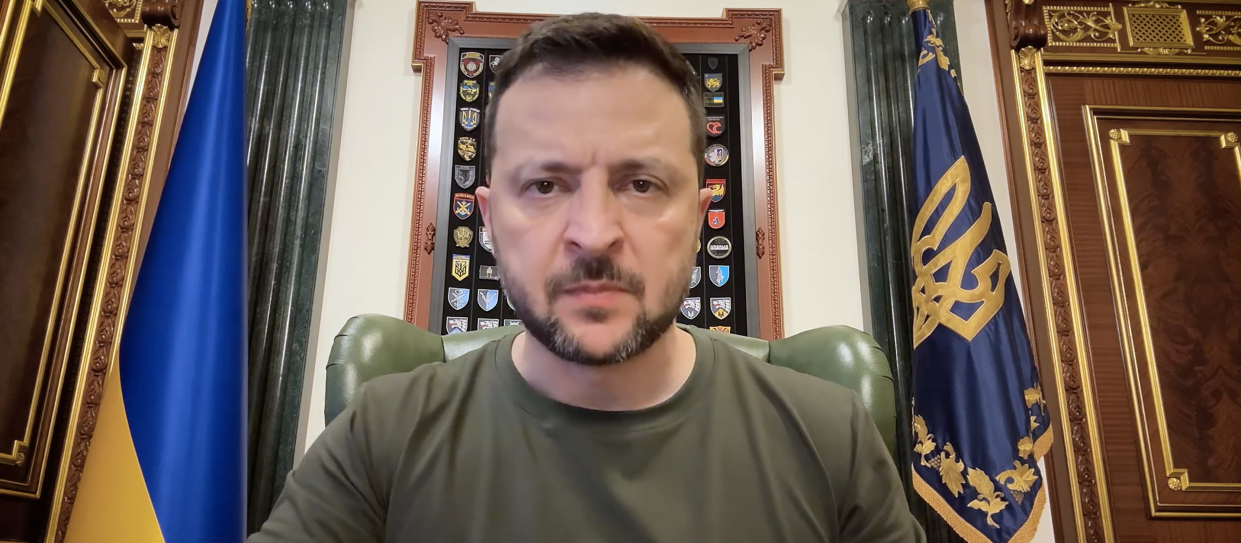
Russia targets Ukraine with nearly 2,500 drones and bombs in one week. Russia launched nearly 2,500 various sorts of airborne weapons at Ukraine over the past week, including about 1,300 attack drones, nearly 1,200 guided bombs and nine missiles of various types, Ukrainian President Volodymyr Zelenskyy said.
In his weekly address, Zelenskyy said the strikes hit multiple regions, with southern Ukraine taking some of the heaviest damage, particularly the Black Sea region of Odesa. He singled out guided aerial bombs, known as KABs, Soviet-era munitions fitted with guidance kits that allow Russian aircraft to strike from long range, often outside the reach of air defenses.
Zelenskyy said Ukraine continues to respond on several fronts, from strengthening air defenses and carrying out long-range strikes to pushing sanctions and diplomacy.
He pointed to a recent European Union decision to approve 90 billion euros ($98 billion) in support for the next two years through 2027, as well as new aid packages from Norway and Japan. He also cited an agreement with Portugal to jointly produce maritime drones – their first military related bilateral agreement.
SOURCEWar in Pictures
 Share the page
Ukrainian drones hit major Russian oil terminal on Black Sea. Ukrainian military intelligence says long-range drones struck a major Russian oil terminal on the Black Sea overnight Dec. 22, setting off a large fire and damaging export infrastructure that supports Moscow’s war economy.
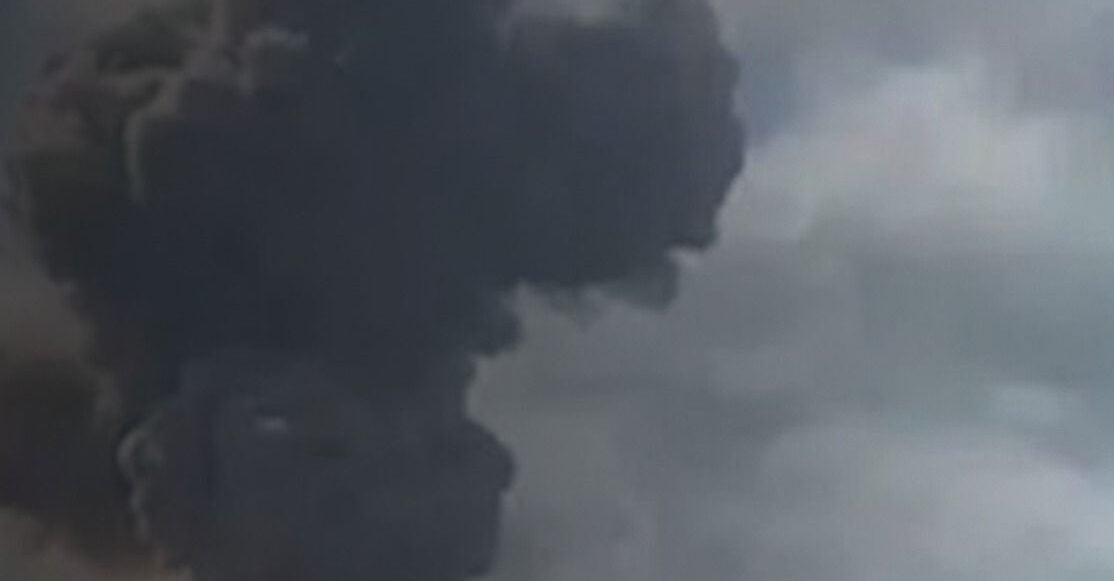
A source in Ukraine’s Defense Intelligence said attack drones hit the Tamanneftegaz terminal in Russia’s Krasnodar region, damaging loading equipment, port facilities and a pier used for liquefied petroleum gas. Video shared with Ukrainian media shows towering flames and thick smoke rising from the waterfront facility, lighting up the night sky.
Ukraine’s General Staff later confirmed the strike, saying a pipeline, two piers and at least one vessel were damaged. Officials said the fire spread across more than 1,000 square meters (about 10,800 square feet), including part of the terminal’s storage tank area, before emergency crews moved in.
The Taman terminal is one of the largest oil and gas transshipment hubs on the Black Sea, with storage capacity exceeding 1 million cubic meters (about 264 million gallons).
SOURCEVideo of the Day
Share the page
Ukrainian intelligence says Russian fighter jets are damaged at Lipetsk airfield. Ukraine’s military intelligence says two Russian fighter jets were damaged in a fire at a military airfield near the city of Lipetsk, in what it describes as a sabotage operation carried out by an anti-Kremlin resistance member inside Russia.
The incident took place overnight Dec. 20–21 and damaged a Su-30 and a Su-27 fighter, leaving both aircraft out of service, according to Ukraine’s Defense Intelligence. The agency estimated the combined value of the jets at up to $100 million, highlighting the financial and operational cost to Russia’s air force as the war continues.
Ukrainian officials said the operation took about two weeks to plan and targeted aircraft used in strikes against Ukraine. Video released by the intelligence service shows flames and smoke rising from the airfield, though the footage could not be independently verified.
SOURCEInstitute for the Study of War (ISW) report
 Share the page
Key Takeaways
- Russian forces are conducting a new cognitive warfare campaign through limited cross-border attacks across a broad part of the previously dormant northern frontline in Sumy and Kharkiv oblasts.
- These two cross-border attacks likely intend to advance the Kremlin’s cognitive warfare campaign to convince the West that the frontlines in Ukraine are collapsing, such that Ukraine should concede to all of Russia’s demands.
- Russian forces have not set conditions to start a new offensive across the international border in northern Ukraine.
- Russian forces notably have not prepared the battlefield in northern Sumy or Kharkiv oblasts for a major ground offensive through intermediate-range strikes against Ukrainian logistics.
- The Russian tactics in the assault in Sotnytskyi Kozachok are not consistent with Russian assault tactics across the theater and suggest the attack was designed to be seen.
- Russian forces forcibly deported about 50 civilians from Sumy Oblast in violation of international law.
- Russian forces have likely seized Siversk — a town with a pre-war population of less than 11,000 — after 41 months of fighting.
- US delegations continued separate meetings with Ukrainian and Russian delegations in Miami on December 21 as the Kremlin continues to reject making compromises to end the war.
- Ukrainian forces recently advanced in the border area of Belgorod Oblast and near Pokrovsk. Russian forces recently advanced in the Slovyansk-Lyman direction, in the border areas of Sumy and Kharkiv oblasts, and near Borova and Siversk.
Latest news
Share the page
- Russians enter border village in Sumy Oblast and take about 50 residents away
- NATO secretary general considers Putin main obstacle to peace
- Ukraine demands return of civilians taken to Russia from Sumy Oblast, says Russia is no different from ISIS or Hamas
- Kremlin expects Ukrainian, European and US proposals to be “categorically unacceptable”
- Czech president says he wants country to join financing mechanism for Ukraine loan
- Senator Graham supports giving Ukraine Tomahawk missiles if Putin says “no” to peace deal
Share the page