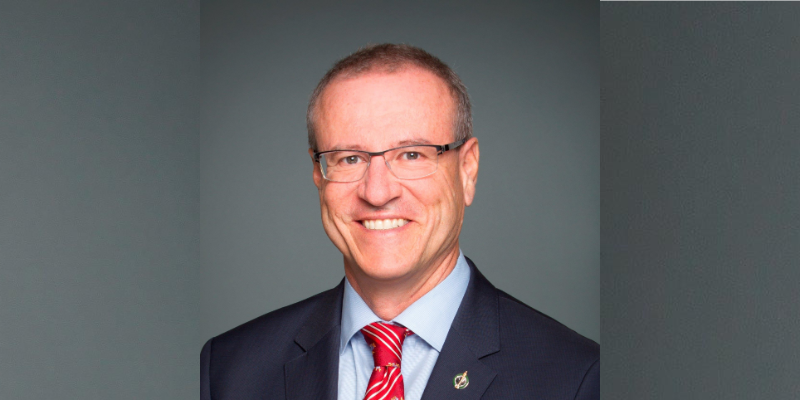


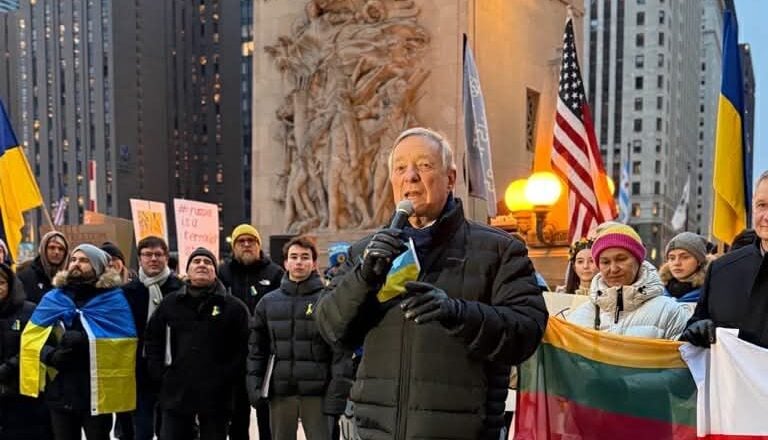


Dr. Mariya Dmytriv-Kapeniak, President of the Ukrainian Congress Committee of America (UCCA) Illinois Division, analyzes the U.S. Ukrainian community’s response to the temporary easing of sanctions on Russia and assesses the effectiveness of communicating the Russian threat.
The Ukrainian community’s reaction to the decision to temporarily relax restrictions on Russia was understandably outraged. However, this outrage was neither swift nor coordinated enough.
Although the sanctions easing was announced on a Friday, many organizations did not issue statements until Monday. In today’s fast-paced information environment, such delays are critical – responses must be immediate, clear, and public.
Communicating with the American public
The strongest arguments for U.S. policymakers are those directly tied to national security. Russia’s cooperation with Iran – including sharing intelligence, technology, drones, and counter-drone systems – poses real threats to the lives of American service members and to U.S. security.
Making these arguments compelling requires systematic information work. Most Americans, including policymakers and their staff, rely on mainstream news where this issue receives little coverage. The Ukrainian community’s role is to explain Russia’s cooperation with Iran, China, and North Korea, provide the facts, and show the direct impact on U.S. security and economy.
It is essential to communicate in English and to go beyond informational “bubbles” in social media, where Ukrainians often only speak to each other. Communication exclusively within the Ukrainian community is ineffective and can even be harmful, as bots and spies may infiltrate these channels. To influence outcomes, messages must reach the broader American public in clear, accessible language on their platforms.
An important argument for policymakers is that Russia’s actions prolong the war. Russia’s support to Iran, including weapons and intelligence, extends the conflict, drains U.S. budgets, and costs American lives. These points should be tied to tangible economic consequences – prices, goods, and taxes.

A generation of current policymakers was shaped in universities where studying Russian culture and language was often normalized and softened its political realities, leaving them more susceptible to pro-Russian narratives. Addressing how the U.S. education system presents Russia, investing in Ukrainian studies going forward is an essential step to counter this.
Dialogue must continue. Silence is the most dangerous response. While the issue is actively discussed, there is an opportunity to convey the truth: Russia is the aggressor, and its actions have global consequences affecting not only people but also the environment and wildlife. If discussion disappears, ideas about “normalizing” relations with Russia may quickly return.
Action
Systematic outreach to the American public is necessary. Across all platforms, the message must be clear: Russia is a threat not only to Ukraine but to the entire world, including the U.S. Framing the threat in the context of Russia’s collaboration with Iran and other authoritarian regimes makes the issue more tangible for American voters.
Engagement with local politicians, especially during elections, is critical. If Ukraine-related issues do not come up in debates, it reflects insufficient community activity. Direct contact with members of Congress – calls, letters, campaigns – works only if it is widespread. Every office tracks these communications, and they directly influence policymakers’ positions.
While traditional U.S. allies opposed relaxing sanctions, the presidential authority to act without Congress shows that not all decisions depend on the legislative branch. The politicization of sanctions opens opportunities for dialogue and draws media and public attention.
The key message must be clear: Russia is not a partner for the U.S. It is a state that systematically acts against American interests, values, and security. Specific examples – ranging from cooperation with authoritarian regimes to war crimes – must be shared. Real-life stories, such as drone attacks on civilians in Kherson, need to reach American audiences.
For the Ukrainian community, the primary task today is to act as part of American society: speak to Americans as Americans, influence as voters, participate in the political process, and be present in decision-making spaces. The community’s voice is the most powerful tool; its use affects not only support for Ukraine but also participation in key policy decisions.
Photos: UCCA Illinois
Latest news

 #GlobalAdvocacy