



The Ukrainian community in the Republic of Korea differs significantly from traditional diasporas in Canada or Europe. It is a young, constantly evolving network of people that, in critical moments, shows an extraordinary ability to self-organize.
The Ukrainian World Congress spoke with Khrystyna Maidanchuk, one of the community’s activists in the country. What follows is her account of how the community took shape, the challenges of cultural diplomacy in Asia, and the fight for Ukrainian narratives. The direct speech has been edited and condensed for clarity.
Between technology and education
The story of Ukrainians in South Korea is closely tied to the country’s development in high-tech industries and education. For a long time, Korea remained a closed, monoethnic state, only opening up to foreign professionals in the early 2000s amid rapid technological and economic growth. The first Ukrainians to arrive were engineers and scientists recruited by giants like Samsung and LG, which actively sought specialists with strong technical backgrounds from post-socialist countries.
This professional focus shaped the foundation of the community. Over time, however, the nature of the Ukrainian presence in Korea became more fluid. Even today, the community remains highly dynamic, constantly renewing itself. Strict visa regulations, language barriers, and a significant cultural gap make it difficult for foreigners to stay in Korea for decades. In contrast, Russians often have more favorable visa conditions and a larger presence in the country, creating unequal conditions for representation.
As a result, the community has grown noticeably younger. Today, it is largely made up of students who came to study and Ukrainians who have started families in Korea. A separate group consists of ethnic Koreans from Ukraine. Although the Korean government offers them special visas and support programs, they often exist within their own information space. This creates a degree of fragmentation, with different groups of Ukrainians pursuing their own paths of integration into Korean society.
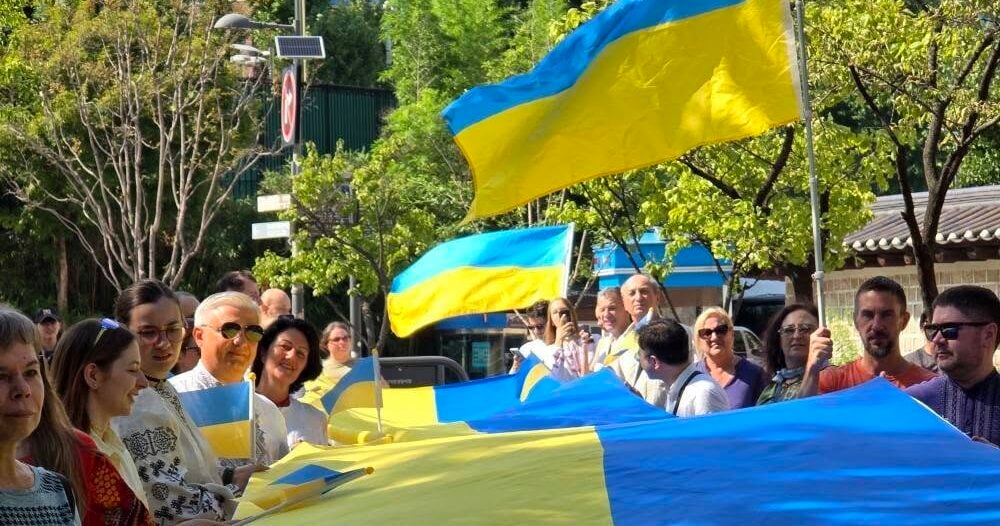
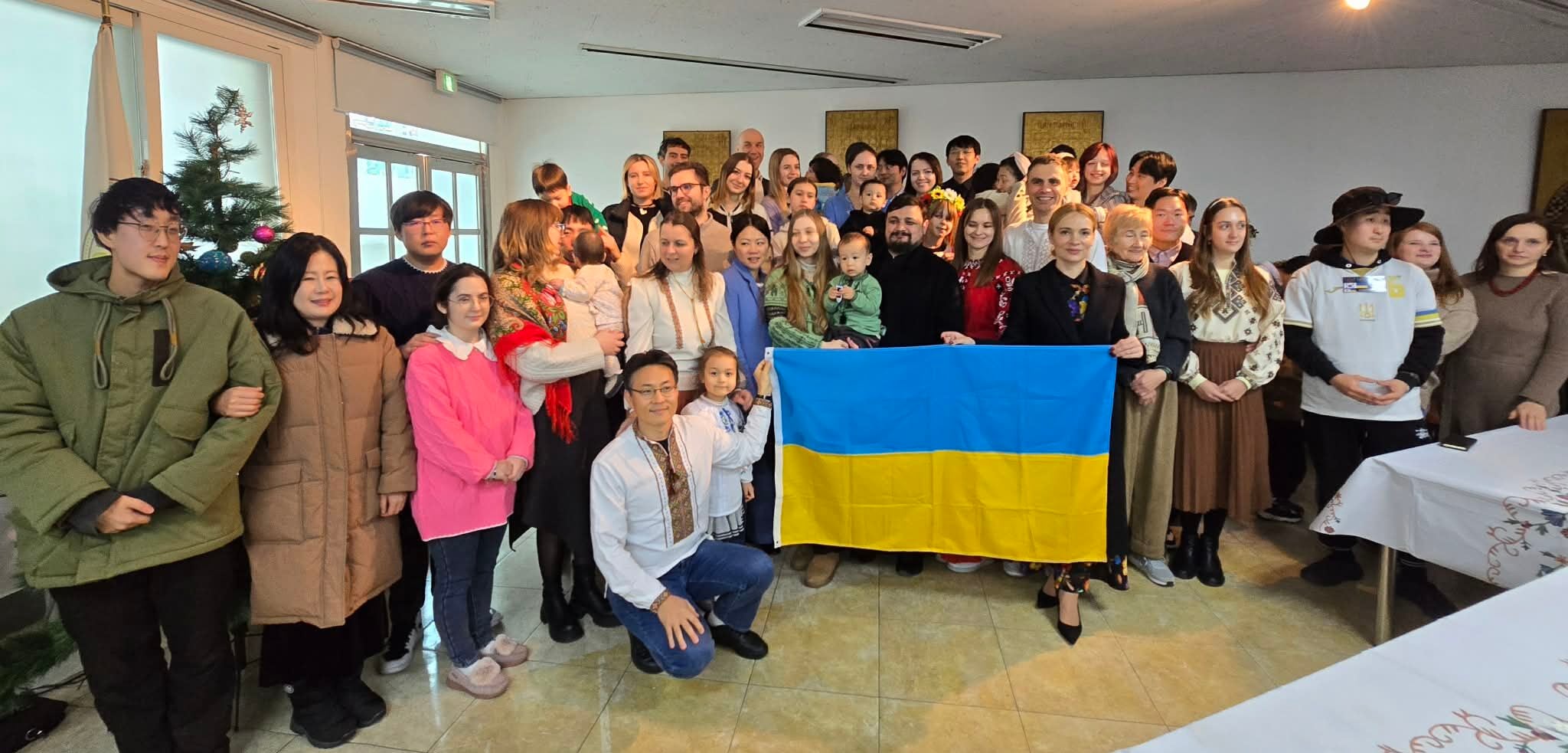 A true sense of the community as a distinct force emerged in 2014. Before that, people in Korea often did not distinguish between migrants from post-Soviet countries, and Russian remained the main language of communication. Ukraine was sometimes even confused with Uzbekistan due to similarities in how the names sound in English and Korean. However, the annexation of Crimea became a turning point: Ukrainians felt a strong need for self-identification and to establish a distinct voice in Asia. The first platform for this was a Ukrainian-language Facebook group, which quickly evolved from a virtual space into a real-world coordination hub, including for protests outside the Russian embassy.
This experience of street mobilization revealed a key challenge – the geographical dispersion of Ukrainians across the country. It pushed the community to develop new forms of connection. Since Ukrainians are spread nationwide, the focus shifted to building a broad digital network that allows coordinated action without being tied to one location. Today, this ecosystem includes Telegram channels for general communication, chats on the local messenger KakaoTalk for оперативне planning, and even a youth initiative with the symbolic name “Varenyky with Kimchi.”
This digital cohesion enables the community to effectively organize offline cultural life – from children’s workshops to gatherings celebrating Ukrainian holidays such as Christmas, Easter, and Independence Day. Moreover, this flexibility has helped address national education. While there is still no permanent Ukrainian school in Korea due to logistical challenges, online platforms have become an effective alternative, allowing children to stay connected to Ukrainian curricula regardless of where they are.
Soft power
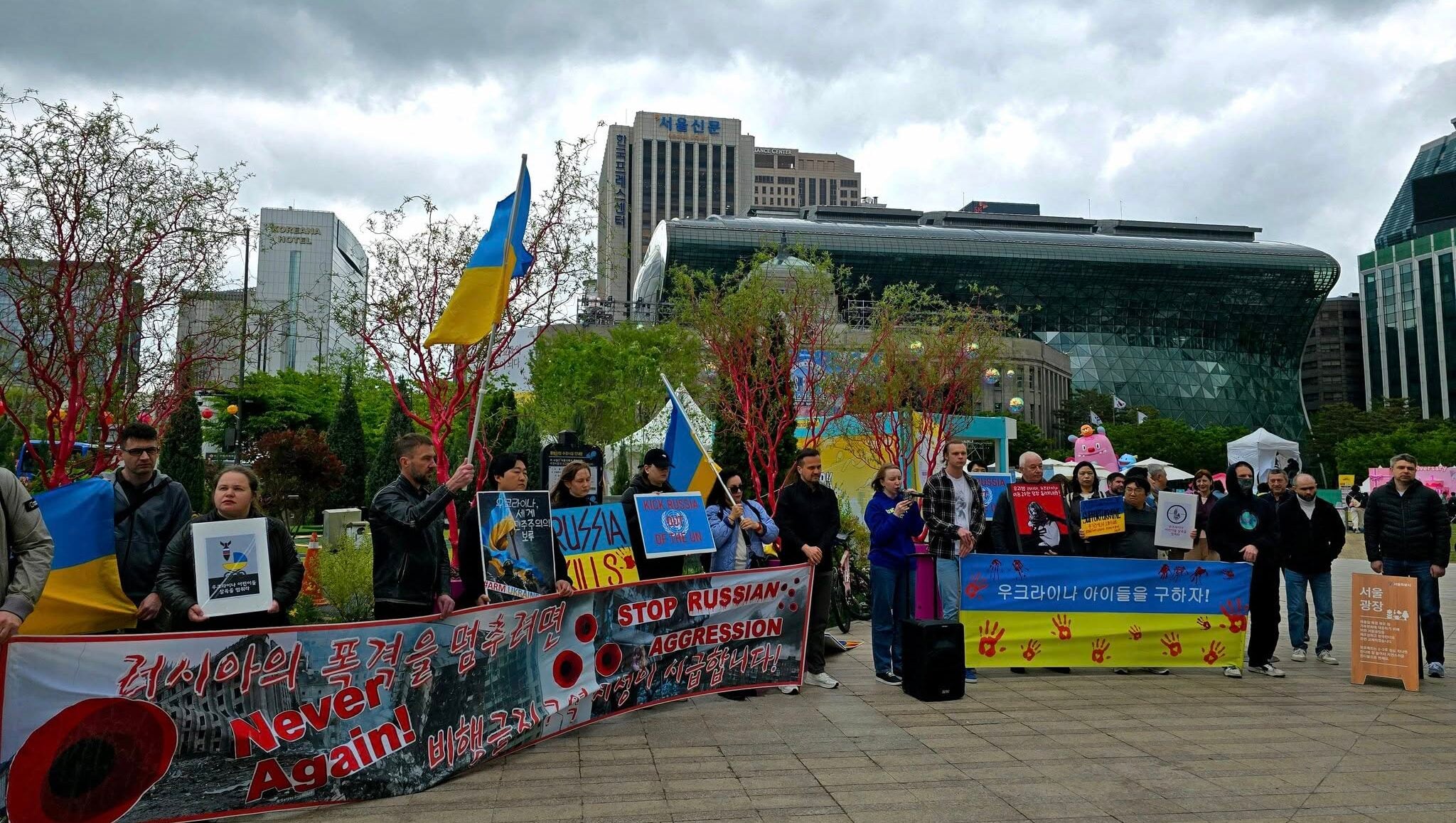
Russia’s full-scale invasion of Ukraine in 2022 marked the community’s final transformation into a mobilized information and volunteer hub. In the first months of the war, efforts focused on large-scale street diplomacy. Organizing rallies in central Seoul required not only emotional engagement but also careful bureaucratic work – from coordination with local police to crafting clear messages understandable to Korean society. At the height of the protests, hundreds of people took to the streets each week to ensure that Ukraine’s voice would not fade in the Asian megacity.
At the same time, a major media battle unfolded, as the Korean information space proved vulnerable to manipulation. Early in the invasion, local media often echoed Russian narratives under the guise of “balanced perspectives,” prompting rapid action. The community launched an Instagram page and a YouTube channel, “Ukrainians in Korea,” where they began publishing translated news and subtitled speeches in Korean.
Direct support for Ukraine’s defenders also became a key focus. Working closely with Korean partners, the community regularly raises funds for medical supplies for the Azov Regiment and the Hospitallers battalion. They have independently built a reliable logistics system to ensure that every donation and every medical kit reaches those saving lives on the front line.
 This systematic work enabled direct engagement with journalists. Dozens of interviews with leading TV channels helped debunk myths about the war and explain the true nature of Russian aggression. Over time, this activity expanded into a form of soft cultural outreach. The community has become a regular participant in international festivals, presenting Ukraine through national cuisine and traditional embroidered clothing, shaping an image of the country as a modern and developed European state.
This media experience laid the groundwork for more complex efforts – systematically pushing back against Russian cultural influence in Korea. In recent years, the community has organized campaigns against tours by Russian cultural groups, particularly ballet companies. Activists picket concert halls and engage directly with organizers, arguing that Russian culture today is often used as a tool of propaganda and a cover for war crimes. While not every performance is canceled, they have achieved something crucial – setting a precedent that encourages Korean organizers to reconsider cooperation with an aggressor.
At the same time, the community understands that countering Russian influence must go hand in hand with promoting Ukrainian culture. One of the most successful initiatives in this regard has been the publication of the book “Ukraine: Food and History” in Korean. This high-quality cultural product introduces local audiences to Ukraine through gastronomy – a format particularly resonant in Korean culture and an effective instrument of soft power.
Special attention is also given to supporting the Ukrainian language. The community created a book club, “Reading in Korea,” where members discuss Ukrainian literature both online and offline. They also organize collective orders of printed books from Ukrainian publishers – a way to support authors and the publishing industry back home while living thousands of miles away.
In addition, the community regularly launches flash mobs – for example, on Vyshyvanka Day – to promote Ukrainian culture, and produces rapid-response video projects following major events such as the destruction of the Kakhovka Dam. This helps keep Ukraine on the Korean public agenda even as media attention to the war naturally declines.
The voice of Ukraine
Despite significant progress in the information space, the situation within the country remains challenging for Ukrainians seeking refuge. Official Seoul, while providing substantial humanitarian aid to Ukraine and preparing for future reconstruction, has yet to develop financial or social support programs for refugees. Ukrainians can obtain humanitarian visas, but the lack of systematic integration mechanisms forces many to leave for Europe after several months of trying to build a life in Korea.
In these difficult conditions, the Ukrainian community in Korea has become more than just a coordination center – it is a living system of support and a vital link to the homeland. It continues to serve as Ukraine’s voice in Asia, using every available tool, from digital platforms to street actions. The goal remains unchanged: not only to help bring victory closer through information efforts, but also to build lasting cultural and human connections that will form the foundation of strong Ukraine–Korea relations in the future.
Latest news

 #GlobalAdvocacy