




by Kate Turska, Co-chair of the Ukrainian Association of New Zealand (North) and the head of Mahi for Ukraine
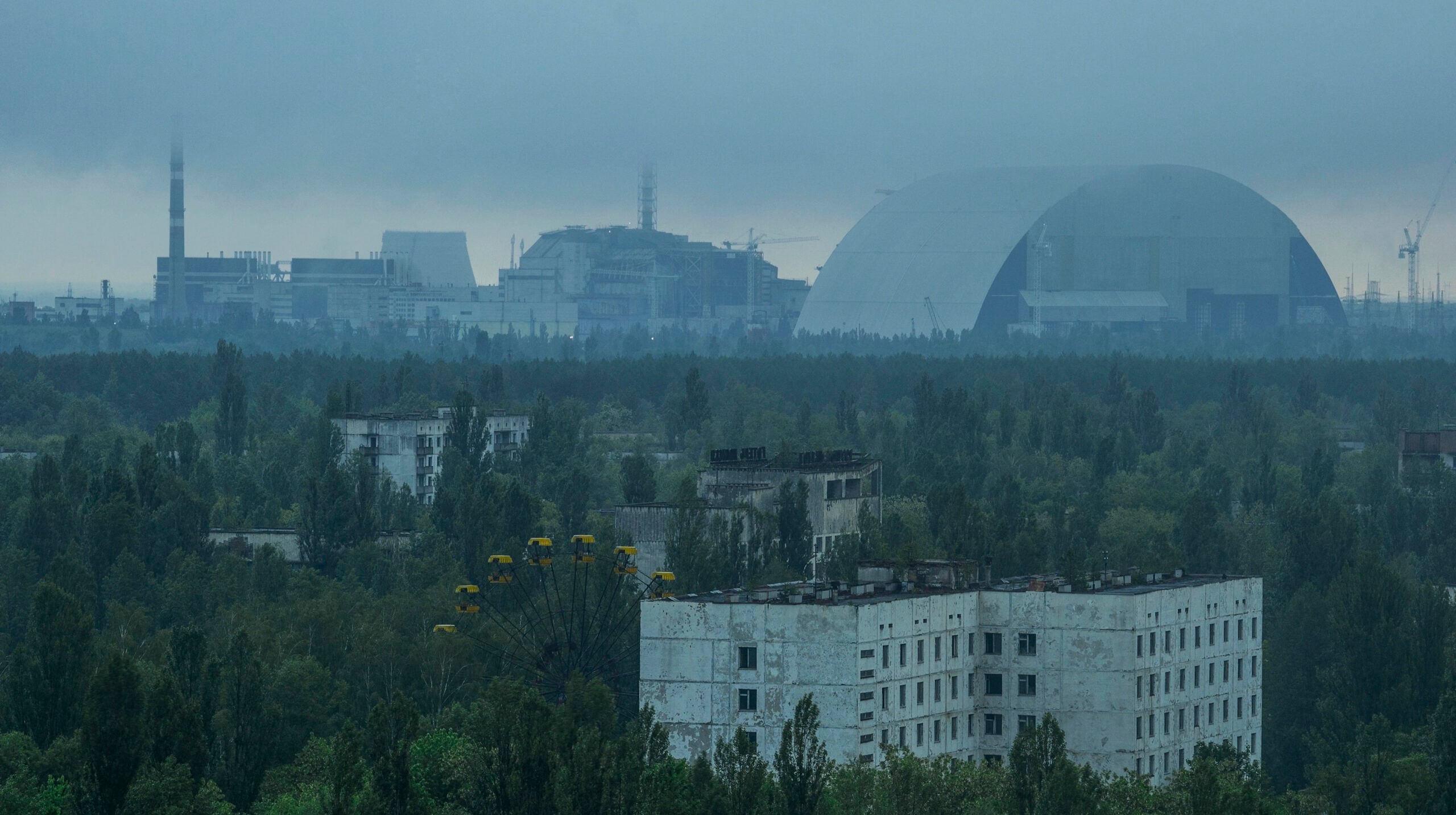
As another anniversary of the Chornobyl disaster approaches, much of the global conversation will return to familiar ground: a tragic accident, systemic failure, and the long shadow it cast over Ukraine and Europe.
What russia is doing today, however, is not history repeating itself. It is something far more deliberate — nuclear terrorism.
Chornobyl was a catastrophe caused by systemic failure: flawed design, poor decision-making, and a political system that prioritised control of information over public safety. The world paid the price, and so did Ukraine. It reshaped how the world understood nuclear risk. For decades after 1986, the dominant assumption was that the greatest danger came from accidents — from things going wrong within the system.
That assumption no longer holds. The risks we are seeing now are not the result of mismanagement or failure. They are being created, maintained, and exploited as part of a broader strategy — the deliberate use of nuclear risk as part of warfare.
Since the escalation of russia’s war in 2022, nuclear infrastructure has become part of the battlefield in ways that were previously considered unthinkable. russia is not just threatening Ukraine — it is testing how far it can push the boundaries of global tolerance.
The occupation of the Zaporizhzhia Nuclear Power Plant illustrates this shift most clearly. A civilian nuclear facility, designed and operated under strict international safety frameworks, has been turned into a military-controlled site. Military equipment has been placed on its territory, operations have been disrupted, and Ukrainian personnel are working under sustained pressure that was never accounted for in safety protocols. These conditions have included repeated damage to external power lines, forcing reliance on backup systems, as well as periods where the plant has come close to losing stable cooling capacity. Each of these incidents increases the risk of a serious failure, even without a direct strike on the reactor itself.
In this context, “nuclear terrorism” is not a rhetorical label but a functional description of how risk is being used — through the manipulation of nuclear facilities and the threat of a potential incident to influence behaviour, constrain decisions, and raise the cost of action for others. The threat does not need to be carried out to be effective. The possibility itself becomes a tool.
Recent assessments by the Institute for the Study of War have raised the possibility that a radiological incident could be engineered or exploited, with russia intending to blame Ukraine in order to influence international responses, weaken Western support, and shape the narrative around the war. Whether or not such scenarios materialise, the fact that they are being seriously assessed reflects how nuclear risk is now being considered within the logic of the war.
This is where the current situation diverges most sharply from Chornobyl in 1986.
At Chornobyl, the danger came from a system breaking down and a state that tried to conceal it. Today, the danger comes from the fact that nuclear facilities are being used to shape military and political outcomes. The risk is not only technical; it is strategic. It exists not just because something might fail, but because instability around nuclear sites is being maintained as part of the broader war dynamic.
At the same time, there are clear parallels that make the current situation particularly concerning. In both cases, decisions affecting nuclear safety are being made under conditions where transparency is limited and external oversight is constrained. The potential consequences extend far beyond Ukraine. Any major incident at a nuclear site would have cross-border environmental, economic, and humanitarian impacts, affecting neighbouring countries and potentially much of Europe. The fallout does not stop at national borders, does not distinguish between combatants and civilians, and does not remain contained.
That reality is not lost on those making decisions. It becomes a way to influence how far others are willing to go, how quickly they respond, and what risks they are prepared to take.
There is also an additional layer now: the presence of active hostilities around nuclear infrastructure.
This introduces a different category of risk altogether. Operating nuclear facilities under occupation, in proximity to military activity, and under conditions of coercion creates ongoing instability. It increases the likelihood of miscalculation, technical error, damage to critical systems, or deliberate escalation — any of which could have serious consequences.
Even without a major incident, the long-term effects are already taking shape. Established norms around nuclear safety are being eroded. A precedent is being set that nuclear infrastructure can be used as leverage in conflict. This is the first time a large-scale nuclear facility has been used in this way — as both a military asset and a form of deterrence. Other actors are watching closely, and what is tolerated now will inform future behaviour. This dynamic persists precisely because the consequences would be so severe.
International mechanisms designed to prevent nuclear disasters were not built for this. As a result, the international response remains limited in scope. Institutions like the IAEA play an important role in monitoring and reporting, but they are not equipped to deal with the militarisation of nuclear facilities in an active war zone or enforce safety conditions in this environment. They cannot compel an occupying force to act responsibly. There is a gap between recognising the risk and being able to address it effectively. The situation is therefore managed rather than resolved, with each new development testing the limits of what is considered acceptable.
The longer this continues without clear consequences or structural changes, the more it becomes normalised. What would once have been treated as unacceptable is gradually absorbed into the broader context of the war. That normalisation is, in itself, part of the problem.
There is also a tendency, especially outside Ukraine, to treat nuclear risk as abstract or distant — something hypothetical, unlikely, or too complex to engage with meaningfully. That is a mistake. Ukraine is currently absorbing a level of risk that affects everyone else. The absence of disaster so far should not be interpreted as stability. Rather, it reflects the efforts of Ukrainian personnel working under sustained pressure to keep systems functioning. But this is not a stable equilibrium. It is a high-risk environment being actively managed day by day.
If there is a central point that needs to be understood, it is this: nuclear risk is no longer only a byproduct of failure. It is being used — and that changes how it should be approached.
First, there must be clear recognition of what this is: not an unfortunate byproduct of war, but a deliberate strategy.
Second, nuclear safety must be treated as a non-negotiable global priority, not a secondary issue managed quietly through technical channels.
Third, there must be consequences for the use of nuclear infrastructure as a tool of coercion. Without consequences, the incentive structure remains unchanged.
Ultimately, this requires clearer recognition of the nature of the threat, stronger international attention, and a willingness to treat nuclear safety as a core element of global security.
Chornobyl showed the world what happens when nuclear risk is underestimated. The current situation is testing whether that lesson has been taken seriously. The question now is whether the world is prepared to act before history repeats itself in a far more deliberate form.
Photo: DepositPhotos
Latest news
 #LocalAction
Head of Ukraine’s community in Estonia: Narva isn’t Donbas, but Russia is testing the limits again

 #UWC news