

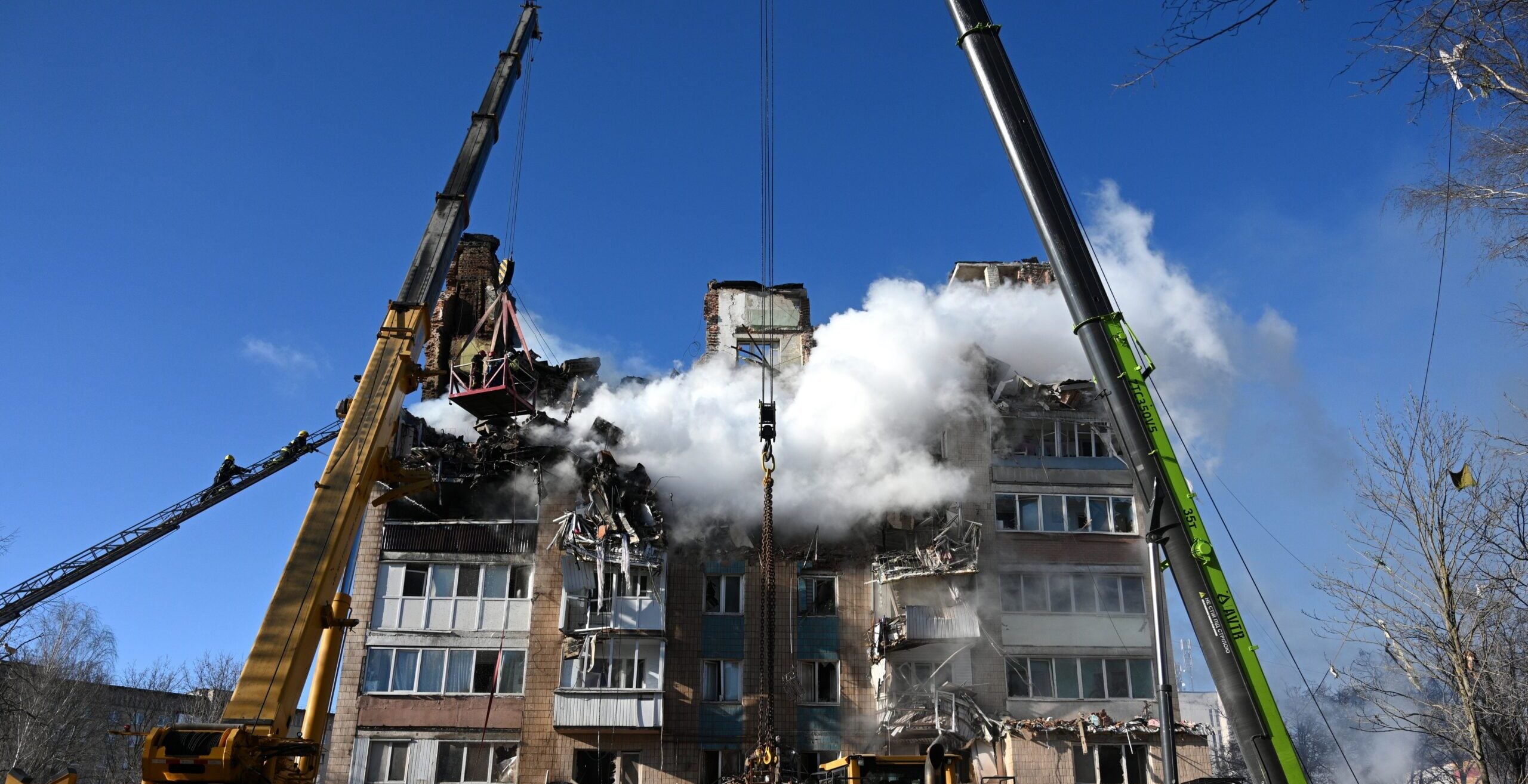


Russian airborne attacks in Ukraine killed 2,514 civilians and injured more than 12,000 in 2025, indicating a 31 percent increase compared to the previous year and the highest death toll since the start of the full-scale invasion, the UN Human Rights Monitoring Mission in Ukraine (HRMMU) reported.
“Our monitoring shows that this rise was driven not only by intensified hostilities along the frontline, but also by the expanded use of long-range weapons, which exposed civilians across the country to heightened risk,” Danielle Bell, head of HRMMU said
Ninety-seven percent of civilian deaths occurred in areas under Ukrainian control, with 63 percent of those killed living in frontline communities. Older adults, who often remain in areas of active fighting, were particularly affected.
The report also highlighted a sharp increase in casualties from short-range drones, which killed 577 civilians and injured more than 3,000.
“The expanded use of short-range drones has rendered many areas near the frontline effectively uninhabitable. As essential services shut down and infrastructure is destroyed, it has become too dangerous in some communities even to provide emergency medical care or evacuate civilians,” Bell said.
According to the UN, Russia intensified attacks with long-range weapons starting in June 2025. These strikes killed 682 civilians and injured nearly 4,500, a 65 percent increase over the previous year.
The deadliest attacks included a Nov. 19 strike on Ternopil, which killed 38 people, including eight children, and the attack on Kyiv on July 31, which killed 32, including five children.
In October and December 2025, Russian attacks on energy infrastructure caused significant damage, particularly in the Black Sea region of Odesa.
“The sharp increase in long-range attacks and the targeting of Ukraine’s national energy infrastructure mean that the consequences of the war are now felt by civilians far beyond the frontline,” Bell said.
Cover: Shutterstock