



Authors: Will Dixon, an Associate Fellow of the Royal United Service Institute specialising in cyber and international security issues, and Maksym Beznosiuk, a strategic policy specialist
Source: Atlantic Council
With the full-scale invasion of Ukraine set to enter a fifth year, there are growing indications that things are not going according to plan for Russian President Vladimir Putin. On the front lines of the war, Russia continues to suffer catastrophic casualties while failing to achieve any meaningful breakthroughs. Despite holding the battlefield initiative throughout 2025, the invading Russian army managed to capture less than 1 percent of additional Ukrainian territory.
Putin also has cause for mounting concern on the home front. The Russian economy is showing signs of strain amid sanctions pressure and other negative factors including falling oil prices and declining energy export revenues. Meanwhile, the recent US raid in Venezuela and subsequent seizure of a Russian-flagged oil tanker in the Atlantic Ocean have underlined how the war in Ukraine is diminishing Moscow’s ability to project power internationally.
This deteriorating picture is now fueling debate over how much longer Russia can maintain the current invasion. It is also raising more fundamental questions about the fragility of the Putin regime. Given the Russian state’s multiple twentieth century implosions, such speculation is inevitable. However, there is currently little to indicate that the country is close to repeating the collapses of 1917 and 1991.
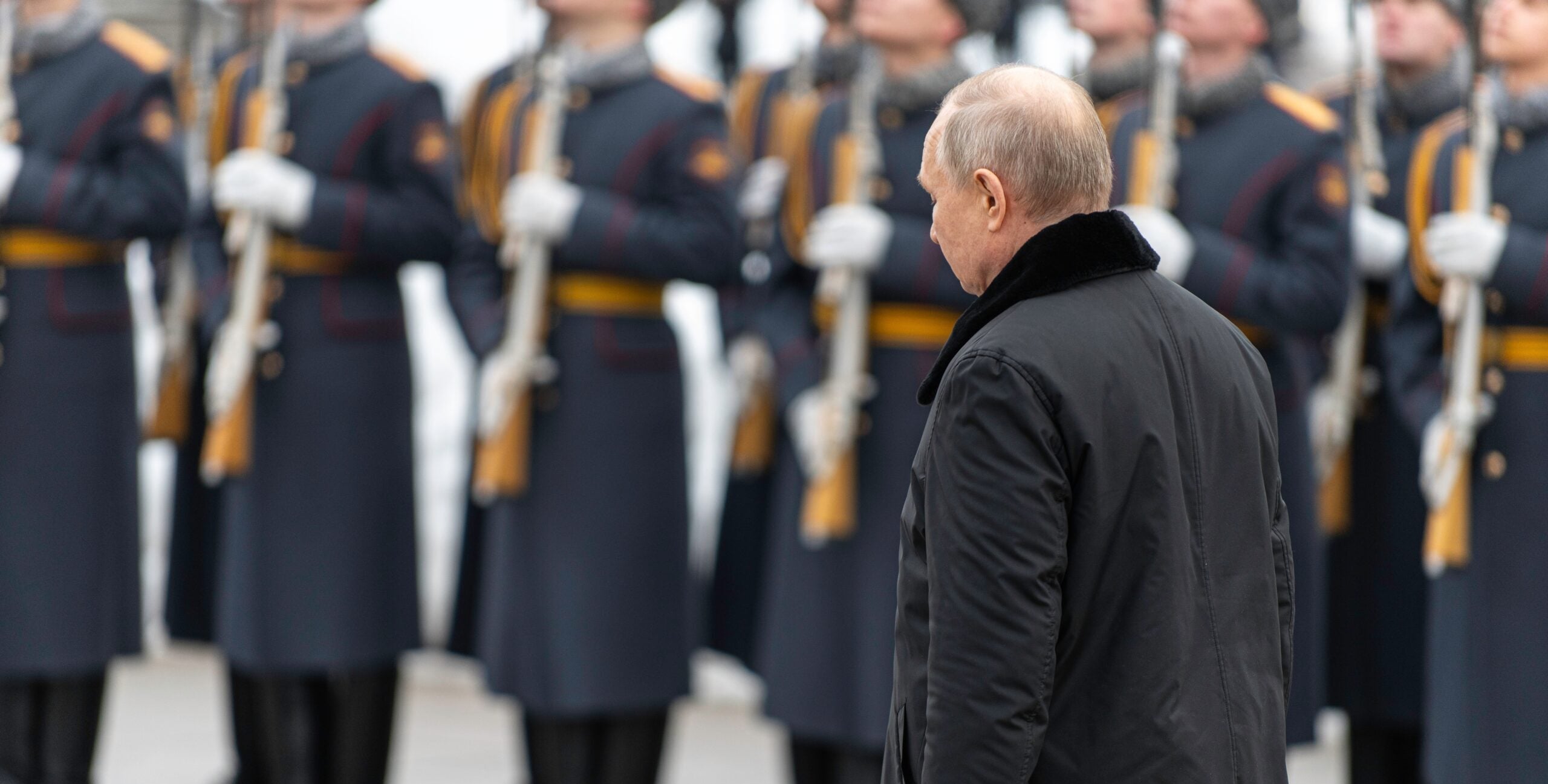
Most studies of autocracies have concluded that the biggest single threat to regime stability comes from existing elites. Putin is apparently well aware of this and has worked hard to minimize the danger of a potential palace coup. While dissent is still possible among Kremlin powerbrokers, Russia’s current ruling class is too closely tied to Putin to mount any serious challenge. One of the Russian ruler’s longstanding allies, Dmitry Kozak, reportedly opposed the full-scale invasion of Ukraine and advocated for de-escalation. But rather than triggering open resistance, this disagreement led to Kozak’s quiet removal from office.
There have also been reports of disagreements within the Kremlin over the handling of the war economy, with diverging opinions on key issues such as financial policy and attracting international investment. However, these differences of opinion have not translated into a serious public split.
The single biggest wartime test for the regime so far came in summer 2023 with the Wagner mutiny. This dramatic episode exposed a potential regime vulnerability, but the uprising ultimately proved short-lived due to a lack of defections from within the Russian military and political establishment.
Crucially, while there was little evidence of any rallying around the flag during the brief mutiny, no major security institutions or regional authorities sided with the Wagner rebels. Instead, most chose to wait rather than commit. Once the initial threat had been contained, Putin was able to reassert his authority. This was widely seen as vindication of the highly personalized style of government established during Putin’s reign, with no rival power bases capable of presenting a direct challenge.
Cover: Shutterstock
Latest news
 #LocalAction