

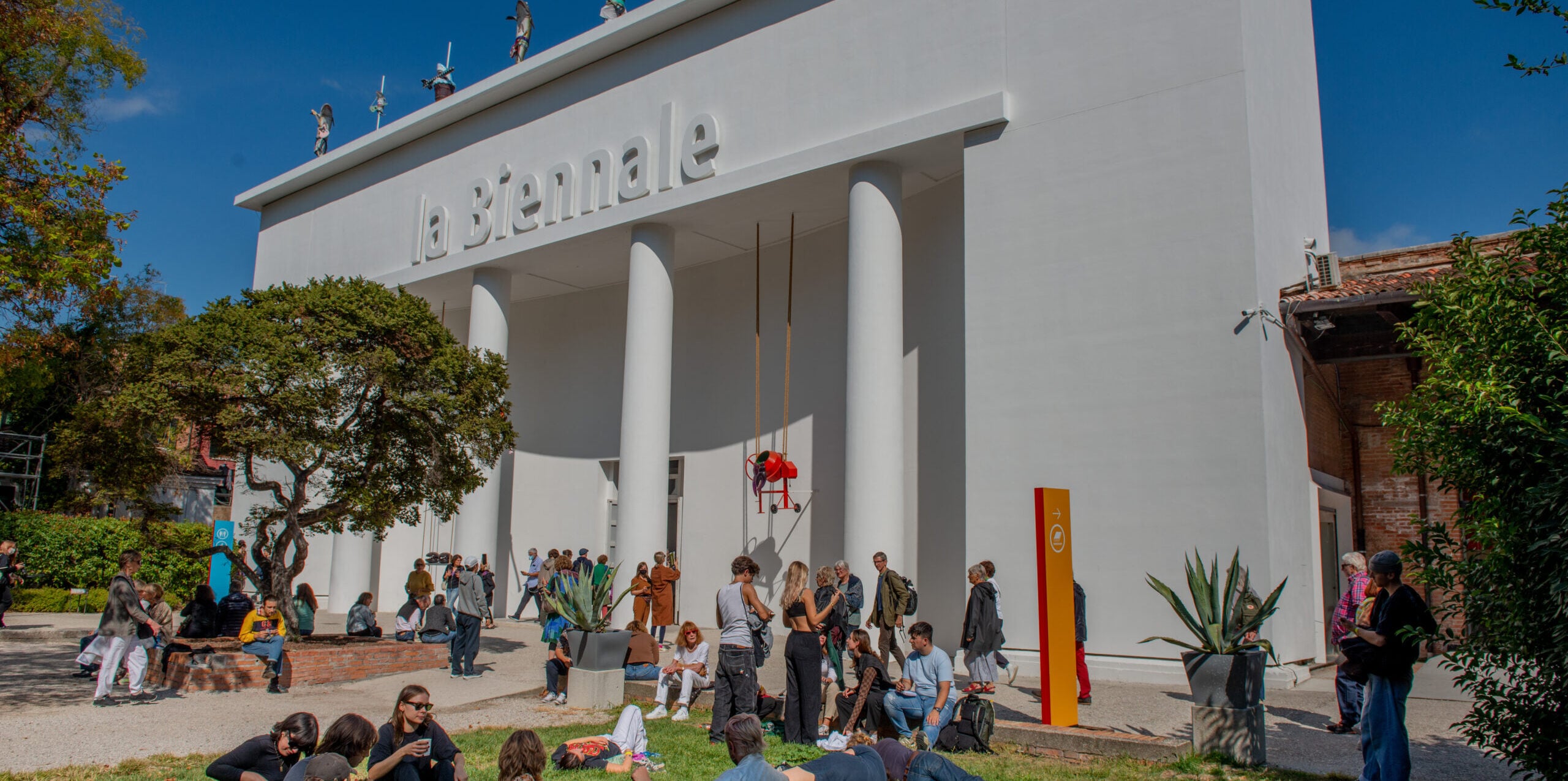


Russia is returning to the Venice Biennale, triggering a wave of international outrage. Organizers announced that Moscow will present a pavilion led by Anastasia Karneeva, the daughter of an FSB general. Despite a two-year absence, the aggressor’s return has sparked widespread protests: 22 countries have already signed a statement opposing Russia’s participation, and the UWC President has joined the international call to block Russia from taking part.
Olena Kim, Vice President of the Network of Associations for Ukraine (NAU) in Italy, an associated member of the UWC, says that slogans such as “art beyond politics” are a trap that masks attempts to normalize a terrorist state. What follows are her words.
Italian society today is deeply divided. On one side, there is sincere support for Ukraine. On the other, there is the strong and sophisticated influence of Russian propaganda, which uses culture as a tool for rehabilitation. For Ukrainians, slogans about “art beyond politics” and “freedom from censorship” increasingly look like a convenient cover for avoiding moral responsibility and returning to business as usual with Russia.
The Biennale: Fighting “neutrality”
Russia’s return to the Venice Biennale has triggered protests. The Ukrainian community and European diplomats have sent letters and petitions to Italy’s Ministry of Culture and the exhibition’s leadership. Among the signatories are influential politicians, including European Parliament Vice-President Pina Picierno, as well as internationally known artists.
The Network of Associations for Ukraine (NAU) has also appealed to the Ministry of Culture and the Biennale’s leadership, calling on them to prevent the appearance of a Russian pavilion.
Although the organizers say their influence over such decisions is limited, these letters carry symbolic weight. They demonstrate solidarity, attract media attention and create pressure on cultural institutions.
Italy’s Ministry of Culture has clearly spoken out against Russia’s participation, recognizing the moral and political responsibility involved. At the same time, cultural institutions invoke “neutrality” and “autonomy,” seeking to preserve their freedom to make creative decisions. Yet this autonomy is not absolute: the Biennale is funded by the Italian state and the EU, and its organizers are accountable to the public and to sponsors.
National pavilions are formed by participating countries, and commercial and financial interests often influence decisions. Russia’s presence can be advantageous through networks of partners, sponsors and collectors, even if the Biennale does not formally accept funding from Russia.
The informational and propaganda dimension also matters. Russian propaganda promotes the image of “great artists,” allowing some institutions to justify Russia’s presence with cultural arguments while avoiding the moral question.
For example, a planned concert by Russian ballerina Svetlana Zakharova in Rome in March 2026 has raised concerns. She is a member of the United Russia party, a former State Duma deputy and a trusted representative of Vladimir Putin. For Ukrainians, this shows that moral choices often give way to financial or reputational interests, and that culture cannot exist in a vacuum.
Not only the Biennale
The problem of normalizing the aggressor goes beyond theater stages or art galleries. It affects all areas where a country’s international image is shaped, and sport plays a major role here. The Winter Paralympics in Milan and Cortina have become another flashpoint, as they set a troubling precedent — the return of the Russian flag and anthem to the global stage.
Local communities actively help Ukrainian refugees and support humanitarian initiatives. At the same time, the appearance of the aggressor’s symbols has created a strong emotional dissonance. For many, it looks like an unacceptable mixing of sport and war.
Society is divided. Some argue that “sport should stay out of politics.” Others say that Russia’s participation under its national flag amounts to legitimizing the aggressor. Some countries limited broadcasts, and some delegations boycotted the opening ceremony. The Russian delegation was met with silence or restrained applause, while other countries received full support.
Andrew Parsons, president of the International Paralympic Committee, said that “what happened on the battlefield does not matter” for wounded Russian soldiers competing in the games. For Ukrainians, that position is impossible to accept. Sport cannot be separated from what is happening at the front. Russian Paralympians may have taken part in bombardments or supported their country’s aggressive policies.
We show Italians concrete stories of cities and people — Bucha, Mariupol, Kharkiv — through photographs, videos and the testimony of refugees. This helps people understand that “athletes from Russia” represent an aggressor state, and that sport does not exist outside moral and political reality.
We organize meetings and discussions in schools and cultural centers and work with the media so that these stories reach a wider audience. This helps Italians see the truth behind the sporting narrative and prevents the normalization of Russia’s presence on international platforms.
Culture as a battleground
Today, Russian culture is used not only as artistic heritage but also as a tool of the Kremlin’s political influence. In Italy, there is a longstanding appreciation for classical figures such as Pushkin, Tchaikovsky and Dostoevsky, as well as for productions like Swan Lake. Yet these performances are often backed by state institutions and propaganda. Examples include Casa Russa Roma and other official centers that organize lectures, exhibitions, courses and cultural events, shaping a positive image of Russia while diverting attention from its aggression.
The Ukrainian community in Italy pushes back through lectures, festivals, cultural exhibitions and creative projects for children, presenting real stories of the war. Festivals, concerts, art events and acts of remembrance — such as the event Souls of Mariupol, scheduled for March 14 in Milan — help Italians understand the difference between the value of art and the political use of culture.
An effective strategy includes:
- constant communication with the media through interviews, open letters and personal stories
- peaceful public actions and flash mobs that show public opposition to normalizing the aggressor
- cooperation with local allies — artists, journalists, politicians and civic organizations
- culture as a response to propaganda through festivals, concerts, exhibitions, children’s projects, poetry and music
Remembering the victims of the war helps European societies grasp the scale of the aggression. The advice to Ukrainians in different countries is simple: stay visible, stay consistent and work with local allies so the world does not forget that the war continues and that culture cannot be used to excuse an aggressor.
Cover: DepositPhotos