




by Dzvinka Kachur, UWC Regional Vice President for Africa and co-founder of the Ukrainian Association of South Africa (UAZA)
Source: Ukrainska Pravda
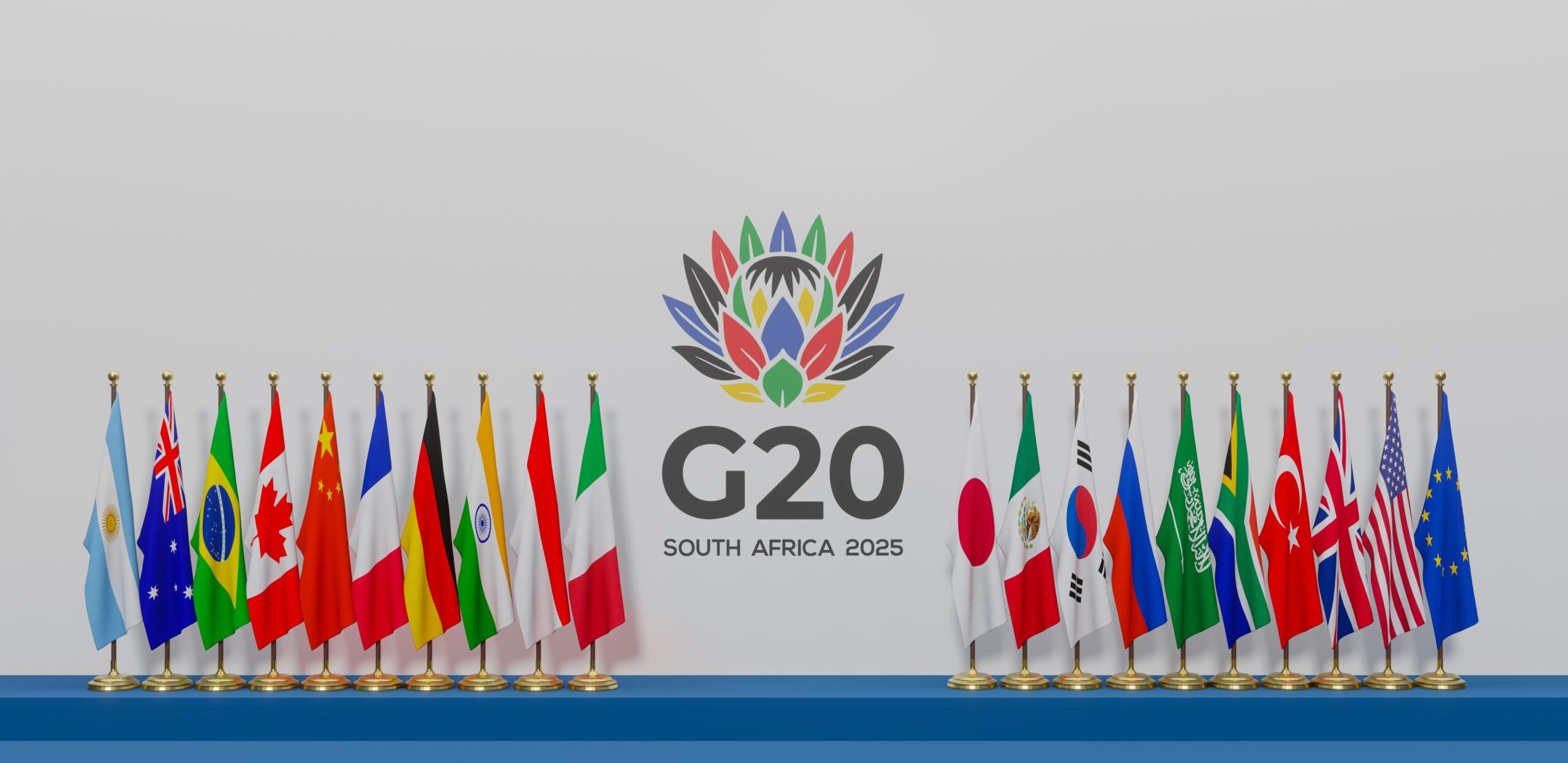
A few weeks ago, South Africa hosted the G20 summit. It was the first time the event took place on the African continent and undoubtedly marked one of the country’s most significant events of the year. Yet Ukrainian media has been reporting extensively on the South African government’s arrests of individuals linked to former President Jacob Zuma’s party, who were allegedly recruiting members to support Russia’s war.
South Africa is one of the continent’s largest economies and a country with an influential voice in international politics. Its actions often appear contradictory: from joint exercises with Russia during the anniversary of the full-scale invasion of Ukraine, to inviting the president of Ukraine for his first official visit and pledging support for the return of deported Ukrainian children.
Ukraine faces the challenge of building sustainable relations with a country where three capitals coexist, nearly 60 million citizens live, and 12 official languages are spoken.
These issues were recently discussed at the Kyiv-Mohyla Academy during the presentation of a study that was commissioned by the Ukrainian Institute and conducted by the International Institute of Education, Culture and Diaspora Relations (IIEC/MIOK) and the Ukrainian Association in South Africa, titled “South Africa: Cultural Environment and Local Contexts.”
This study represents one of the first systematic efforts to understand contemporary South African culture and avenues for cooperation.
The study highlights the key factors that shape South African culture, the country’s rich academic and cultural environments, and ways to engage with them.
It also explores why South Africans are united by rugby (“braai culture”) and how their national team became champions six times in the Rugby World Cup. While the article does not summarize the study, it provides a concise analysis of Ukraine–South Africa cooperation and how Russian aggression has reshaped this relationship.
Shared experience in the struggle for freedom
Nelson Mandela’s name is well-known in Ukraine as a symbol of the fight against apartheid. Even during Soviet times, Ukrainians offered political support to South African freedom fighters. After the UN Committee Against Apartheid was established, Ukraine consistently co-chaired the committee.
Diplomatic ties between the two countries were established in 1992, as both embarked on their own democratic transformations. However, recent experience shows that a shared history of struggle does not automatically guarantee understanding. Dialogue and mutually beneficial partnerships remain essential.
Early cooperation and cultural initiatives
In the 1990s and 2000s, Ukrainian interest in Africa remained limited. Only a few enthusiasts advanced cooperation, such as the creation of a Ukrainian museum in Riversdale in 2010, initiated by Mayor Chris Tate in partnership with the sister city of Voznesensk.
The events of 2014 transformed Ukraine and its diaspora. Public diplomacy strategies began to take shape: the Information Security Doctrine and the Action Plan for Promoting Ukraine Abroad were adopted, and the Ukrainian Institute was established.
At the same time, Ukrainian communities abroad began to organize more actively amid protests and humanitarian initiatives. In 2017, the NGO Ukrainian Association in South Africa registered and organized the first Ukrainian Days in South Africa, including documentary screenings, lectures, literary exhibitions, and the inaugural Ukrainian Festival in Cape Town.
Ukrainian artists supported these events: Oksana Zabuzhko gave an opening lecture on Ukrainian literature, poets Hanna Yanovska and Oksana Kutsenko read their work, and the band Dyvyna performed Donetsk folk music. At the time, representatives of the Ukrainian Embassy participated more as guests than partners.
While Ukraine’s public diplomacy had primarily focused on Europe and North America, the mechanisms developed allowed embassies worldwide to engage effectively with Ukrainian communities. In South Africa, limited financial support combined with strong community enthusiasm enabled dozens of projects that brought Ukrainians and South Africans closer together. These initiatives ranged from annual Holodomor commemorations to cultural projects such as the theatrical adaptation of Lesya Ukrainka’s Forest Song and the creation of a Ukrainian mural in Cape Town.
A new phase after 2022
Russia’s full-scale invasion in 2022 once again transformed Ukrainians and global perceptions of Ukraine.
It revealed the weakness of Ukraine’s contacts with Africa but also prompted a new strategic approach. In 2022, the Ministry of Foreign Affairs adopted Ukraine’s first Ukraine–Africa Strategy, followed by a communication strategy focused on the continent. Ukrainian officials began actively visiting South Africa, and the Ukrainian Institute launched cooperation with three African countries, organizing a major charity concert in support of deported children, featuring the Ukrainian band YAGODY (berries), bandura player Anastasiia Voitiuk, and South African artists, including the renowned band The Soul. European partners also facilitated connections through supporting visits by South African journalists, expert exchanges, and advocacy events with Ukrainian experts and human rights defenders.
Cover: Shutterstock
Latest news
 #LocalAction