



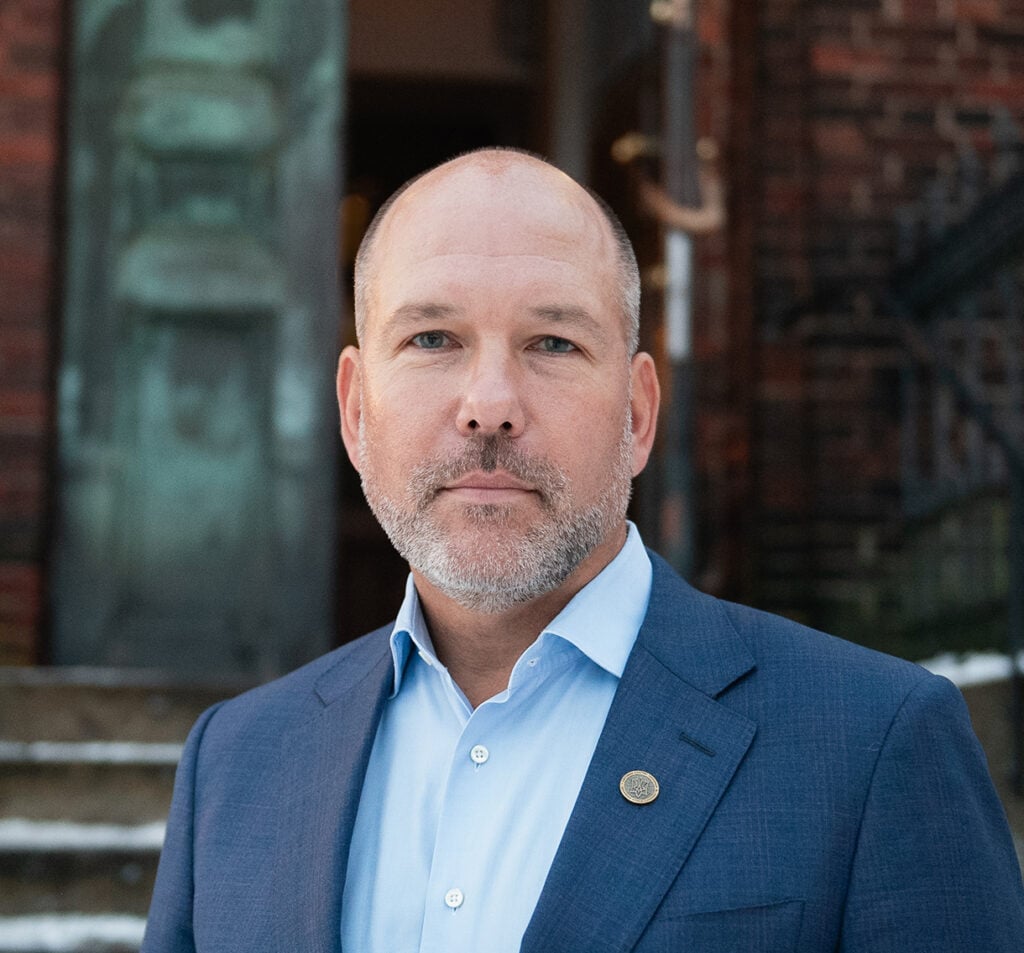
 Paul Grod, President, Ukrainian World Congress (UWC)
The Munich Security Conference (MSC) remains one of the world’s most consequential gatherings of political and military leadership. It brings together global decision-makers from 120 countries responsible for security policy, alongside senior military officials and a growing cohort of business leaders who understand geopolitical risk not as an abstraction, but as a defining factor of economic and strategic planning. MSC 2026 once again demonstrated that this forum is where global power dynamics are debated openly and where narratives are contested.
For the second consecutive year, the Ukrainian World Congress was invited to participate, representing the interests and voice of the global Ukrainian community, some 25 million people worldwide. This continued inclusion reflects both the relevance of Ukraine to global security and the recognition that the Ukrainian diaspora plays an essential role in shaping public opinion, political will, and long-term resilience across democratic societies.
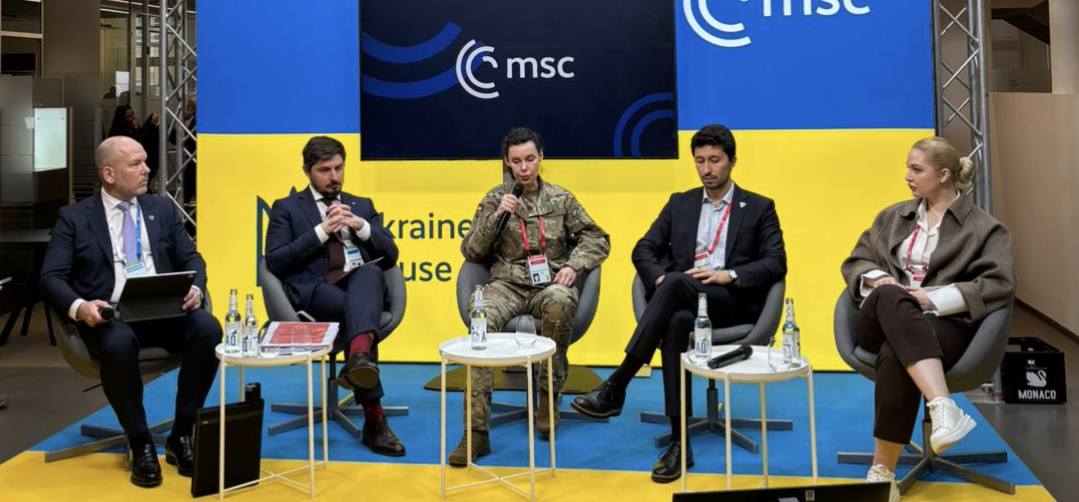
A historic milestone was reached this year with the establishment of a prominent Ukraine House as a core feature of the conference. For the first time in the MSC’s more than 60-year history, Ukraine had a central, dedicated space embedded within the conference ecosystem. In addition to Ukraine being the focus on the main stages of MSC, Ukraine House became the focal point for many Ukraine-related discussions, briefings, and exhibitions. Its impact was immediate and profound.
At the heart of the exhibition stood a 20-foot Shahed drone, an ominous, physical representation of Russia’s near-daily mass attacks against Ukrainian cities and civilian infrastructure. The drone’s presence stripped away any remaining abstraction about the nature of this war. Facing it were several advanced Ukrainian air and land-based drone systems, highlighting Ukraine’s extraordinary innovation under fire. At a nearby location, the U-Force team showcased the highly effective Muhura sea drone, a system that has played a decisive role in destroying Russian naval assets and effectively pushing the Russian navy out of the Black Sea. The contrast was stark, instruments of terror confronted by tools of defense, ingenuity, and survival.
Inside the main halls of MSC, Ukraine was a recurring topic across nearly every panel and discussion. Yet, one moment was particularly jarring. U.S. Secretary of State Marco Rubio made no meaningful reference to Russia’s war against Ukraine. While he offered symbolic gestures of rapprochement with Europe, remarks that surprisingly drew a standing ovation, many observers interpreted these comments as largely cosmetic. For many in attendance, this appeared less a reaffirmation of transatlantic unity and more an attempt by Washington to manage and shape Europe’s strategic posture without addressing the core security challenge unfolding on its eastern flank.
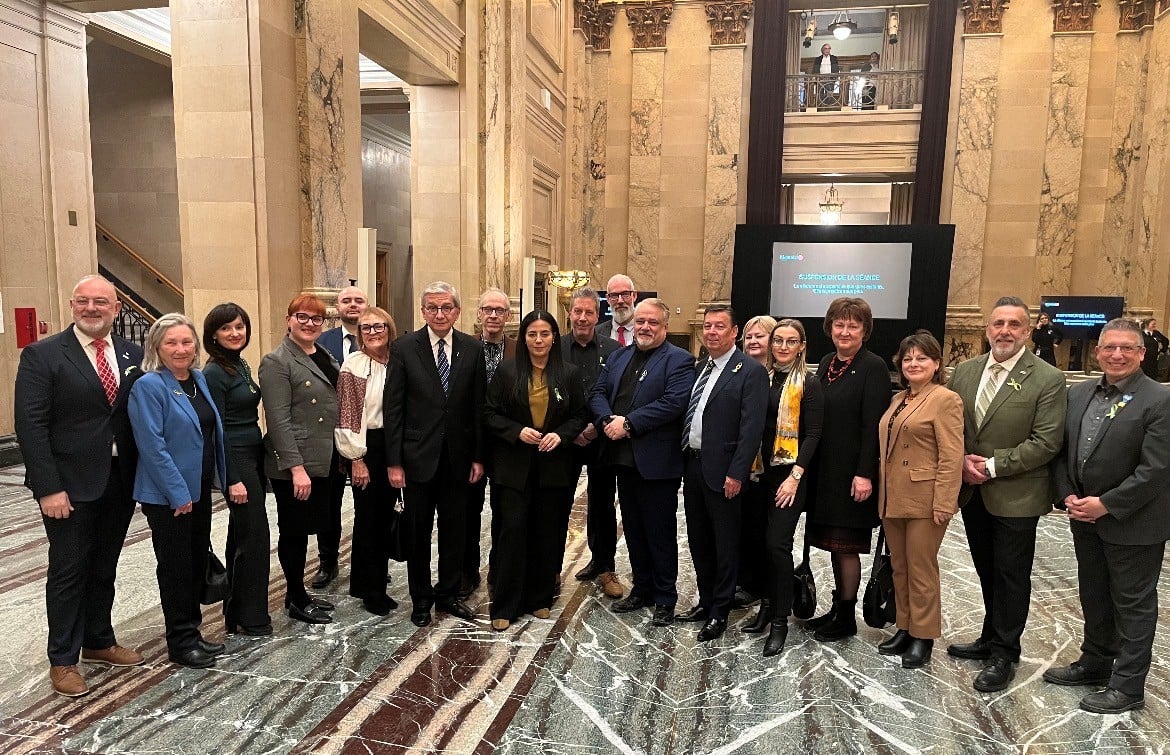
Against this backdrop, UWC’s engagement was both active and substantive. We worked closely with the Ukrainian delegation and held meaningful discussions with Foreign Minister Andrii Sybiha and numerous senior government officials. Beyond Ukraine’s official representatives, I engaged in extensive side discussions with senior transatlantic leaders, including U.S. Senators and Members of Congress, Canada’s Minister of National Defence, EU officials from several member states, the EU Special Representative for Human Rights, and the Council of Europe’s Representative on Ukrainian Children among dozens of parliamentarians, government officials, media, civil society leaders and policy experts.
Civil society was also strongly present. International and Ukrainian NGOs organized focused discussions on the confiscation of Russian state assets, the forced abduction of Ukrainian children by Russia, and the strategic importance of Ukrainian veterans as a pillar of future European security. These conversations underscored that accountability, justice, and long-term stability must remain central to any serious security architecture for Europe.
As President of the Ukrainian World Congress, I also prioritized engagement with the Ukrainian community in Munich and the surrounding regions. On Sunday, February 15, I convened a deeply engaging town hall that brought together community leaders, activists, and concerned citizens. Their commitment, clarity, and resolve reaffirmed the strength of our global community. Following productive meetings with Ukrainian leaders in Germany, UWC agreed to co-organize a Forum of Ukrainians in Germany in the fall of 2026, an important step in strengthening coordination, advocacy, and community resilience.
MSC 2026 made one reality unmistakably clear: Ukraine has friends in the capitals of every civilized nation. The challenge ahead is not solidarity in words, but consistency in action. Translating commitments into swift and effective delivery of military and economic support is critical to saving Ukrainian lives from daily Russian drone and missile attacks on civilians and civilian infrastructure. Steering Europeans away from populist political forces that are largely pro‑Russian will be a key objective for the UWC, alongside ensuring that our communities worldwide continue to mobilize strong support among voters and political leaders in their countries. These efforts are inseparable. The stakes for Ukraine, for Europe, and for the democratic world could not be higher.
Let’s get to work. Now is the moment to act. До перемоги!
Slava Ukraini!
Latest news
 #LocalAction