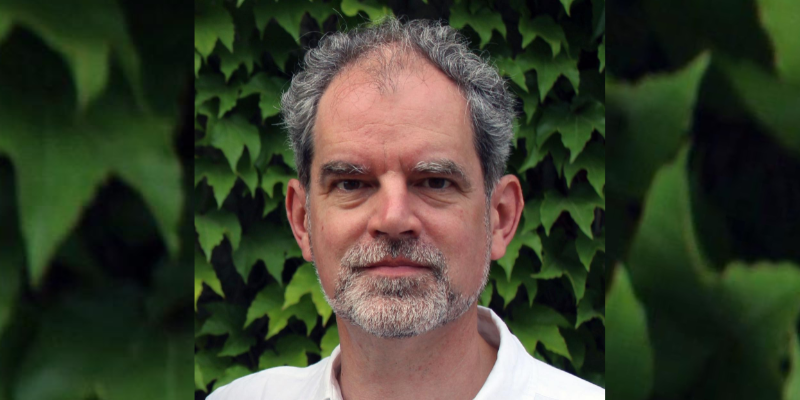



by Vitaly Portnikov, a well-known Ukrainian journalist, political commentator, and analyst, as well as a laureate of the Shevchenko National Prize of Ukraine
Source: Portnikov on Facebook
Amid ongoing negotiations supposedly aimed at ending the Russian-Ukrainian war, Russian President Vladimir Putin mentioned the inevitability of “liberating” Donbas and “Novorossiya” by Russian forces during a press conference in New Delhi.
At first glance, this statement may come as a surprise. Until recently, Putin had spoken exclusively about the need for Ukrainian troops to withdraw from Kyiv-controlled territory in Donetsk Oblast, even calling this the main condition for ending the war. American envoys have focused their talks with the Russian president on this issue, and former U.S. President Donald Trump repeatedly endorsed the idea of Ukraine withdrawing troops from Donbas, stressing that Russia would “take it anyway.” Yet now, Putin’s rhetoric has resurrected the long-forgotten term “Novorossiya” — proving, as the saying goes, that appetite grows while eating.
Why is Putin now bringing up “Novorossiya”? First, he sees any negotiations with him as a sign of weakness. Seeking compromise is, in his view, an even greater weakness. If the Americans are genuinely willing to pressure Ukraine to withdraw from Donbas, why not include other Ukrainian territories on his “wish list”?
Second, the term “Novorossiya” is politically vague, giving Putin enormous flexibility for making new demands. He could declare the occupied and annexed areas of Kherson and Zaporizhzhia as part of “Novorossiya” and demand not only Ukraine’s withdrawal from Donbas but also from these regions. He could even avoid insisting on troop withdrawals altogether, framing it as a temporarily frozen conflict while emphasizing that Russia will eventually reclaim these territories — keeping the “sword of Damocles” of war hanging over Ukrainians, even in the unlikely event of a ceasefire.
The concept of “Novorossiya” could be expanded further. Putin previously referred to the “Bolshevik gifts” to Ukraine in his 2014 Crimea annexation speech. On the night of February 23–24, 2022, he spoke of the need for “self-determination of the peoples of Ukraine.” Which peoples? For example, the “people of Donbas.” Similar “peoples” could be invented in any Ukrainian region under Russian occupation to justify declaring them “independent states” and eventually annexing them. This was the core of Putin’s blitzkrieg plan: remove legitimate Ukrainian authority in Kyiv and force his puppets Viktor Yanukovych and Viktor Medvedchuk to hold a series of “referendums” in designated oblasts — the same territories referred to as “Novorossiya,” a term first mentioned in Russia in August 1991. Putin’s political mentor Anatoly Sobchak also spoke of the “Bolshevik gift,” and the Kremlin under both Yeltsin and Putin spent millions supporting pro-Russian forces and sentiment in eastern and southern Ukraine. The possibility of annexation was never forgotten; it was only assumed to be quick and easy.
The large-scale annexation plan in 2014 had to be postponed. Putin’s 2022 blitzkrieg also failed — but this does not mean he abandoned his plan. He simply delayed it and decided that the instrument for annexing Ukrainian lands would no longer be a swift offensive, but a prolonged war of attrition. He revived the rhetoric of “Novorossiya” now because he believes the Americans are wavering, and that he can demand anything.
And what about the peace process, which has been so widely discussed in recent weeks? For Putin, it does not exist. His recent statements make it clear that he sees no genuine peace process and is using visits from American envoys solely to buy time, continue the war, and strengthen his territorial and political demands.
Cover: Shutterstock