



On the eve of Easter, Pavlo Sadokha, Vice President of the Ukrainian World Congress (UWC) for Southern Europe and President of the Union of Ukrainians in Portugal (UUP), shares practical guidance on how to counter Russian influence operating through churches.
Dmytro Shatruk, Vice President of the Association of Ukrainians in the Canary Islands, also speaks about his community’s experience pushing back against these efforts – and the methods that have proven effective in protecting Ukrainian interests abroad.
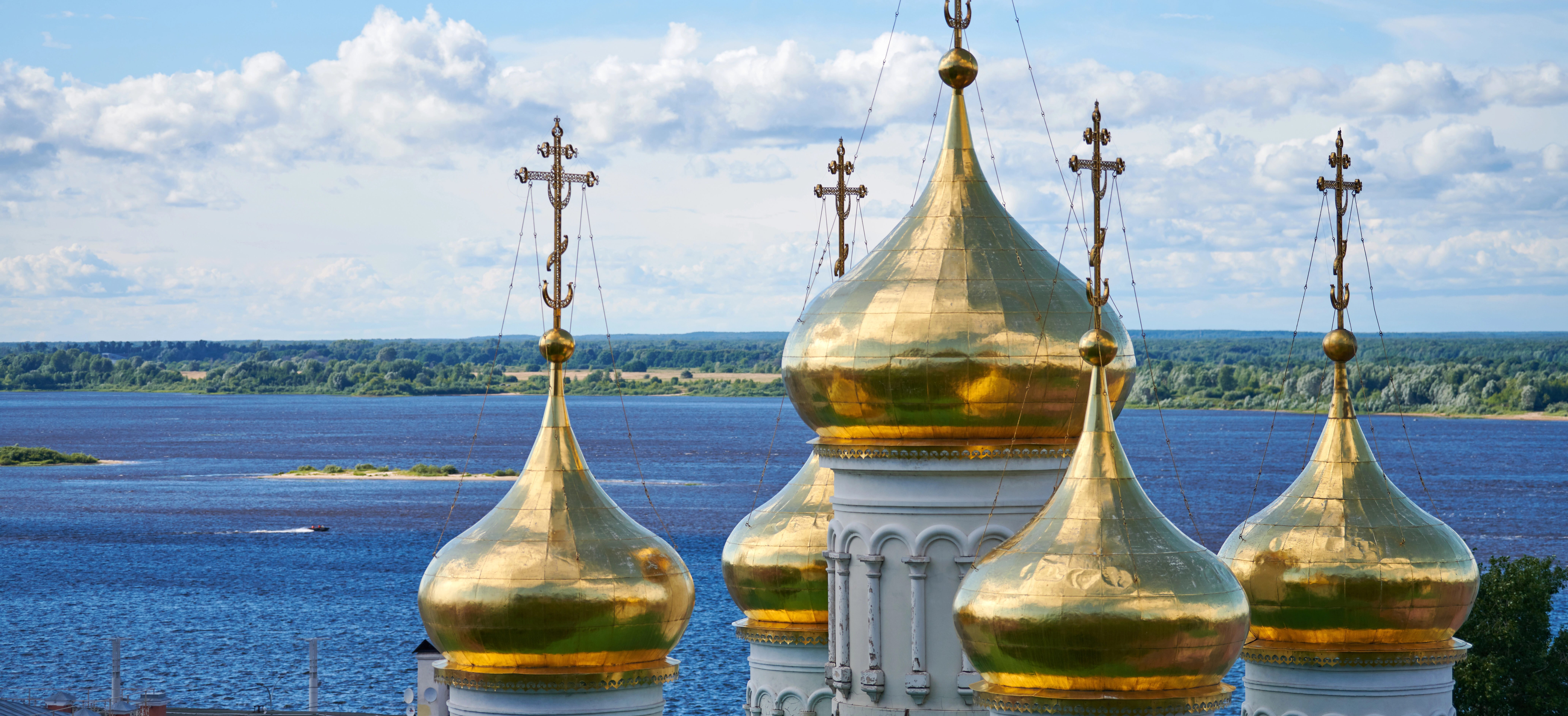
The Russian Orthodox Church (ROC) has long been used by the Kremlin as a tool of influence among Ukrainians abroad. Operating under the cover of religious mission, it in practice promotes Kremlin narratives.
How the Russian church operates
Abroad, the Russian church is not just a place of worship but a tightly controlled hierarchy. In Portugal, for example, it is subordinate to a ROC bishop responsible for the entire Iberian Peninsula.
“Before 2014, there were only two ROC parishes in Portugal. After the start of Russia’s full-scale aggression, there are now 17 permanent parishes and four temporary ones. There simply aren’t that many Russians here. These parishes are being built largely around displaced Ukrainians. They operate very subtly, presenting themselves as neutral, but during services they push pro-Putin messaging,” Sadokha says.
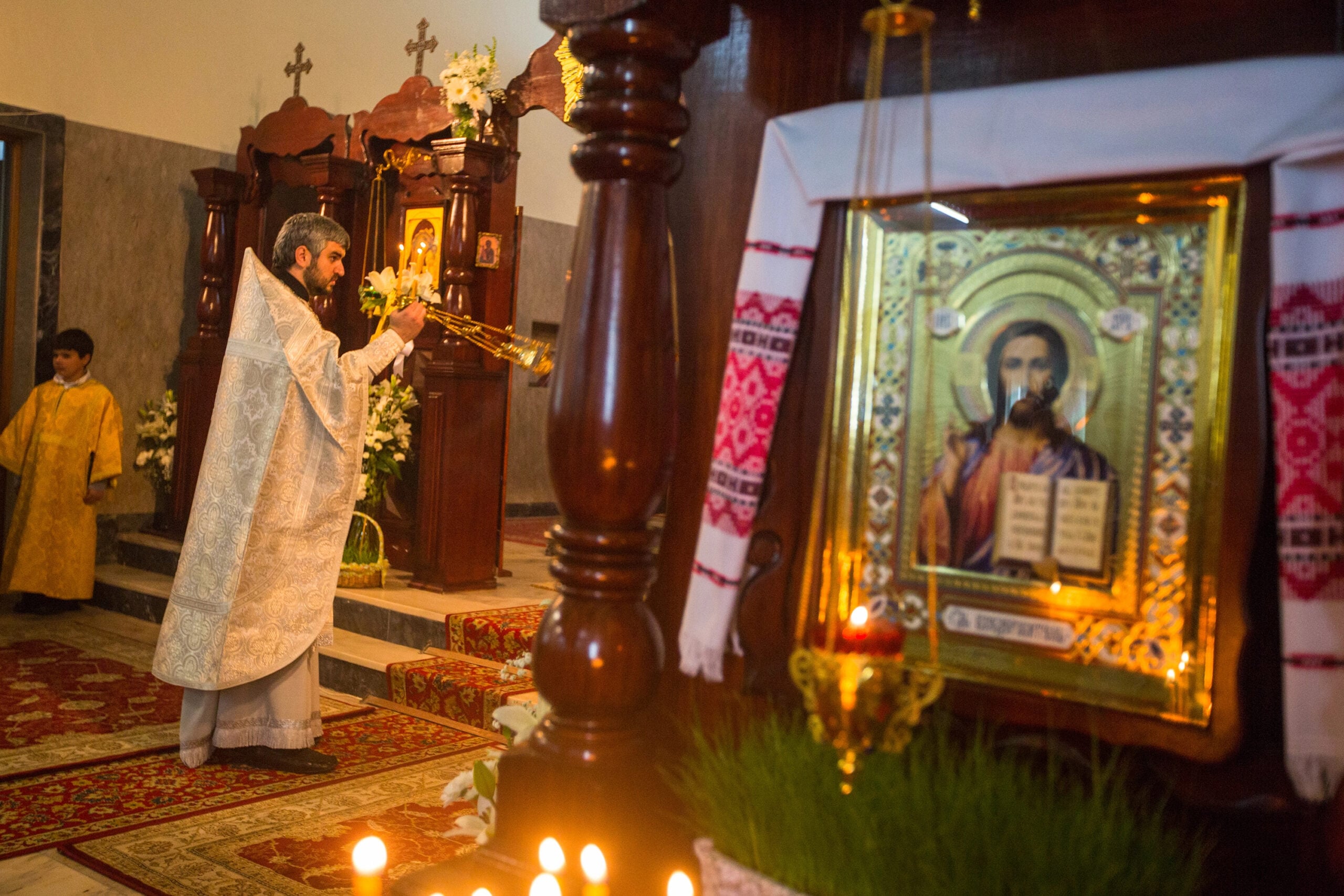 The danger is in the marginalization of Ukraine and in the influence on children. ROC priests often depersonalize the war, framing it as a “conflict caused by human sin,” which removes responsibility from the aggressor. At the same time, parish schools promote the ideology of the “Russian world,” shaping pro-Russian views from an early age.
Shatruk says that when Russia declared the war against Ukraine “holy,” the mask fully came off.
“They claim we are all ‘one Russian people,’ and that Ukrainians are simply ‘bad Russians.’ Our community is told directly that the Orthodox Church of Ukraine are ‘heretics.’ This is a real religious war. They’re building a massive church in Tenerife on land granted free of charge for 50 years. This is not just a church – it’s an extension of the Russian state,” he says.
Why it matters
In March 2024, the Russian People’s Council – an organization under the ROC – declared the full-scale invasion of Ukraine a “holy war,” a position endorsed under the leadership of Patriarch Kirill of Moscow.
In April 2025, Ukrainian intelligence reported that the Kremlin had appointed new ROC representatives to promote the “Russian world” ideology under the guise of religious activity.
Investigations, including reporting by The Insider in October 2025, indicate that the Russian state uses the church and so-called “miracle-working” icons as cover for intelligence operations and criminal networks to expand its influence in Ukraine and abroad.
How to stop provocations
One of the most striking successes of the Ukrainian community in Portugal was preventing the removal of children to occupied Crimea.
Sadokha recounts a case in Albufeira, where a Russian priest announced a contest with a vacation trip to Crimea as the prize. The community responded immediately, sending official appeals to the Portuguese government and relevant authorities. The trip was ultimately blocked.
As practical advice, Sadokha recommends grounding appeals in Ukraine’s official position. In August 2024, Kyiv adopted a law restricting religious organizations linked to Russia, giving communities a legitimate basis for action. This is no longer just activism – it is state policy.
When there is no Ukrainian church
One of the biggest challenges for Ukrainians abroad is the lack of physical spaces for worship in their own language, Shatruk explains. The ROC exploits this vacuum, drawing people into its often well-funded churches.
“We understand that people arrive and intentionally look for a church. Since Tenerife does not yet have a parish of the Orthodox Church of Ukraine or the Ukrainian Greek Catholic Church, we are actively working to create our own space. We call it a ‘Ukrainian House of Prayer’ – our own church,” Shatruk says.
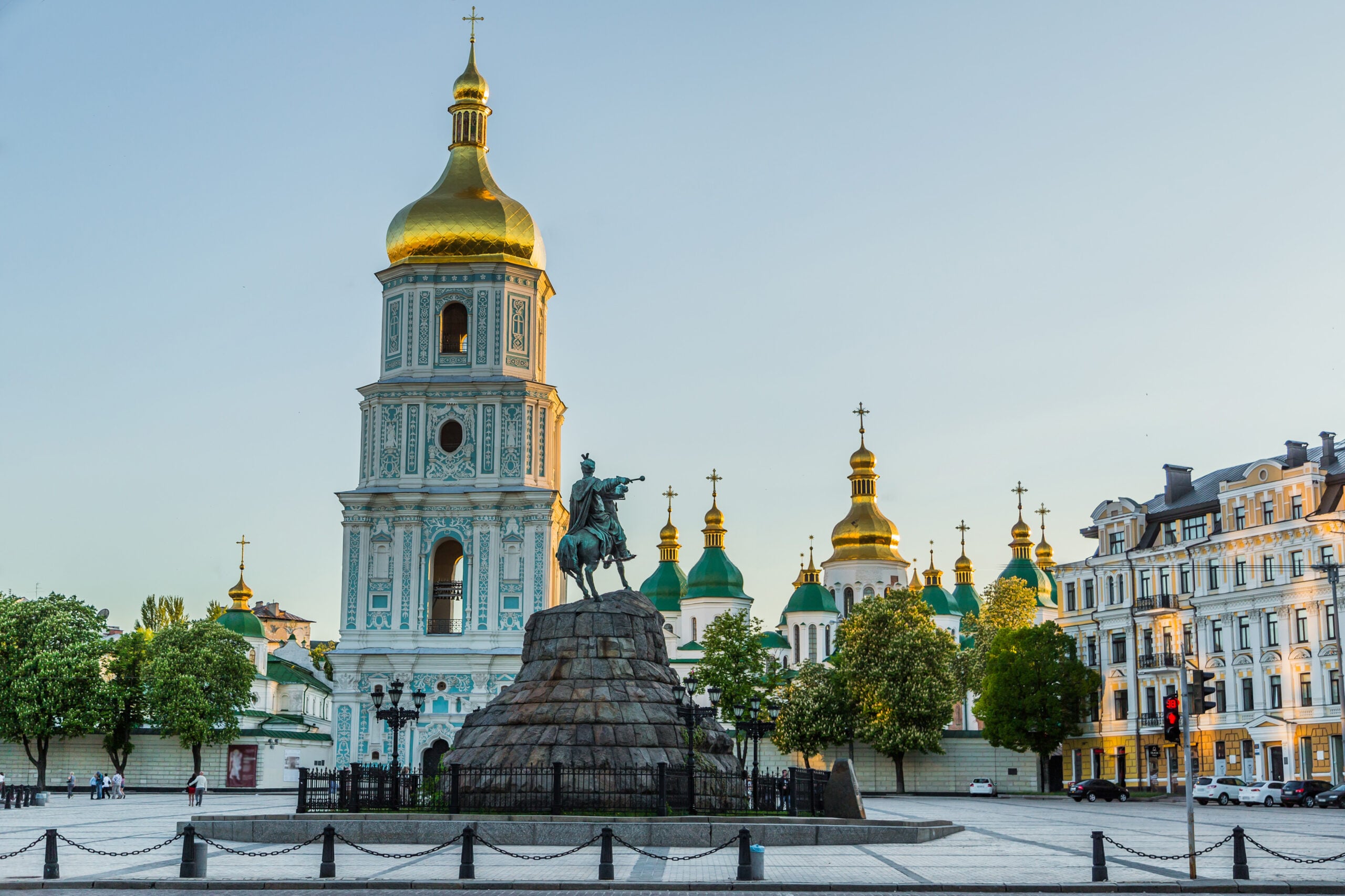
A key complication is that under the terms of the Tomos, the Orthodox Church of Ukraine (OCU) cannot establish parishes outside Ukraine.
Sadokha notes that this creates real challenges: “Our priests abroad are subordinated to local bishops of Constantinople, who are not always strong supporters of Ukraine. On top of that, OCU clergy often lack financial support and must work regular jobs to support their families.”
To preserve Ukrainian identity and prevent believers from being drawn into ROC structures, communities – such as in Tenerife – are using practical strategies:
- Chaplaincy service: The OCU can send chaplains to minister to migrants and military personnel without establishing a formal parish.
- “Ukrainian Houses of Prayer”: Communities register cultural or civic organizations that rent spaces. Formally, this is not an OCU parish, but in practice it functions as a Ukrainian worship center led by a Ukrainian priest.
“We’re not waiting for ready-made cathedrals. We’re creating our own space where the Ukrainian language is heard – and where the ROC has no access,” Shatruk says.
How to push back – a quick checklist
- Act quickly. Document and stop provocations through official appeals to local authorities.
- Rely on Ukraine’s position. Use the 2024 law restricting organizations linked to Russia.
- Check the church. Mentions of Patriarch Kirill (Gundyayev) and dominance of the Russian language are red flags.
- Choose alternatives. OCU, UGCC, or other Orthodox jurisdictions.
- Inform the community. Use Telegram channels, explain the risks, share educational materials.
- Engage locally. Explain to religious leaders that the ROC functions as an ideological tool.
- Share facts. Translate and distribute investigations and evidence of support for aggression.
- Be active in media. Demand the right of reply and present your position.
- Act publicly. Organize events, campaigns, and demonstrations.
- Create your own spaces. Prayer houses, chaplaincy, community hubs.
- Strengthen Ukrainian communities. Reduce dependence on ROC structures.
- Educate broadly. Inform local societies about how this network operates.
The struggle for the hearts and minds of Ukrainians abroad continues. Russia has funding, property, and the backing of its security services. But Ukrainians have truth – and the official support of their state.
“Every Ukrainian, wherever they are, must arm themselves with information. When evidence of this church’s harmful activity emerges, share it as widely as possible. This is a process – and we cannot afford fatigue,” Sadokha says.
Take care of yourself, stay connected to your community, and remember: true faith cannot bless violence.
Photos: DepositPhotos