




by Marc De Vore, a senior lecturer at the University of St. Andrews’s School of International Relations, a fellow at the Council for Geostrategy
Source: Atlantic Council
Ukraine entered 2026 in a seemingly perilous position, with Russian forces advancing on the battlefield and Ukrainian cities experiencing prolonged blackouts due to relentless Russian bombardment of critical infrastructure. This is adding to concerns that Ukraine’s defenses may be in danger of fraying.
The country’s new Defense Minister Mykhailo Fedorov confirmed in January that around two hundred thousand soldiers are currently absent without official leave (AWOL), with a further two million men accused of avoiding military service.
Russia is also facing serious problems. Unsustainable Russian military spending constitutes an economic time bomb for the Putin regime. Meanwhile, the Russian military continues to suffer heavy losses in Ukraine while making very limited territorial gains. Despite enjoying the initiative throughout 2025, Russia managed to capture less than one percent of Ukraine.
In order for Russia’s emerging weaknesses to prove decisive, Ukraine may need to sustain the war for longer than some believe is realistic. With this in mind, an increasing number of voices now argue that Ukraine’s allies should compel Kyiv to accept a Kremlin-friendly peace agreement. However, the idea that Kyiv has little choice but to end the war on Russian terms overlooks the importance of Ukraine’s role at the epicenter of a revolution in military affairs that is currently taking place.
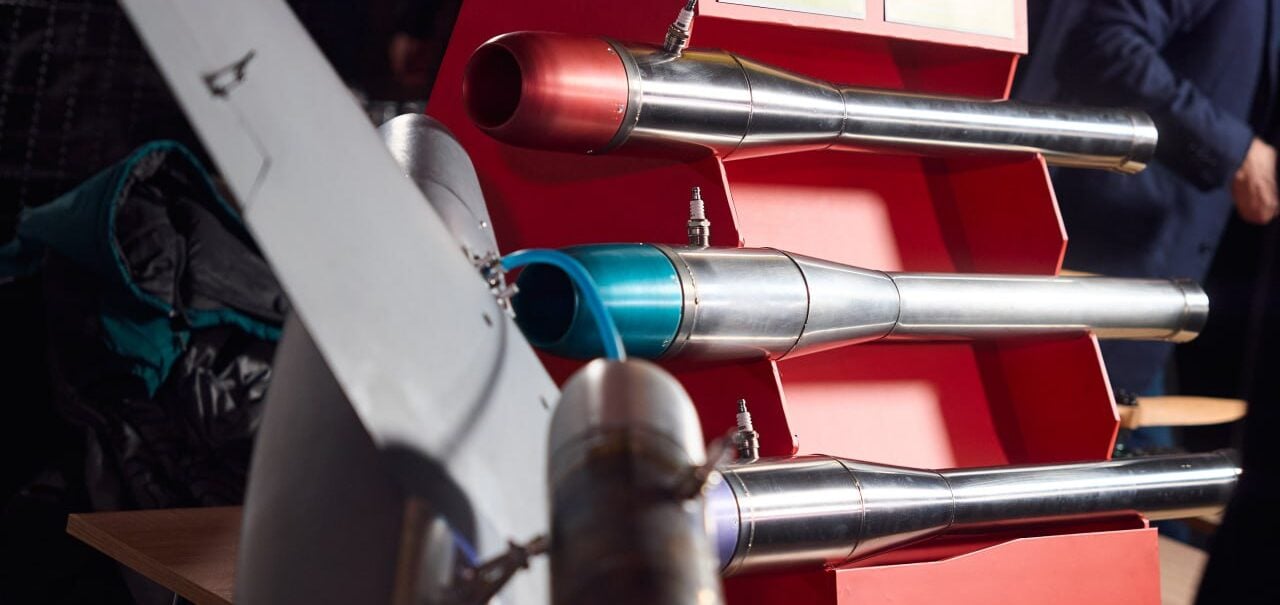
After almost four years of full-scale war, Ukraine now leads in the development of inexpensive and highly accurate drones and cruise missiles. By fully embracing this revolution, Ukraine and its allies stand a good chance of regaining the battlefield initiative and obliging Russia to compromise on its objectives.
Historians have long known that the development of warfare is not linear. For long periods of time, weaponry and tactics tend to develop only incrementally. European armies in 1780, for example, looked almost identical to those of 1680. Likewise, little distinguished the medieval forces of 1300 from the armies that fought two centuries earlier.
At specific junctures, however, a confluence of new weapons, tactics, and forms of organization can fundamentally transform how wars are waged. In the late medieval period, a military revolution saw disciplined, salaried infantry displace mounted knights.
Then came the early modern military revolution characterized by cannons, star-shaped forts, and oceanic warships. Centuries later, the industrial revolution empowered those states able to master the new technologies of railways, steel artillery, and mass conscription.
Not all military revolutions are the same. Some have led to the introduction of new technologies that only the wealthiest states can afford, while others have seen new military capabilities become more readily available to a wider range of states.
Cover: Defense Minister Mykhailo Fedorov on Telegram
Latest news

 #GlobalAdvocacy