



The fifth year of Russia’s full-scale invasion has begun, in a war that has now lasted 12 years. Differences among Ukraine’s allies are becoming increasingly visible. The EU is taking a more proactive leadership role, while U.S. support is increasingly shaped by domestic politics in Washington.
A telling example came in the recent UN vote on the resolution “Support for Lasting Peace in Ukraine,” endorsed by the Ukrainian World Congress (UWC). While 107 countries supported the resolution, the United States did not participate. This signals that support for Ukraine remains, but it can no longer be taken for granted.
In this new reality, the role of the global Ukrainian community is more important than ever. As the international order shifts and Russia promotes narratives of “Ukraine fatigue,” overseas communities help keep Ukraine at the center of political and public attention. Their voices influence voters — and, in turn, government decisions.
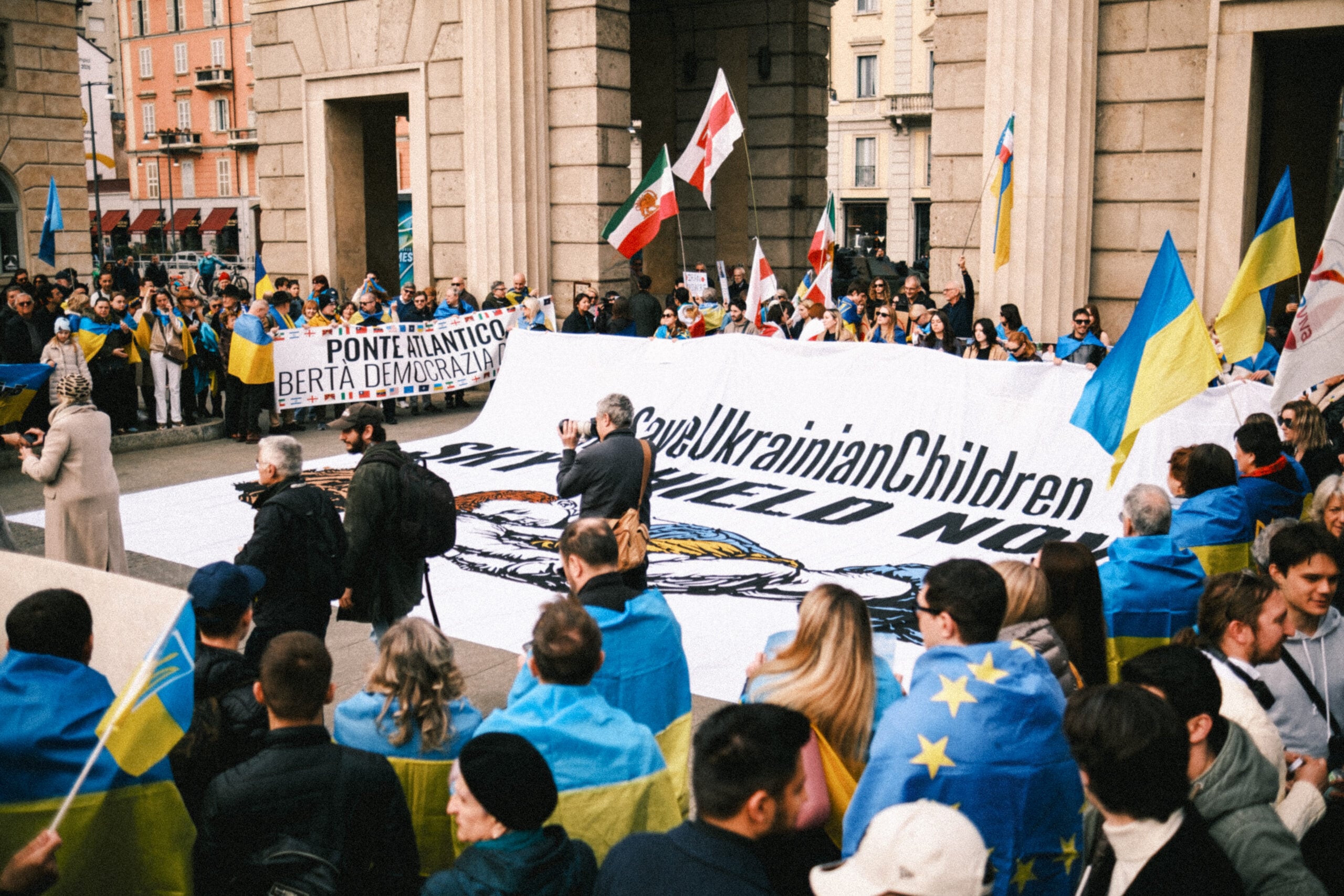 Rally in Milan, Italy, on Feb. 22 calls for the return of Ukrainian children abducted by Russia
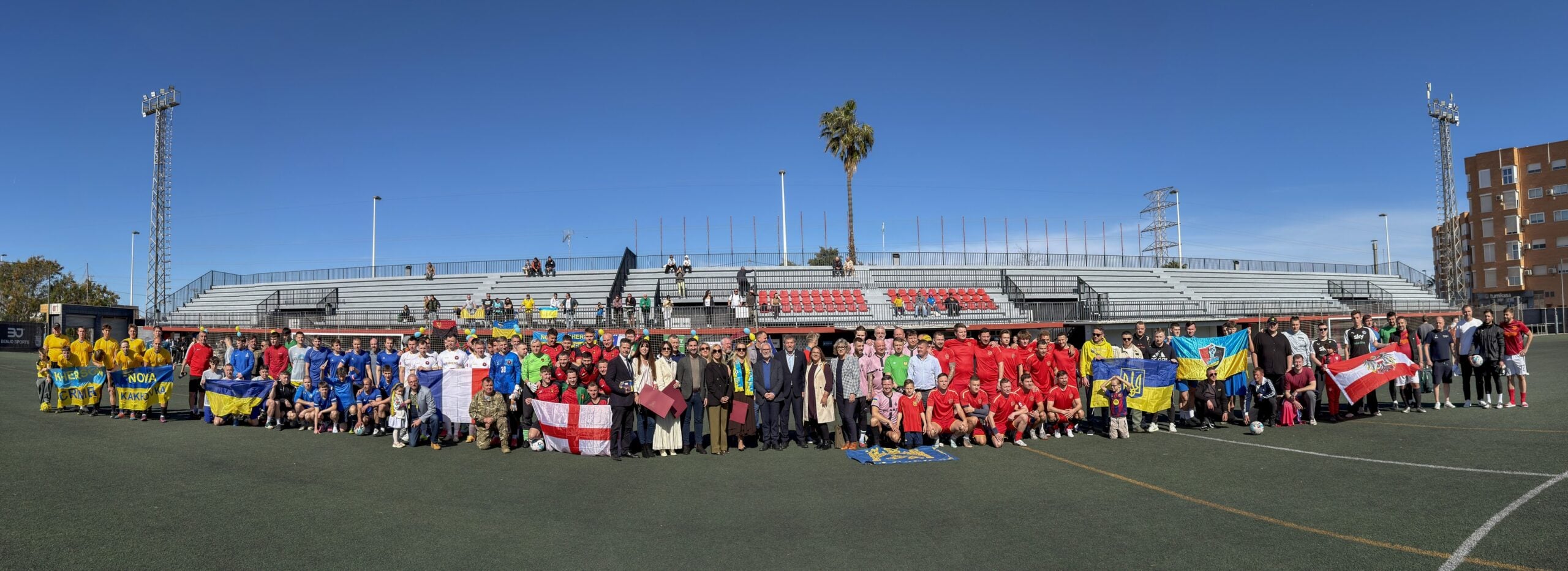
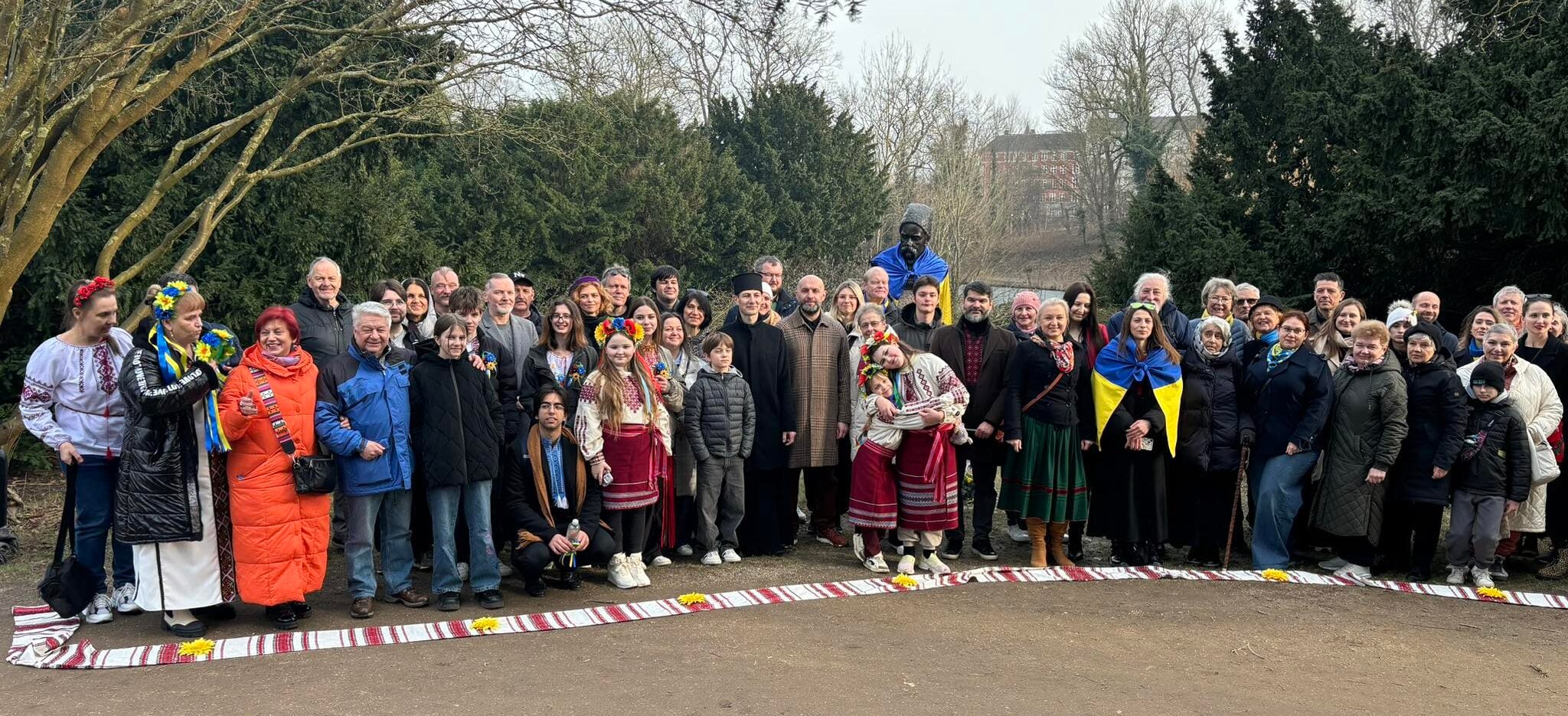
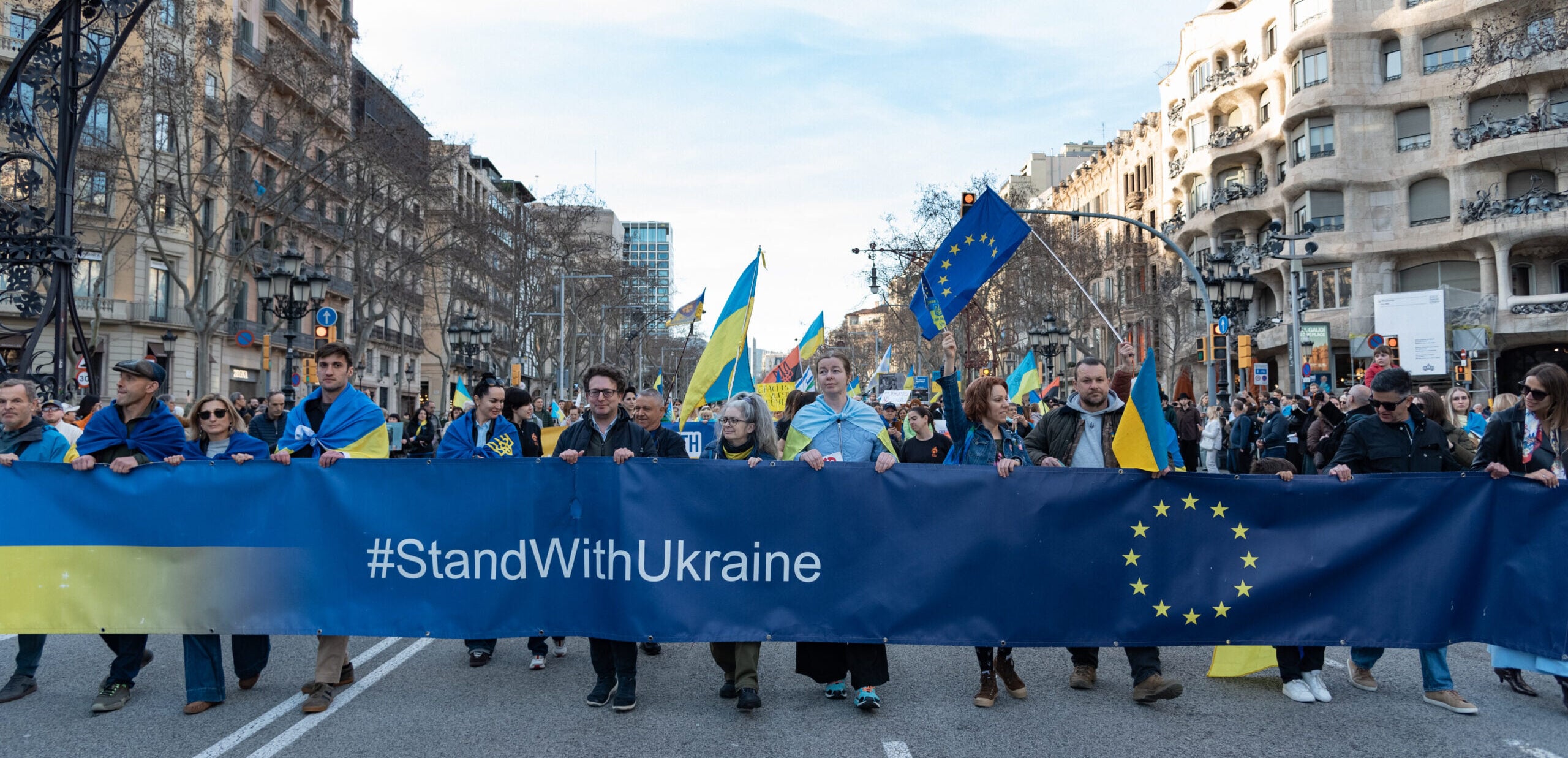
Ahead of the fourth anniversary of the invasion, Ukrainian communities around the world took to the streets to remind the world that the war continues. As part of the UWC campaign “Stand With Ukraine: Protect Future Generations,” more than 1,200 events took place across 81 countries.
Support extended beyond public squares: parliaments around the world issued statements, activists lit buildings in blue and yellow, and representatives from various political parties recorded messages of solidarity.
The UWC expects this global mobilization to expand the Coalition for the Return of Ukrainian Children, produce new political measures, and strengthen military and financial support for Ukraine. This is an example of systematic international engagement that produces concrete political outcomes.
The global Ukrainian community has become a driving force for worldwide mobilization in support of Ukraine amid political uncertainty.
Normalization of war
The main risk in the fifth year of the war is not only political turbulence among allies, but the gradual deprioritization of Ukraine on the global agenda. Today, Ukraine’s future depends on two opposing trends:
- European consolidation: For Paris, Berlin, and Warsaw, a Ukrainian defeat is existential. Community activism in the EU has evolved into sustained pressure on governments, producing tangible results.
- American turbulence: In the U.S., support for Ukraine is now tied to election cycles and rising isolationist sentiment. The voice of the Ukrainian community in America matters more than ever — it must be framed not as a “plea for help,” but as a clear argument for U.S. national security.
In democratic countries, public opinion shapes the political mandate for governments. When public attention wanes, the willingness of political leaders to make strategic decisions in Ukraine’s favor weakens.
That is why community voices are decisive.
Solutions: systematic presence and strategic advocacy
Zenon Kowal, a member of the UWC Executive Committee, political adviser to the European Congress of Ukrainians and the Association of Ukrainians in Belgium, as well as former Special Adviser to the Embassy of Ukraine in Belgium (1992-1995), emphasizes that Ukraine’s support today is unprecedented.
“In our history, Ukraine has never received such widespread support. Between 30 and 50 countries actively back Ukraine — but this coalition must be maintained and cannot be disappointed.”
This work is not just about thanking allies; it requires ongoing engagement — through parliamentary friendship groups, think tanks, media, and civil society.
Andriy Futey, Third Vice President of the Ukrainian World Congress (UWC), frames the key message for American audiences: “Ukraine is America first, and it is in the interest, national security interest of the United States of America to make sure that Ukraine is victorious.”
This is strategic communication: Ukraine is not a “foreign war,” but a matter of security, stability, and partners’ economic interests.
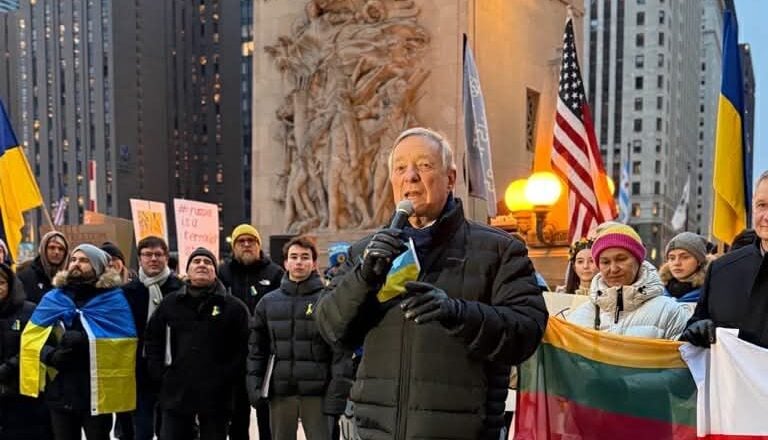
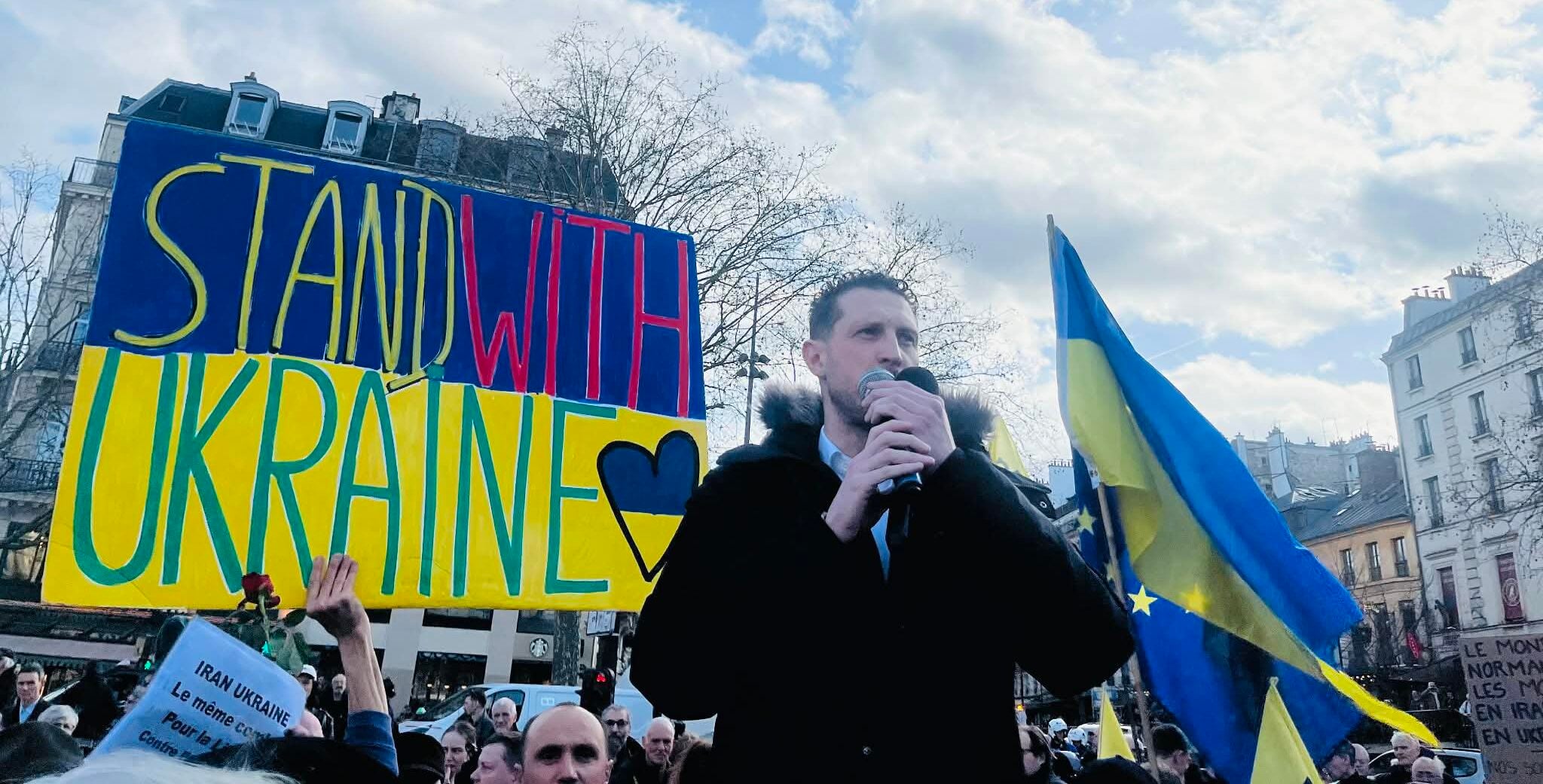 UWC Vice President Volodymyr Kogutyak addresses a pro‑Ukraine rally in Paris on Feb. 24
Volodymyr Kogutyak, UWC Vice President for Western Europe and Vice President of the Association of Ukrainians in France (AUF), mentions the diaspora’s role as “horizontal diplomacy.”
“Today, the global Ukrainian community is more than just protestors. We are voters in foreign countries. We have shifted from slogans like ‘Help us’ to ‘We are protecting your peace.’ Communities abroad are our ambassadors in every city hall and parliamentary committee.”
A new reality
The UWC, as a coordinating body, organizes mass support events every year. Ukrainian communities remain active despite war fatigue, especially in the U.S., Germany, Canada, Italy, and France, where the largest number of events occurs around Feb. 24.
Trends are shifting: Ukrainians are becoming more unified, concentrating in major cities and regional centers. Last year, events spanned over 700 cities; now nearly 600. This is not a decline, but a consolidation — fewer locations, but larger-scale and more impactful events. The total number of events in 2026 has already surpassed 2024–2025 levels.
This marks a shift from the spontaneous mobilization of the early war years to more structured, strategic engagement.
Year five: From emotion to strategy
Ukraine has proven its resilience. The next task is to turn global sympathy into long-term policy support.
This requires:
- Coordinated communities and professionalized advocacy
- Consistent messaging in key countries
- Arguments framed in terms of partners’ national interests
- Continuous presence in media and political agendas
The fifth year of the war is a test not only for the frontlines but also for the global Ukrainian community. How systematically Ukraine can remain in the world’s focus will determine the durability of international support.
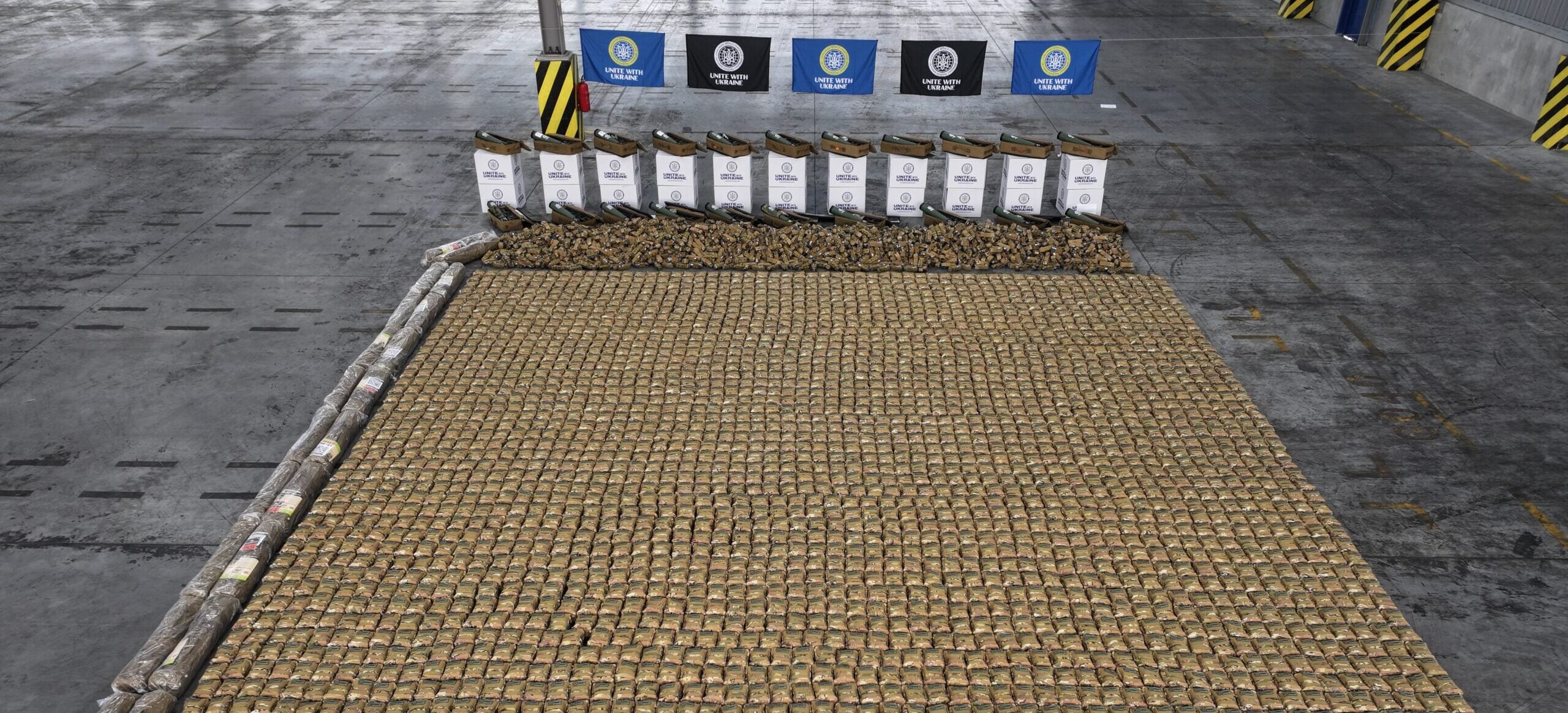
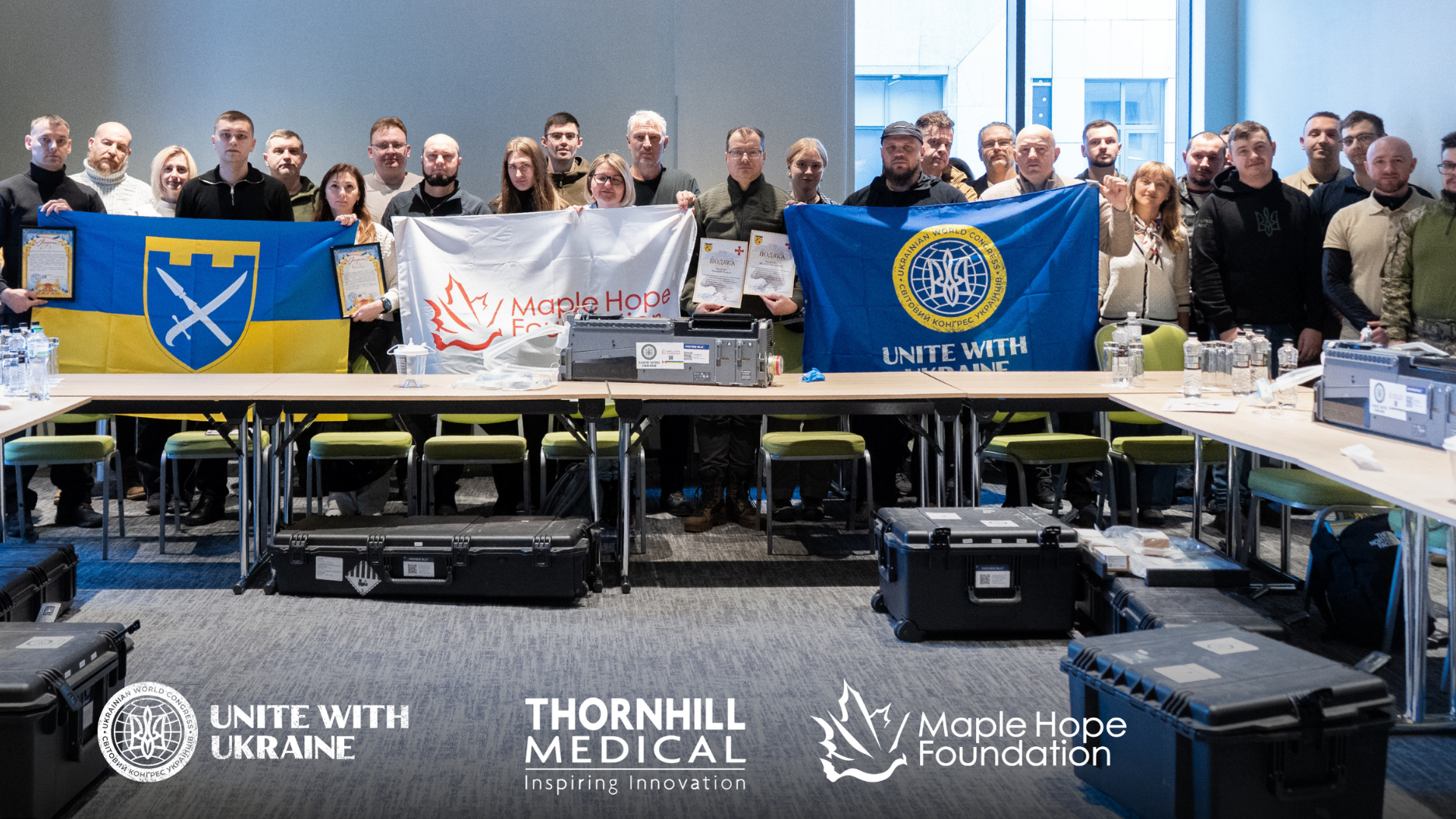 UWC delivers $10M in mobile life-support systems to Ukraine’s military, Feb. 23
Meanwhile, the UWC continues to support Ukraine’s military. On Feb. 23, the UWC and Maple Hope Foundation delivered 50 additional MOVES® SLC™ mobile life-support systems to the Armed Forces of Ukraine as part of the Unite with Ukraine initiative.
These advanced systems are designed to provide emergency medical care to severely wounded soldiers directly on the battlefield.
Support Ukraine by contributing to the UWC’s work here.
Photos: Kateryna Pelekh, Natalia Lomatska
Latest news

 #GlobalAdvocacy