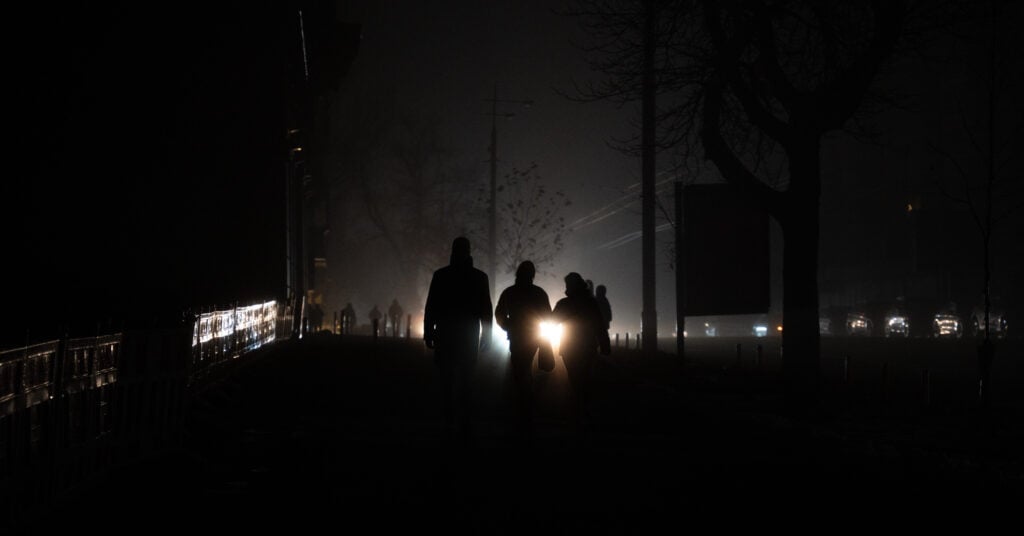


Just weeks before winter, Russia has stepped up a massive campaign of missile and drone strikes on Ukraine’s energy sector. According to the independent organization ACLED, 195 strikes on energy infrastructure were recorded in 2023. In 2026, there have been 2,319 since the start of the year, and that is only as of Nov. 6.
With each new record-breaking attack, Russia hits major substations in an attempt to split the unified power grid into isolated parts. Some of the strikes target substations that supply nuclear power plants. Since the first days of November, Russia has been striking the energy sector without pause.
Because of the destruction, scheduled and emergency outages have been introduced in most regions. On Nov. 10, areas of Kyiv Oblast around the capital were without power for 14 to 17 hours a day.
Much of the population in affected cities and many critical infrastructure facilities remain without electricity. In one Kyiv residential complex that went three days without power, temperatures inside apartments dropped below +13 °C, local media report. Energy workers are working around the clock, but the power shortage remains critical.
Life between attacks
In the first week of November alone, the private energy company DTEK reports 128 attacks on energy facilities. During an attack on Nov. 3, three drones headed for a substation critical to the operation of the Khmelnytskyi Nuclear Power Plant, and three thermal power plants shut down after serious damage. On Nov. 4, nuclear power plants were forced to reduce output: the electricity was generated, but there was nowhere to send it.
On Nov. 7, 36 ballistic missiles and 172 drones were launched at Kyiv and the surrounding region. Substations connecting the Rivne and Khmelnytskyi nuclear power plants to the capital and the central regions were damaged. Strikes on the substations through which nuclear plants feed power into the grid have now continued for more than a year.
In Kyiv, the effects are felt in daily life. The capital’s metro came to a complete halt on Oct. 8, with escalators out of service. It happened again on Nov. 2 and 5. On Nov. 5, the capital also lost water in most districts.
In the first ten days of November, the number of complaints from Kyiv residents to the hotline about a lack of electricity rose roughly 16-fold compared with last November, and complaints about a lack of water rose 5.6-fold. According to data from Svitlobot sensors, the capital averaged about 11 hours a day without power, and on November 4 it was more than 14 hours. Residents of 904 apartment buildings reported having no electricity, heat, or water at the same time.
Communications are also failing. According to the Ministry of Digital Transformation, 92% of base stations can run for up to 8 hours on batteries, and 70% have generators that can last more than three days.
In addition, on Nov. 11, Kyiv decided to temporarily turn off outdoor lighting because of an electricity shortage caused by damage to energy infrastructure in Russian attacks.
How can you help?
In this extremely difficult situation, international support is vital, including the efforts of the global Ukrainian community. A prime example of such help is the Ukrainian World Congress (UWC) initiative “Energize Ukraine.”
This global platform works closely with Ukraine’s Ministry of Energy and brings together international partners, donors, and Ukrainians around the world to address the most urgent needs.
This year, the top need is powerful generators to keep hospitals and other critical infrastructure running.
Every donation and every project under this initiative is a real contribution to keeping hospitals, schools, Points of Invincibility, and homes in Ukraine warm and lit, despite any enemy terror.
You can make an individual targeted contribution on the website: https://energizeukraine.com/about
To learn more about how Ukrainians worldwide are helping Ukraine get through its hardest winters, follow this link.
Cover: DepositPhotos
Latest news
 #LocalAction
From single package to saved lives: How Ukrainians in Denmark help children
 #UWC news
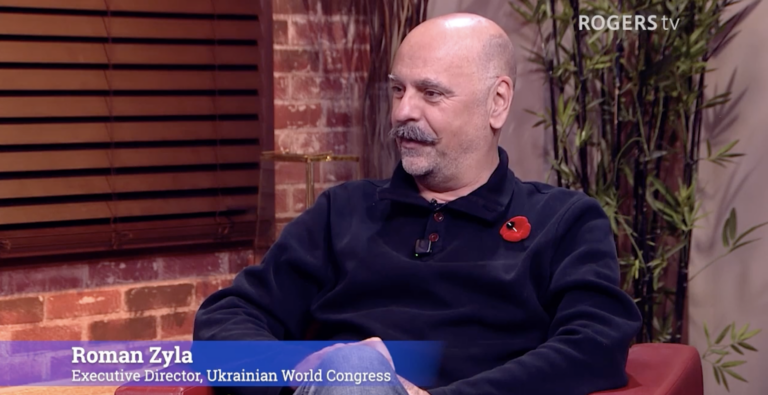
‘It’s the same struggle’: UWC Executive Director on 1991, the film Distance to Independence
 #Opinion