


by Kate Turska, Co-chair of the Ukrainian Association of New Zealand (North) and the head of Mahi for Ukraine
In 1932–33, Moscow used starvation to break Ukrainian resistance. Nearly a century later, it is destroying the infrastructure that keeps Ukrainians warm, supplied with water & alive through winter. The Soviet regime confiscated food; today’s russian state destroys the means to produce heat and electricity. Both have made civilian survival a means of coercion.
As Ukrainians prepare to commemorate the Holodomor this November, the man-made famine engineered under Joseph Stalin that killed millions, a new United Nations investigation has concluded that russia’s systematic attacks on Ukraine’s energy infrastructure constitute not only war crimes but crimes against humanity.
The findings, published on 26 October 2026 by the Independent International Commission of Inquiry on Ukraine, establish that russian authorities deliberately pursued a state policy of depriving civilians of electricity & other essential services, causing widespread suffering. The Commission examined the cumulative impact of attacks since 2022, including the devastating winter of 2025–26, when temperatures fell to minus 21°C and millions endured prolonged interruptions to heating, electricity, water & gas.
The UN’s conclusion leaves little room for the familiar excuse of collateral damage: the deprivation of essential services was deliberate, systematic & pursued as state policy.
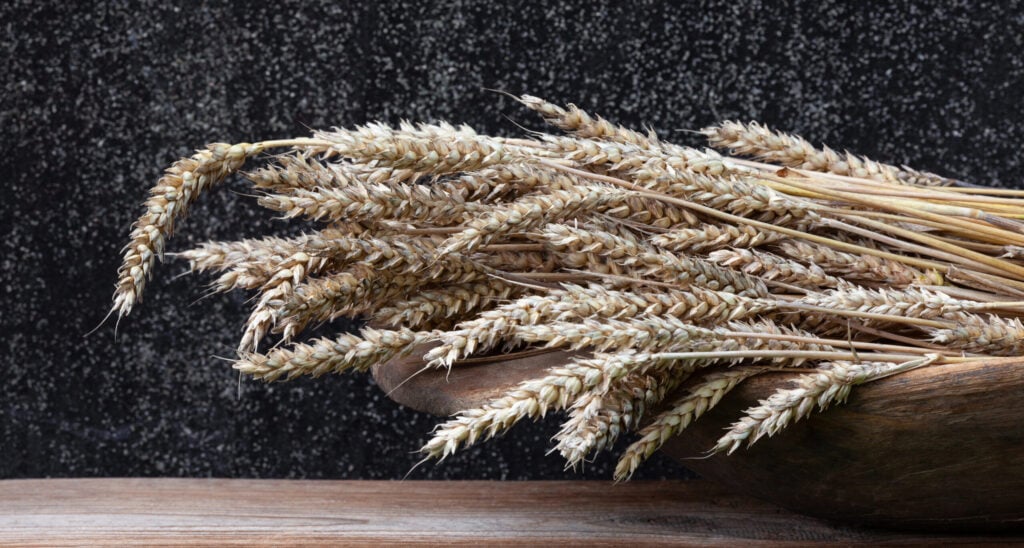
The Holodomor was neither a natural famine nor simply the consequence of disastrous Soviet economic policies. Stalin’s regime imposed impossible grain requisition quotas, confiscated food from Ukrainian households, blacklisted entire villages & prevented starving Ukrainians from leaving in search of food. People were punished for attempting to feed themselves, while entire communities were deliberately deprived of the means to survive.
The famine was accompanied by a systematic assault on Ukrainian national identity, including the persecution of intellectuals, cultural figures, political leaders & others regarded as threats to Moscow’s authority. Stalin’s objective went beyond enforcing collectivisation: the regime sought to break Ukrainian resistance and dismantle the political, cultural & social foundations of Ukrainian national existence.
Millions died while Soviet authorities concealed the catastrophe, suppressed evidence & denied responsibility for decades.
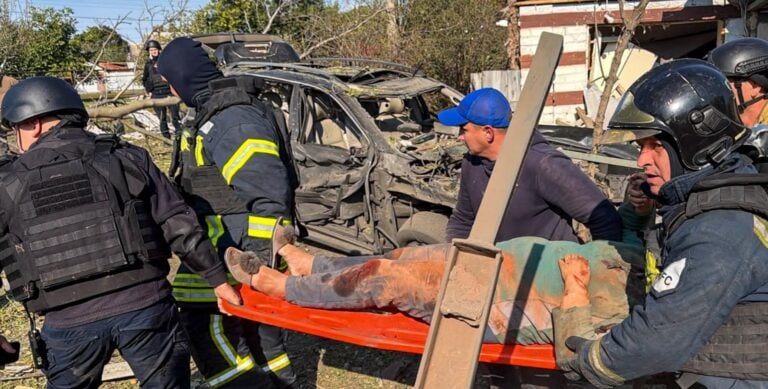
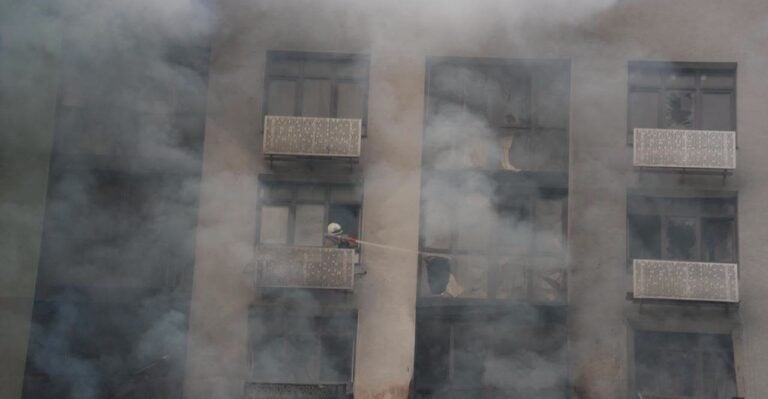
Today, instead of confiscating grain, russian missiles & drones destroy power generation facilities, substations, heating systems & other infrastructure on which civilian life depends. Instead of sealing starving villages, russian occupation and military operations have left communities isolated, displaced or dependent on humanitarian access. Instead of treating Ukrainian national consciousness as a threat to Soviet authority, the contemporary Kremlin openly challenges the legitimacy of Ukrainian statehood and seeks to impose russian political, cultural & institutional control over occupied territories.
The consequences are again borne disproportionately by civilians, whose ability to survive is made conditional on the decisions of a hostile power.
The recent humanitarian crisis in russian-occupied Oleshky, in Ukraine’s Kherson region, exposes the disturbing reality of having to negotiate access to basic necessities for civilians living under occupation.
After months of severe shortages of food, medicine & essential supplies, a six-day local ceasefire allowed humanitarian aid to reach residents and evacuations to take place, with international involvement.
That an agreement was needed to deliver food and evacuate civilians from a Ukrainian town under russian occupation speaks to the conditions its residents had been forced to endure. The operation saved lives, but the temporary permission to provide basic necessities was celebrated as a humanitarian achievement while the occupation and deprivation that made it necessary continued.
Providing temporary relief does not absolve russia of responsibility for the humanitarian catastrophe it created. Nor should such gestures be mistaken for evidence of a commitment to peace while russian forces continue systematically destroying the infrastructure on which millions of other Ukrainian civilians depend.
But the deeper issue is the recurring relationship between russian imperial power and Ukrainian independence.
The Holodomor did not emerge in a historical vacuum. It followed centuries of imperial efforts to subordinate Ukrainian political life, restrict Ukrainian language & culture, dismantle autonomous institutions and suppress movements seeking independence from Moscow.
The Russian Empire, the Soviet Union & today’s Russian Federation differed in ideology and institutions, but each sought to determine the limits of Ukrainian political and national existence. The recurring claim was that Moscow, rather than Ukrainians themselves, had the authority to decide how much independence, cultural expression or political autonomy Ukraine could exercise. When Ukrainians challenged that claim, coercion & violence followed.
The Holodomor represents one of the most devastating manifestations of that history. It was a genocide against Ukrainians, carried out through the deliberate destruction of the conditions necessary to sustain life.
But it was neither the beginning nor the end of Moscow’s attempts to destroy Ukrainian resistance and national independence.
Soviet mass deportations, political executions, cultural repression and the persecution of Ukrainian national movements formed part of a wider history of state violence. In the present war, the forced transfer of Ukrainian children, systematic torture, persecution in occupied territories, destruction of cultural heritage & attacks on civilian infrastructure have once again exposed the methods through which Moscow seeks to impose control.
At the centre of that continuity is the treatment of Ukrainian self-determination as a threat to be eliminated rather than a right to be respected.
The Soviet regime concealed the Holodomor, denied its existence & suppressed evidence of the catastrophe. Yet reports of mass starvation reached foreign governments and journalists, some of whom chose to minimise or dismiss them. Political expediency helped Moscow escape international scrutiny while millions of Ukrainians were dying.
Nearly a century later, the world cannot even claim it didn’t know. The evidence is documented, the perpetrators are identifiable, and the United Nations has established that the deliberate deprivation of essential services constitutes crimes against humanity.
Satellite imagery, independent investigations, eyewitness testimony & international monitoring provide extensive documentation of russian attacks on Ukrainian civilians. The UN has now explicitly identified a state policy of depriving civilians of essential energy services and concluded that its implementation constitutes crimes against humanity.
If knowledge of these crimes is no longer in dispute, what exactly is preventing the international community from acting with the determination that knowledge demands?
As winter approaches, millions of Ukrainians again face the prospect of living without reliable heating, electricity & water, not because their country lacks the resources or capacity to provide them, but because another state is deliberately destroying the infrastructure necessary to sustain civilian life.
In 1932–33, food was turned into a weapon against Ukrainians. In 2026, heat, electricity & water are being weaponised against them.
Holodomor remembrance must therefore be more than an act of mourning for the millions murdered nearly a century ago. It must also be an act of historical recognition, acknowledging the imperial structures, political ambitions & methods of coercion that made the genocide possible, and confronting their contemporary manifestations.
Ukraine is not simply fighting to preserve its borders. It is resisting a long-standing imperial claim that its people should not be free to determine their own future.
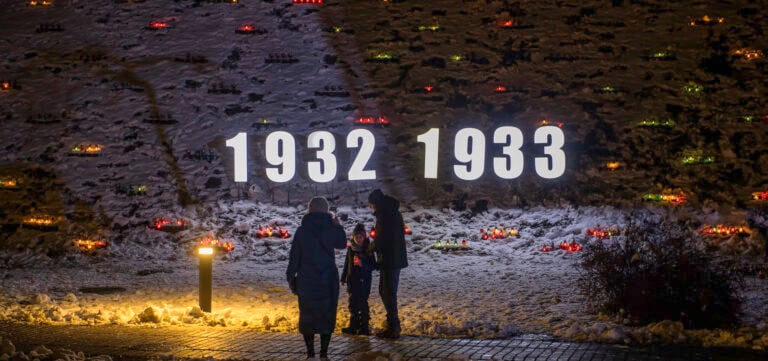
As Ukrainians light candles for the victims of the Holodomor this November, many will do so in homes where the electricity may once again have been cut by russian attacks. The candles will commemorate those whom Moscow deliberately starved nearly a century ago, while illuminating the consequences of its latest campaign against Ukrainian civilian survival.
Cover: DepositPhotos
Latest news


 #GlobalAdvocacy
Russia awarded World Weightlifting championships: What Ukrainian communities can do
 #LocalAction