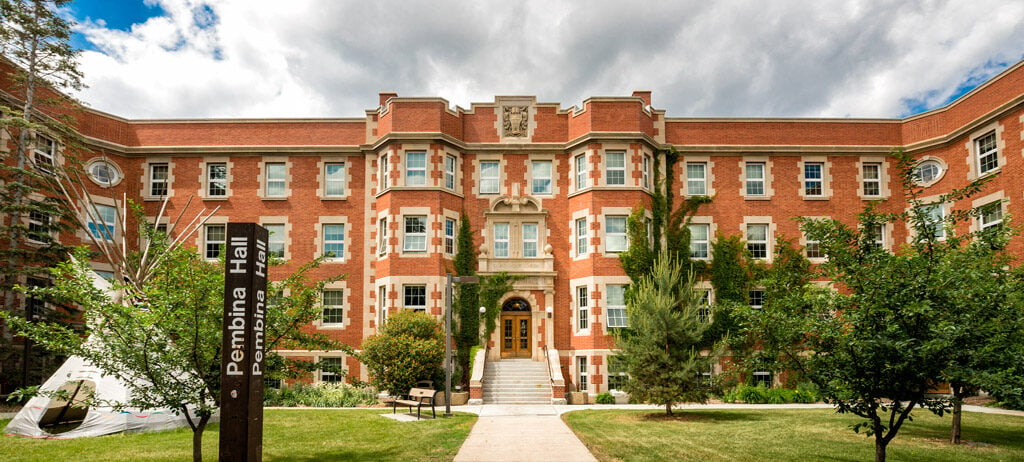



by Natalia Khanenko-Friesen, Director of the Canadian Institute of Ukrainian Studies and Professor at the University of Alberta
Source: Ukrainska Pravda
In July 2021, Vladimir Putin published an essay on the “historical unity of Russians and Ukrainians,” effectively denying Ukraine the right to its own history and national identity. Seven months later, Russia launched its full-scale invasion of Ukraine.
The connection between historical narratives and military aggression is no coincidence. Russia’s war against Ukraine is being fought not only over territory, but also over Ukrainians’ right to exist as a distinct nation, to have their own state, and to determine their own future.
The intellectual struggle for Ukraine’s right to define itself began long before the country regained its independence in 1991. Nor did it end with the collapse of the Soviet Union. The world’s understanding of Ukraine did not change overnight, after centuries in which the country had been overshadowed by the Russian Empire and the USSR.
This year, the Canadian Institute of Ukrainian Studies (CIUS) at the University of Alberta celebrates its 50th anniversary. Founded in 1976, the Institute emerged at a time when an independent Ukrainian state did not yet exist and historical scholarship in the Soviet Union was constrained by ideological restrictions.
Over the past half-century, CIUS has become part of a broad international intellectual network dedicated to ensuring that Ukraine has a voice of its own in global academia.
To understand why the Institute was established in Canada, we need to look at the country’s own history. For much of its existence, Canadian identity was shaped around two major linguistic and cultural communities: English-speaking and French-speaking Canadians. Immigration, however, gradually transformed Canadian society.
Ukrainians were among the communities that actively advocated for recognition of Canada’s multicultural character. The first waves of Ukrainian immigration in the late nineteenth and early twentieth centuries settled primarily in Alberta, Manitoba, and Saskatchewan.
After the Second World War, another wave of Ukrainian immigrants arrived in Canada, including many scholars, journalists, and community leaders. By the 1970s, Ukrainian Canadians were seeking not only to preserve their ancestral culture but also to become full participants in shaping the Canadian nation.
When Pierre Trudeau’s government introduced its official multiculturalism policy in 1971, the Ukrainian community was among the active participants in the public debate that helped shape a new understanding of Canadian identity.
In many ways, we Ukrainians helped Canada reimagine itself as a multicultural country while simultaneously redefining our own place within it.
It was in this environment that Ukrainian studies could move beyond community initiatives and become firmly established within the university system.
There is a widespread perception that the Canadian Institute of Ukrainian Studies was created by the Ukrainian diaspora alone. In reality, it emerged through a partnership among three key stakeholders.
The Ukrainian community contributed the vision, intellectual resources, and financial support. The University of Alberta provided the academic infrastructure and institutional backing. The Government of Alberta ensured long-term public support.
Historian and political thinker Ivan Lysiak-Rudnytsky played an important role in establishing the Institute. Manoly Lupul became its first director, while Peter Savaryn, an influential leader of the Ukrainian Canadian community, also made a significant contribution.
Yet the greatest achievement was the partnership model itself. It transformed a community initiative into a sustainable academic institution capable of operating independently of political cycles.
Institutions do not emerge out of nowhere. They are built through decades of accumulated human, intellectual, and financial resources.
Ukraine’s decolonization began long before independence
Throughout the 1970s and 1980s, Soviet propaganda exerted considerable influence over how the world understood Eastern European history. Ukraine was often viewed through a Russian historical lens rather than recognized as a historical actor in its own right.
Our scholars examined Ukrainian statehood, language, culture, and history in the broader context of European developments, including Polish-Ukrainian, Jewish-Ukrainian, and other intercultural relations.
Cover: the University of Alberta
Latest news
 #UWC news
UWC holds Annual General Meeting, declares 2027 the year of Ukrainian leadership
 #CallToAction