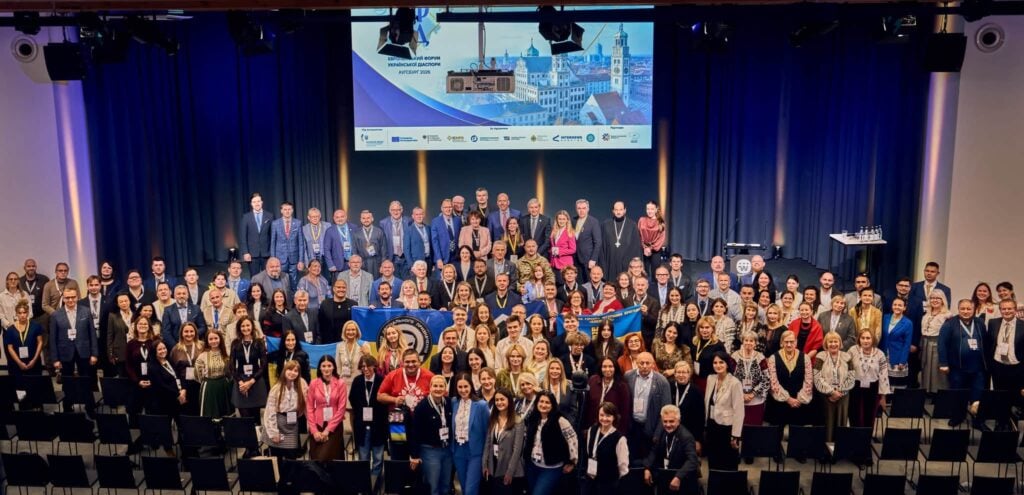


More than 200 participants from 25 European countries, together with representatives of Ukrainians from around the world, gathered in Augsburg, Germany, for a forum dedicated to the future of the Ukrainian diaspora, support for Ukraine, the preservation of national identity, and the strengthening of organized Ukrainian community activities across Europe.
Augsburg, Oct. 30-31, 2026
On Oct.30 and 31, 2026, the European Forum of the Ukrainian Diaspora, “Augsburg 2026,” took place in the German city of Augsburg, which holds a special place in the history of Ukrainian emigration and organized Ukrainian life in Germany. This was one of the major international gatherings of representatives of Ukrainian national communities, organizations, and institutions from various European countries, as well as representatives of Ukrainians from around the world, who came together to exchange experiences, discuss current challenges, and seek to coordinate future areas of activity.
The Forum brought together more than 200 participants from 25 European countries. They included heads and representatives of Ukrainian national organizations, members of the governing bodies of international institutions, scholars, cultural and educational figures, journalists, representatives of humanitarian organizations, and activists from Ukrainian communities. The participation of representatives of the Ukrainian World Congress from Canada gave the gathering particular significance, adding a broader international dimension to the European meeting.
The Forum was organized by the European Congress of Ukrainians (EKU), headed by its president, Bohdan Rajčinec, and the Association of Ukrainian Organizations in Germany (Dachverband der ukrainischen Organisationen in Deutschland – DUOD), headed by Rostyslav Sukennyk. The Ukrainian community of Augsburg also contributed to organizing and carrying out the program, and its important efforts helped ensure the successful realization of this international gathering.
Alongside representatives of the German authorities, the Forum participants were greeted by Ukraine’s Minister of Foreign Affairs, Andrii Sybiha. Greetings and support were also extended by the Consulate General of Ukraine in Munich. From the very beginning, it became clear that this was not simply another meeting of emigration organizations, but an effort to further strengthen the collective voice of Ukrainian communities in Europe and around the world in the face of Russian aggression against Ukraine.
Augsburg, a city of historical and contemporary Ukrainian diaspora
The choice of Augsburg as the venue for the Forum also carried deep symbolic significance. After World War II, the city became one of the important centers of Ukrainian life in Germany. Ukrainians established their organizations, schools, cultural and community institutions here, developed religious life, and created conditions for preserving their national identity in a new environment.
It was precisely the historical experience of that generation of Ukrainian emigrants, who, despite the hardships of war, political changes, and life far from their homeland, managed to preserve the Ukrainian language, culture, and national consciousness, that became one of the important starting points for the discussions.
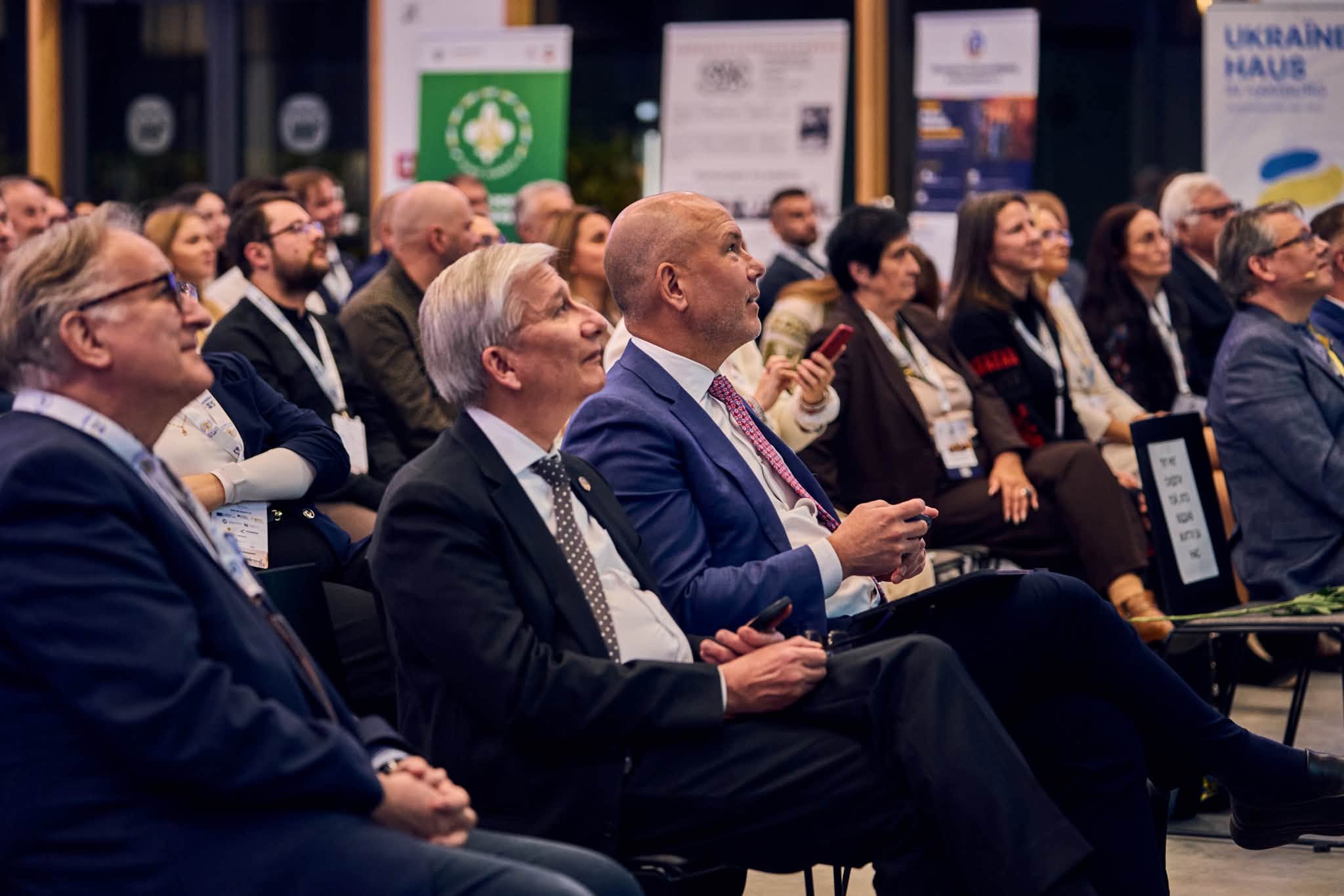
Today, the Ukrainian diaspora finds itself in new historical circumstances. Alongside traditional communities that have been active in European countries for decades, a large number of new Ukrainian communities have emerged in recent years, particularly following the beginning of Russia’s full-scale aggression against Ukraine. Millions of Ukrainians have been forced to leave their homeland and seek safety in other countries.
These changes have brought new needs, but also new opportunities. Traditional organizations face the question of how to pass on their experience, organizational achievements, and institutional connections to new generations and newly arrived Ukrainians, as well as how to involve them in the shared life of Ukrainian communities.
Seven thematic areas – from European security to the future of Ukrainian organizations
Over the course of the two-day program, several thematic panels and discussions took place, featuring more than 20 speakers. The discussions covered a wide range of issues, from Ukraine’s place in European security and political relations to the preservation of national identity, the role of women, the organization of new communities, and the future of Ukrainian institutions in the digital age.
One of the central themes was “Ukraine in Europe: The Contribution of Ukrainian Civil Society and the Diaspora to European Security and Cooperation.” Participants discussed how Ukrainian organizations can exert greater influence on shaping European public opinion, promote understanding of Ukraine’s struggle for freedom and independence, and participate in protecting Ukraine’s national interests at the international level.
Particular attention was devoted to the topic “Ukrainian Women Without Borders: Voice, Influence, Action,” which emphasized the role of Ukrainian women in community organizing, humanitarian activities, education, cultural life, civic engagement, and representing Ukraine in their countries of residence.
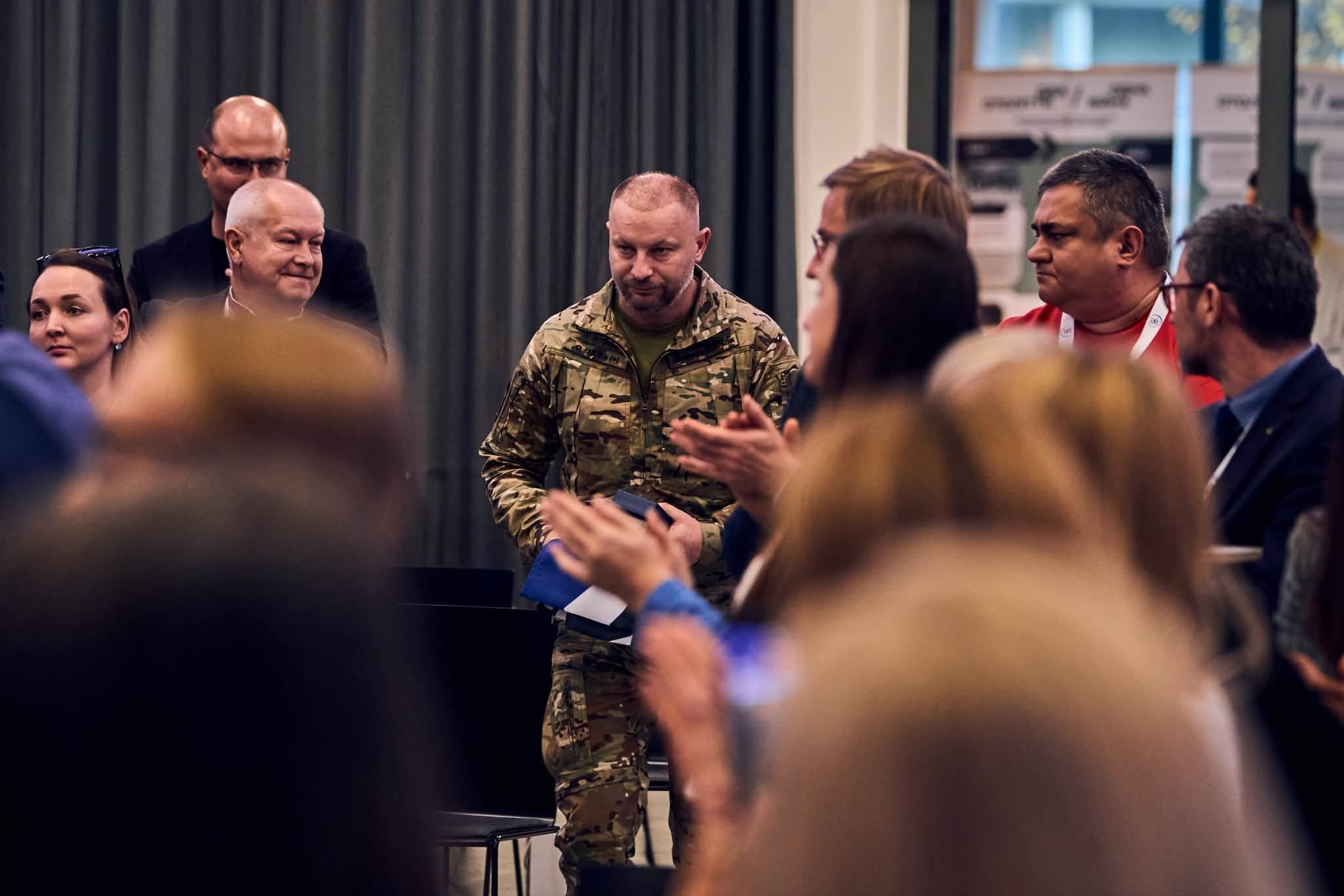
During the discussion “Ukraine on the Front Line: Challenges to Security and Resilience,” the connection between life in Ukraine and the activities of the diaspora was emphasized. The presence of representatives of the Ukrainian military added particular significance, reminding everyone present that the struggle for Ukraine takes place not only on the battlefield. It also continues at the diplomatic, informational, humanitarian, and societal levels, and the support of Ukrainian communities beyond the homeland plays an important role in it.
One of the most important topics for the future of the Ukrainian people was “Preserving Ukrainian Identity and Values – The Key to the Future of Both Ukraine and Communities Abroad.” Participants spoke about language, culture, education, traditions, spirituality, and passing national consciousness on to younger generations.
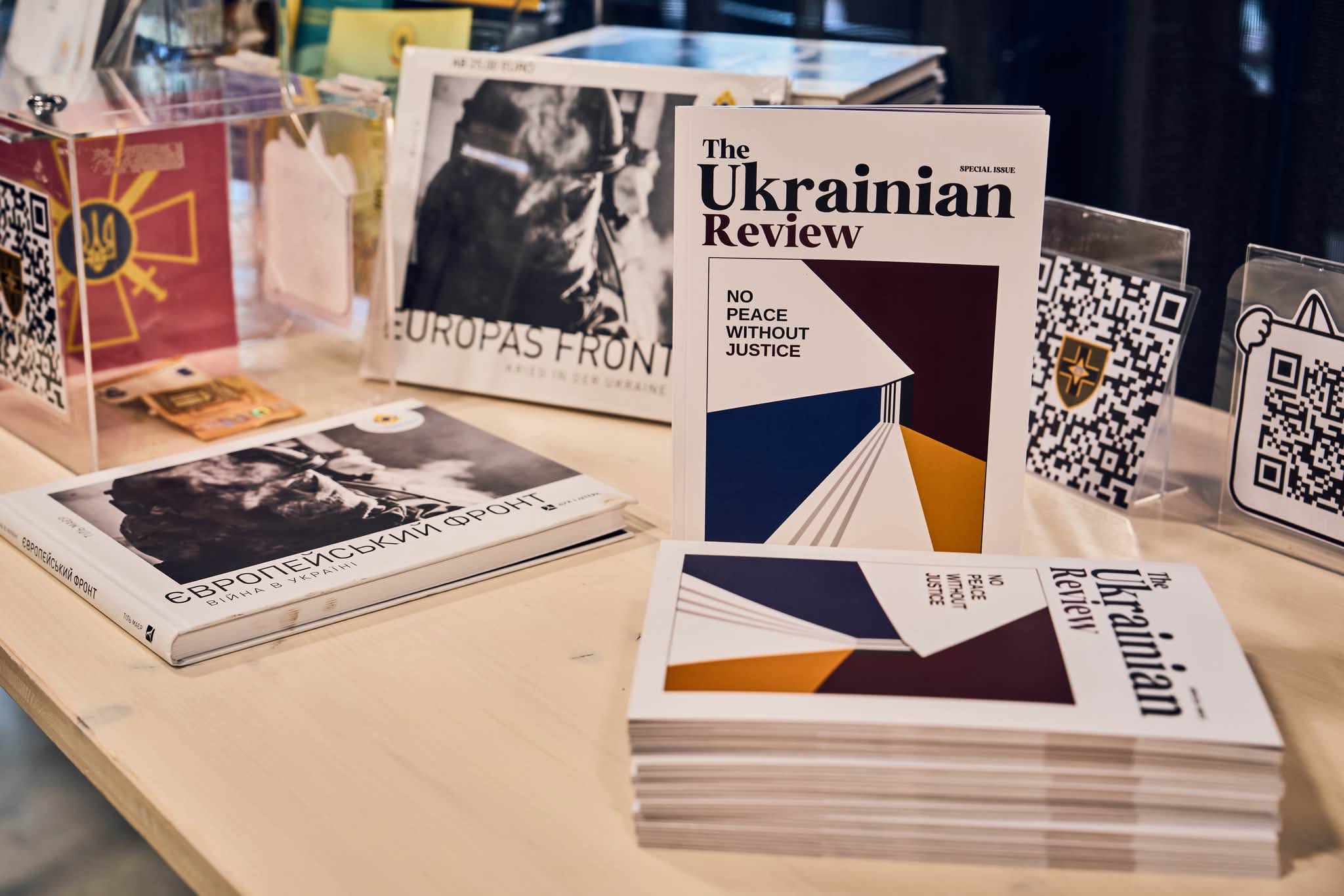
In this context, the experience of the Ukrainian Free University in Munich was presented. The institution has been working for the benefit of Ukrainian scholarship, education, and national culture for 106 years. The university’s rector, Professor Larysa Didkovska, shared her thoughts on the importance of national identity, language, and historical roots, as well as the possibilities of preserving Ukrainian identity regardless of the country in which a person lives.
Particular emphasis was placed on the importance of establishing and maintaining Ukrainian schools, cultural centers, religious communities, and educational institutions. These institutions create the conditions necessary for children and young people born or raised outside Ukraine to know their language, history, and culture and to develop an awareness of their belonging to the Ukrainian people.
One idea that was repeatedly expressed during the discussions was this: integrate into the society of the country in which we live, but do not assimilate. Integration and the preservation of national identity are not opposing processes. On the contrary, they can complement one another. Ukrainians can actively participate in the social, economic, cultural, and political life of the countries in which they reside while remaining connected to their language, culture, traditions, and spiritual heritage.
The relationship between the historical diaspora and new Ukrainian communities was at the center of the panel “Historical Diaspora, New Communities, and Changes in Organized Ukrainian Life in Europe.” Participants considered how to combine the experience of organizations that have been active for decades with the energy and initiatives of new communities, how to develop mutual cooperation, and how to avoid organizational separation between them
An important place was also given to the topic “Strengthening the Voice of Ukrainian Communities in Europe Through Coordination, Advocacy, and Representation.” During the discussions, the need for more active cooperation with European institutions, national governments, and international organizations was emphasized. Ukrainian communities, which bring together millions of people, possess significant human, professional, social, and organizational potential. However, this potential can be fully realized only through cohesive, systematic, and coordinated efforts.
The final important program area focused on the digital generation, continuity, and the future of Ukrainian organizations in Europe. Participants discussed how to adapt traditional forms of organizational activity to new communication technologies, how to engage young people in community work, and how to ensure that organizations remain recognizable, effective, and open to new generations.
The Forum also presented the activities of the European Congress of Ukrainians, the Association of Ukrainian Organizations in Germany, and the Ukrainian Free University in Munich. Participants were also introduced to the GIZ Ukraine “YOUA” project, which gave them an opportunity to learn about various forms of institutional, educational, and development support for Ukrainian communities.
Diaspora unity – supporting Ukraine today and rebuilding it tomorrow
Although the topics of the discussions varied, almost all of them were united by one common idea: the Ukrainian diaspora must remain a strong and organized pillar of support for its homeland.
As long as the war continues, Ukraine needs international political support, humanitarian assistance, efforts to counter Russian propaganda, outreach to European public opinion, and the protection of its national interests. Particular emphasis was placed on the need to continue assisting the population, which suffers daily from Russian strikes on cities, energy infrastructure, and other facilities essential to normal life.
The approaching winter further underscores the importance of humanitarian solidarity. The Ukrainian people continue to need tangible assistance, and the diaspora bears a special responsibility in this regard.
However, the Forum participants did not limit their discussions to the immediate circumstances of the war. A significant portion of the discussions looked toward the future, particularly the role of the diaspora in Ukraine’s postwar reconstruction, its economic and social recovery, and the return of people who were forced to leave their homeland because of the war.
At the same time, one of the most difficult questions facing contemporary Ukrainian society emerged: what will happen to the millions of Ukrainians who are currently outside their country?
Some have already returned or are preparing to return, others will remain for some time in the countries that have provided them with refuge, and some will likely establish their lives there permanently. For Ukrainian organizations, this means a new responsibility: helping those who wish to return, maintaining connections with those who remain abroad, and ensuring that their children and future generations do not lose the Ukrainian language and national identity.
That is precisely why the diaspora will be needed by Ukraine not only during the war. Its role will be no less important in peacetime: in rebuilding the country, developing the economy, establishing connections with international institutions, facilitating the return of the population, and building a democratic society.
The Forum’s message was clear: Without a free Ukraine, there can be no free Europe!
The Ukrainian World Congress and the European Congress of Ukrainians – organizational unity and a shared voice
The participation of representatives of the two most important international organizations of the Ukrainian diaspora – the Ukrainian World Congress (UWC) and the European Congress of Ukrainians (EKU) – gave this gathering particular significance.
Their participation confirmed the need for closer unity among Ukrainian organizations at the European and global levels. At a time when Ukraine is engaged in an existential struggle for its statehood, territorial integrity, and freedom, an organized diaspora represents an important political, social, and cultural resource.
The President of the Ukrainian World Congress, Paul Grod, emphasized the need to organize Ukrainian communities in such a way that they become a powerful political force in European societies, capable of defending Ukrainian interests over the long term.
This is precisely one of the important tasks of the European Congress of Ukrainians: bringing national organizations together, creating common platforms for action, representing the interests of Ukrainian communities, and ensuring their presence in European institutions.
The Augsburg Forum demonstrated that such cooperation should not be limited to declarations and formal meetings. It is necessary to develop concrete joint programs, exchange experiences, establish connections between organizations, and create mechanisms that will ensure long-term cooperation.
At the conclusion of the Forum, the preparation of a joint declaration was announced. It is intended to present agreed-upon positions and priorities for future activities.
The Forum is not just about organizations and positions. The Forum is about people
However, after all the official events, speeches, panels, and discussions, perhaps the most important impression left by the Augsburg Forum was connected with the people.
The European Forum of the Ukrainian Diaspora was not simply a meeting of organizations, presidents, members of governing bodies, and representatives of institutions. It was a gathering of people who, regardless of the country in which they live, share a common concern for Ukraine, its freedom, and its future.
Behind every organization are real people and their life stories. They are the people who have preserved Ukrainian traditions in their countries of residence for decades; those who, after the beginning of the war, helped refugees, organized humanitarian campaigns, raised funds, supported families, children, and the wounded; and those who work every day to preserve the Ukrainian language and culture.
In their meetings, conversations, embraces, and group photographs, one could feel a unity that transcends national borders. Each person has a unique life story, but at the same time, they share a common responsibility to their people and homeland.
It was especially moving to see representatives of the Ukrainian military among people living in the safety of European countries. Their presence reminded everyone that freedom does not come by itself and that a high price is paid for it every day.
One of the strongest messages that could be taken away from the entire gathering is that Ukraine is sustained by its people – those who defend it on the front lines, those who work and live in the homeland, and the millions of Ukrainians beyond its borders.
Ukrainians of Croatia in the European community
For representatives of the Ukrainian national minority in the Republic of Croatia, participation in such an international gathering is particularly significant. Croatia has a long tradition of organized Ukrainian life, and its Ukrainian cultural and educational societies have been working for decades to preserve the language, culture, customs, and national identity.
The Ukrainian Cultural and Educational Society “Kobzar” from Zagreb, as one of the organizations representing the Ukrainian national minority in Croatia, builds its activities on precisely these values. Preserving Ukrainian cultural and spiritual heritage, developing publishing and informational activities, nurturing traditions, and establishing cooperation with Ukrainian institutions in Ukraine and around the world constitute an important part of its program.
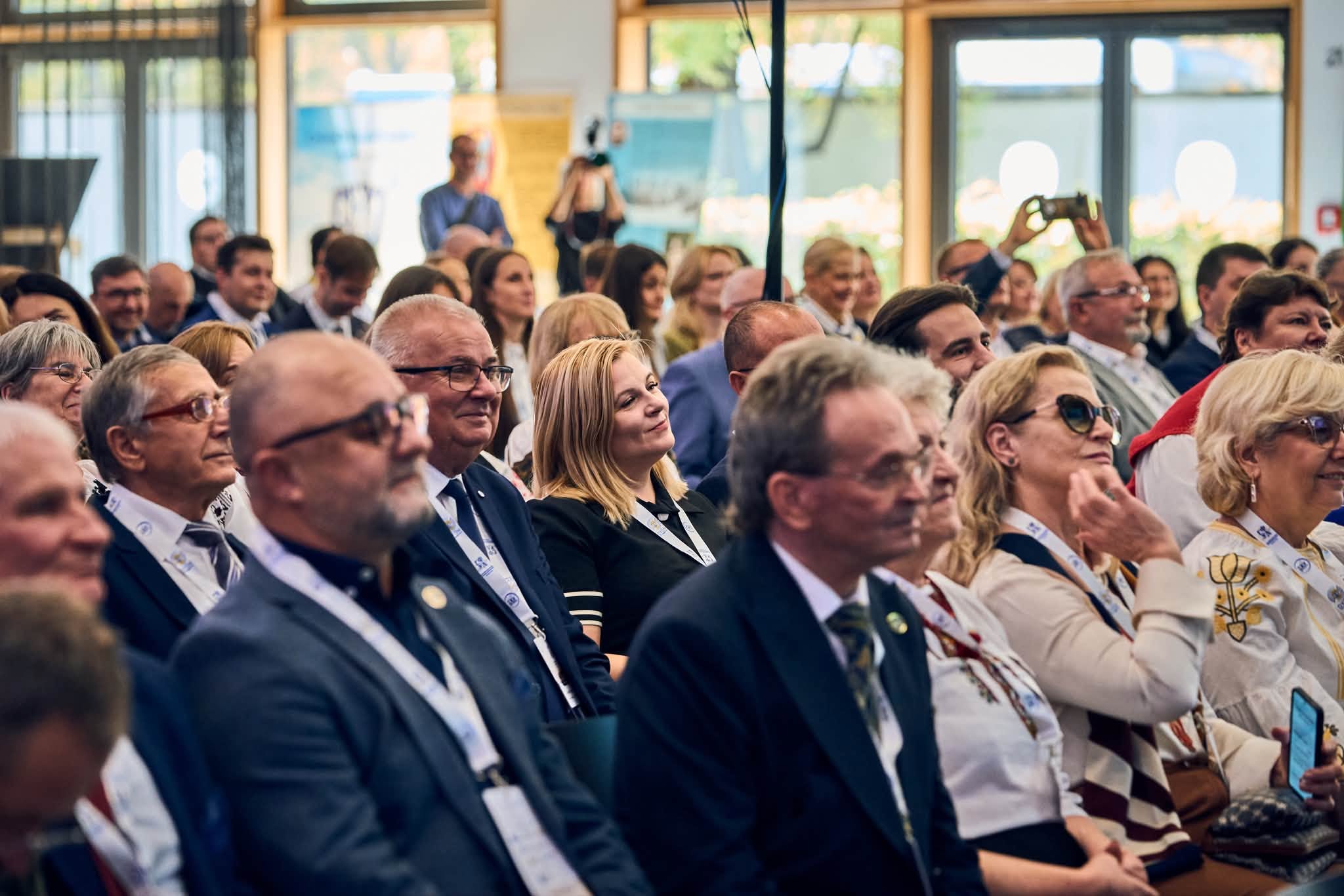
Comparing the experiences of Ukrainian communities in different European countries shows how different their circumstances are, while their fundamental goals remain remarkably similar. Regardless of their size, historical circumstances, or legal status in a particular country, every organized Ukrainian community contributes to preserving national identity and representing Ukraine within its environment.
For Ukrainians in Croatia, it is particularly important that their experience in organizing national life, cultural autonomy, and activities within a multilingual and multicultural society be combined with the experience of other European communities. Such gatherings make it possible to establish new connections, open up opportunities for cooperation, and strengthen the sense of belonging to a broad European Ukrainian community.
Appreciation to the hosts and organizers
The success of such a large international gathering depends not only on the quality of the program but also on the people who prepare and carry it out.
Therefore, special thanks are due to the organizers and the entire Ukrainian community in Germany, headed by its chairman, Rostyslav Sukennyk, and especially to the Ukrainian civic organization in Augsburg, headed by Kateryna Matey-Babenko.
Special appreciation is also due to the leadership and Presidium of the European Congress of Ukrainians for preparing a substantive and organizationally complex program, as well as to all the panel discussion participants who enriched the Forum with their knowledge, experience, and proposals.
I would personally like to acknowledge and express my sincere gratitude to Ms. Iryna Wolf, who showed extraordinary care, kindness, and willingness to help during my stay in Augsburg. She met me upon my arrival and assisted me when I departed. Such human warmth and hospitality leave particularly pleasant memories.
I also thank everyone I had the opportunity to meet, talk with, and exchange thoughts and experiences with during my stay in Augsburg. New acquaintances, friendly conversations, and a sense of unity are values that cannot be measured by the number of participants or panels held.
A shared path – from solidarity to concrete action
The European Forum of the Ukrainian Diaspora in Augsburg has concluded, but the questions it raised remain relevant to all Ukrainian organizations in Europe.
How can the historical diaspora and new Ukrainian communities be brought together more effectively? How can the collective voice of Ukrainians in European institutions be strengthened? How can young people be engaged in organizational activities? How can the Ukrainian language and culture be preserved for new generations? How can we continue helping Ukraine during the war while also preparing for its future reconstruction?
These questions cannot be answered at a single international gathering. What is needed is ongoing cooperation, mutual trust, institutional unity, and a willingness to turn jointly agreed ideas into concrete programs.
Augsburg demonstrated that the Ukrainian diaspora has the human potential, organizational experience, and international connections necessary for such work. However, its strength will be determined not only by the number of organizations and their members, but above all by their ability to act cohesively, responsibly, and in pursuit of a common goal.
You leave Augsburg with new acquaintances, experiences, and impressions, but also with a clearer understanding of the responsibility each of us bears toward Ukraine. The war continues, a just and lasting peace is still nowhere in sight, and the Ukrainian people continue to need the support of their compatriots around the world.
Therefore, the message of this Forum extends far beyond its two-day program. The Ukrainian diaspora is not simply a community of people living outside their homeland. It is an integral part of Ukraine’s national, cultural, and social space, an important pillar in defending statehood and freedom, and one of the factors contributing to Ukraine’s future reconstruction and development.
Ukraine needs its diaspora today – in the struggle for freedom and independence. It will need it tomorrow as well – in rebuilding the country, bringing people home, strengthening democratic society, and preserving Ukrainian national identity.
The Augsburg Forum confirmed that, despite distances, different life circumstances, and national borders, the Ukrainian people remain united by a shared historical experience, language, culture, and responsibility for the future of their homeland.
After all, wherever we may live, Ukraine remains our common home.
Glory to Ukraine! Glory to the Heroes!
Slavko Burda
Publicist, Editor
President of the Kobzar Ukrainian Cultural and Educational Society in Croatia
Photos: Dachverband der ukrainischen Organisationen in Deutschland on Facebook
Latest news
 #UWC news
Ukrainian World Congress announces ROBOBRO Canada tour with Taras Chmut, Ihor Pustovyi
 #LocalAction
Fight continues: UCCA urges New York state to block arrival of Russian tanker
 #Opinion