

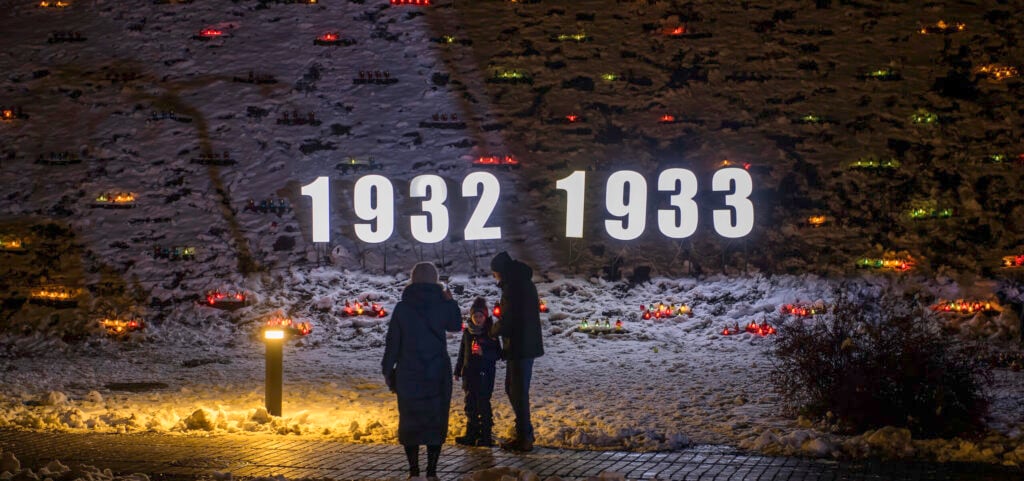


As a child growing up in the US, Olya Soroka heard about the Holodomor in whispers. In her family, which had survived the tragedy, memories were passed down from one generation to the next. But even thousands of miles from Ukraine, the fear of speaking the truth never went away.
Her grandparents were reluctant to revisit what they had endured, while her aunt, who had lived in the US for nearly sixty years, remained afraid to speak openly about the Holodomor until the end of her life. She feared that she could be arrested and deported to the Soviet Union for telling the truth about the Soviet government’s crime.
For young Olya, these conversations were a glimpse into her family’s pain, which she could not yet explain. How could a state deliberately starve its own people? Why did those who had survived the tragedy continue to fear speaking about it, even far from their homeland? Over time, these questions became a realization of her personal responsibility: to preserve the memory of her relatives and share the truth with the world.
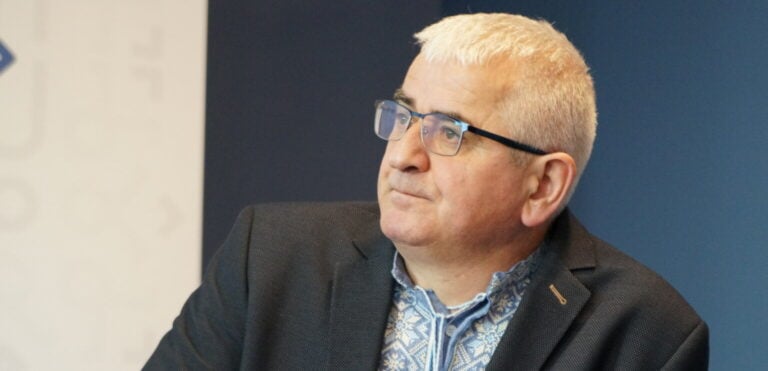
Today, Olya Soroka chairs the Ukrainian World Congress (UWC) International Coordinating Committee for Holodomor and heads the Global Holodomor Descendants Network. She was recently appointed by Ukraine’s Ministry of Culture to the Supervisory Board of the Holodomor-Genocide Museum in Kyiv, and elected its’ secretary.
Her work encompasses preserving family testimonies, engaging young people, researching the long-term effects of genocide, securing international recognition of the Holodomor, and countering Russian disinformation. At the heart of it all is the conviction that memory must not disappear with the generation of eyewitnesses.
“I dedicate my time to this work to honor the memory of my family and share their testimonies so that the world can learn the truth about the Holodomor. As a Ukrainian, I feel a personal obligation to my roots,” Ms. Soroka explains.
From family stories to a global network
The idea of establishing the Holodomor Descendants Network came from the late Stefan Romaniw, a prominent leader of the global Ukrainian community and First Vice President of the UWC, Ms. Soroka says. He understood that the number of Holodomor survivors was dwindling and that, with them, the world risked losing invaluable testimony about the crime committed by the Soviet regime.
“Stefan recognized the need to find a way to ensure that the work of collecting information about the Holodomor would continue. And he thought descendants should be involved in this effort,” Ms. Soroka continues.
At the time, she was already working with Stefan on various community projects. He also knew her family’s story, so he asked her to develop a plan for engaging the descendants of Holodomor survivors. Ms. Soroka agreed and led a small team of volunteers who launched the network in 2020.
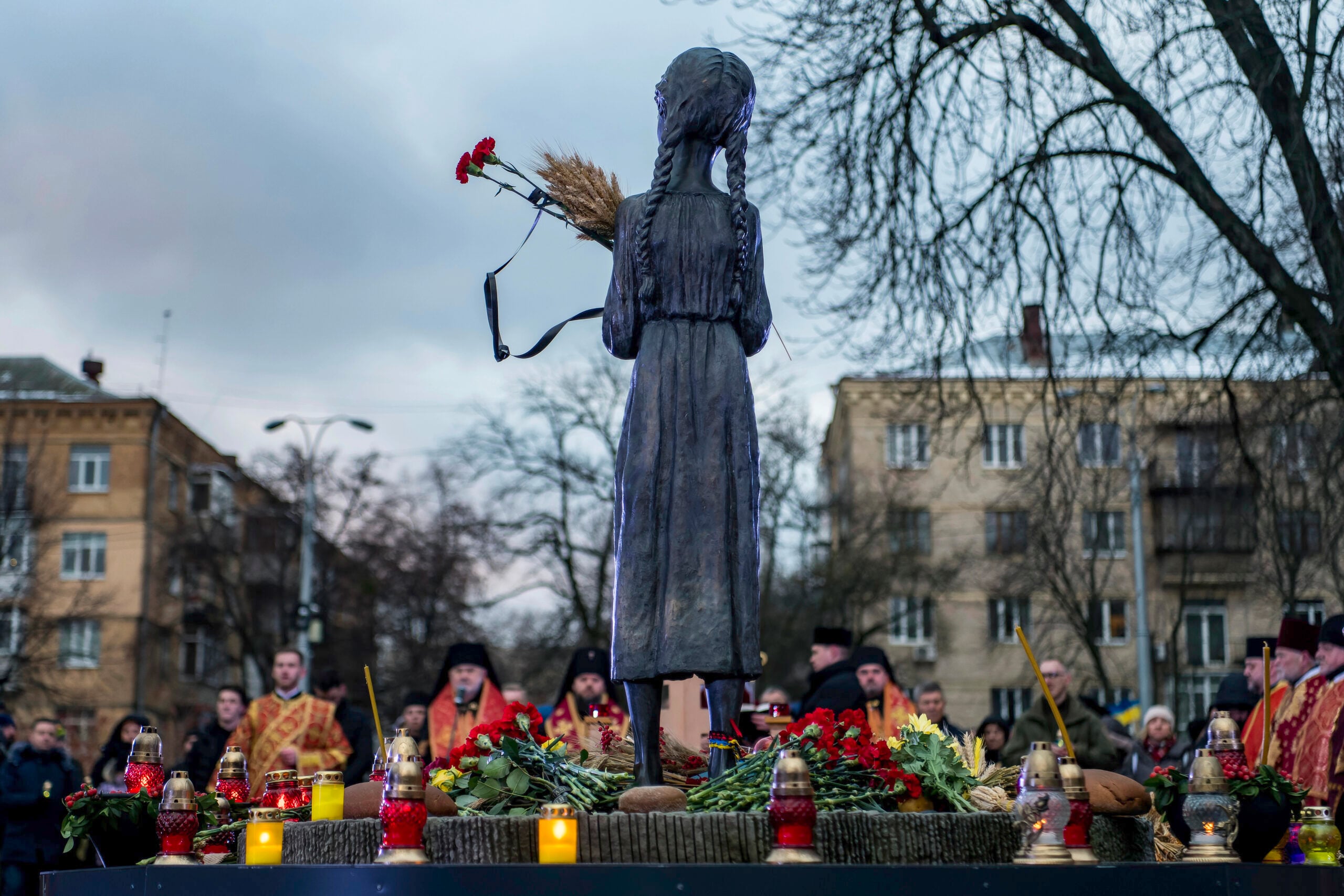 Since then, the network has become a space for people united not only by their family histories but also by a shared commitment to preserving memory, securing recognition of the Holodomor as a genocide of the Ukrainian people, and telling future generations about it.
Today, the network brings together participants from 13 countries around the world. They include members of Ukrainian communities in the US, Canada, Australia, and countries across Europe, Asia and South America. Ukrainians in Ukraine have also been actively involved in the initiative from the beginning.
Network members share a family memory of the Holodomor and a desire to preserve their relatives’ stories so they are not lost over time. For many, this also reflects a personal sense of responsibility to tell the world the truth about the genocide of the Ukrainian people and work toward its international recognition.
At the same time, the network draws attention to a lesser-known aspect of the tragedy: its possible long-term effects on the health of subsequent generations. In this way, family memories become not only a means of honoring the past but also a foundation for research, educational outreach, and a deeper understanding of their own history.
What is heard within families must be heard by the world
One of the network’s key projects is an oral history initiative, initially carried out in cooperation with Ukrainian heritage schools in the US and Canada. Upper glass grammar school students record interviews with descendants of Holodomor victims, exploring their own family histories and preserving memories for future generations.
The interviews collected became the basis for a serial program on the Ukrainian-Canadian television channel Kontakt. The UWC is now working to expand the project to other countries in cooperation with the International Educational Coordinating Council (IECC).
For Olya Soroka, the value of this project lies not only in preserving testimonies but also in helping families uncover their own past. She recalls a grandmother who, after watching her granddaughter’s interview about the Holodomor, decided to tell her family’s story for the first time. Until then, she had remained silent about it, even with close relatives. In this way, a school project gave a voice at last to family memories that had remained unspoken for decades.
“I am proud of the oral history project because it preserves testimonies that might otherwise have been lost. But just as important is what happens to young people when they listen to these stories. It awakens something in them that a regular classroom lesson cannot always achieve,” Ms. Soroka says.
At the same time, these conversations help descendants better understand their own identity. The history of the Holodomor is not just about statistics, dates, and political decisions. It is about the lives of real people, families torn apart, forced silence, and experiences that shaped how subsequent generations see the world.
One story that particularly affected Olya Soroka was told by a woman whose mother had been arrested and sentenced to five years in prison for gathering four ears of corn and hiding them near her house in an attempt to feed her starving children. While imprisoned, the woman received a letter from her husband informing her that their young daughter had died of starvation.
“I am a mother, too. And it pains me deeply to think about what this woman must have endured. I know she was not the only one who had to go through something like this,” Ms. Soroka says.
These stories are precisely why preserving testimonies cannot be postponed. Every conversation can restore the voice of someone who was forced into silence and help their descendants understand their own history.
A tragedy felt by next generations
Another important area of the network’s work is research into the transgenerational effects of the Holodomor. In support of researcher Brent Bezo of Carleton University in Canada, the team is working to expand his research in the US, helping recruit participants for further scientific study. Earlier research was conducted in Ukraine and Canada.
The goal is to draw attention to the possible long-term effects of the famine on the physical and psychological health of descendants. For many people, this offers a new perspective on their family history, as they may not realize that their ancestors’ experiences could also have implications for their own lives.
For the network, this is another way to help descendants see memory not only as an obligation to the past but also as an opportunity to better understand themselves. At the same time, scientific findings must be explained carefully: specific health outcomes depend on many factors, and further research is needed to clarify the mechanisms and extent of these effects.
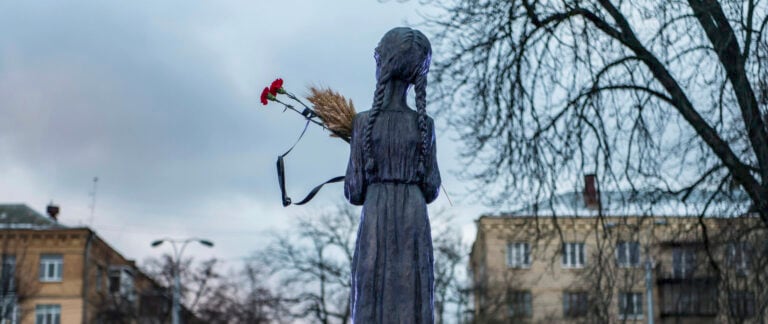
Another project the team plans to revisit after Ukraine’s victory is assisting the National Museum of the Holodomor-Genocide in Kyiv in collecting artifacts and materials from that period. The full-scale war forced this work to be suspended, but it has not diminished its importance.
All three areas of work – oral history, research into long-term effects, and the preservation of artifacts – share one goal: to prevent the tragedy from fading into the passage of time.
One unified voice
While the Global Holodomor Descendants Network focuses on people, family histories, and future generations, the UWC International Coordinating Committee for Holodomor Awareness works on broader international objectives.
The committee cooperates with the Ukrainian Institute of National Memory, the National Museum of the Holodomor-Genocide, and Ukrainian communities in various countries. Its work aims to strengthen international recognition of the Holodomor as a genocide, develop educational initiatives, preserve historical materials, and coordinate global commemorative events.
According to Olya Soroka, mostly thirty countries have already recognized the Holodomor as a genocide of the Ukrainian people. However, the work continues, as the committee’s goal is to secure such recognition in every country around the world.
“We are working to increase the number of countries that recognize the Holodomor as a genocide against the Ukrainian nation. We also aim to expand the descendants’ network, involve Ukrainian heritage schools in educational projects, and raise awareness of the Holodomor’s effects on subsequent generations,” she says.
An important tool in this effort is a joint global campaign to commemorate the victims of the Holodomor. Its purpose is to ensure that Ukrainian communities in different countries have coordinated materials, can hold commemorative events, and can deliver a unified message to international audiences.
How to talk about the Holodomor
Olya Soroka believes that the Holodomor must be discussed with every generation, but that particular care is needed when talking to children who have neither a family connection to the tragedy nor sufficient historical context. For younger audiences, she suggests starting not with horrifying statistics but with a picture of ordinary Ukrainian life.
“Imagine that your family lived in a beautiful village where your grandparents grew food, honored traditions, spoke your language, sang songs, and taught these things to their children. Then soldiers came, took away the food and livestock, searched the house, and would not let the family look for anything that could help them survive. This happened to millions of Ukrainian families. That is the Holodomor.”
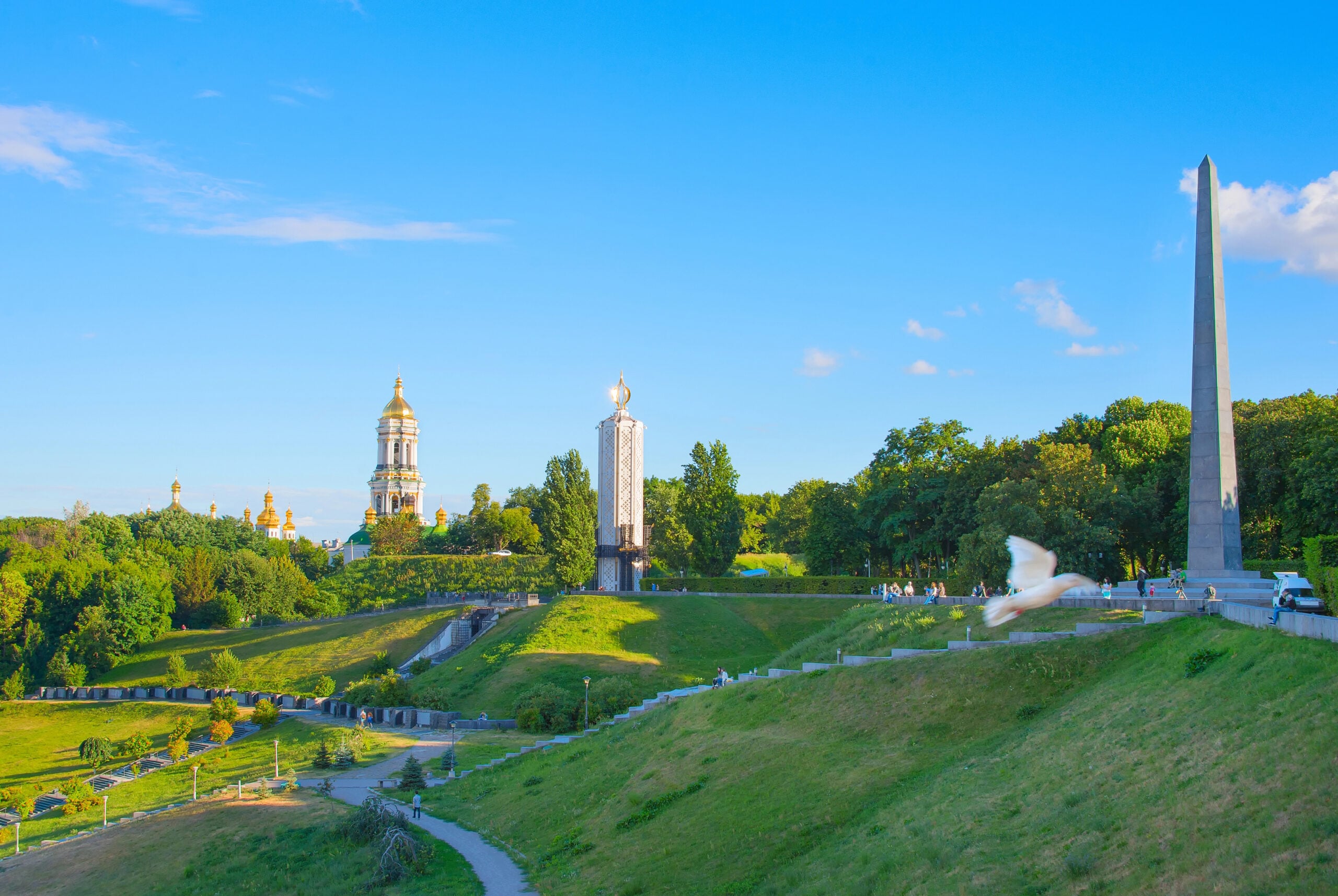 Through this picture, children can understand what was at stake. It was not just people’s physical survival but Ukrainian life itself – language, culture, traditions, family ties, and the right of a people to be who they are.
In the 1920s, Ukrainians were experiencing a cultural revival. They were developing education in the Ukrainian language, writing books, creating music and art, and strengthening their sense of Ukraine as a distinct nation. The Soviet authorities viewed this growing national consciousness as a threat to their rule. Repression against the Ukrainian intelligentsia and institutions, along with the Holodomor, became part of an assault on Ukrainian society.
“Being Ukrainian is not simply having a Ukrainian last name or knowing where your grandparents came from. It means language, songs, traditions, history, food, faith, family memories, and a connection to your native land,” Ms. Soroka says.
This explanation is also important for those born outside Ukraine who have no direct family connection to Holodomor victims. Understanding why the Soviet regime tried to destroy Ukrainian identity helps people see the tragedy not as an isolated chapter of history but as part of the struggle for Ukrainians’ right to exist as a distinct people.
From the Holodomor to today’s war
Russia’s full-scale war against Ukraine has once again drawn international attention to the history of the Ukrainian people. At the same time, it has shown how important it is to understand the mechanisms of propaganda, the denial of crimes, and attempts to destroy national identity.
Olya Soroka points out that in 1932–1933, the Soviet authorities denied the scale of the tragedy, concealed information, restricted people’s ability to leave famine-stricken areas, and punished those who spread the truth. Some Western journalists, including Walter Duranty of The New York Times, helped spread a distorted picture of events in Ukraine. Despite the existence of documentary evidence, denial of responsibility for the Holodomor persists by russia today.
According to her, Russian propaganda continues to use familiar tactics: denying obvious facts, spreading disinformation, manipulating history, and attempting to shift responsibility for crimes onto their victims. However, modern technology makes it possible to document events and share evidence almost instantaneously.
While drawing parallels between the Holodomor and today’s war, Ms. Soroka also cautions against equating the two historical periods. The political and military circumstances are different, but there are troubling similarities: denial of Ukraine’s national agency, suppression of its language and culture, deportations and forced displacement, attacks on civilians, destruction of cultural institutions, propaganda, and the use of food and agricultural infrastructure as tools of war.
“The Holodomor is not just a historical topic. It helps explain why Ukrainians consider preserving their national identity, language, culture, and independence a matter of the nation’s very survival,” she emphasizes.
That is why, in Olya Soroka’s view, Ukrainians living abroad must do more than preserve memory within their own families. They must also actively tell the societies in which they live about Ukraine. They should talk to friends, colleagues, and neighbors, visit schools and libraries, take part in community initiatives, and speak up when they encounter disinformation.
“Everyone with Ukrainian roots, regardless of where they were born, should know Ukraine’s history and share the truth with others. Living outside Ukraine, we have the technology and freedom to support it by countering Russian propaganda so that the world can see the truth.”
For Olya Soroka, this work began with quiet conversations among family members – with memories her loved ones did not dare to speak aloud. Today, she helps transform such stories into an international voice heard in schools, research projects, Ukrainian communities, and at the political level.
Because remembering the Holodomor is not only a responsibility to those who died. It is also a responsibility to those living today and to future generations, who must know what happened to Ukraine, why it was possible, and why the truth about the past matters for protecting the future.
Photos: DepositPhotos
Latest news
 #GlobalAdvocacy
Russia seizes foreign businesses: Turning Kremlin blackmail into advocacy tool
 #LocalAction