




by Kate Turska, Co-chair of the Ukrainian Association of New Zealand (North) and the head of Mahi for Ukraine
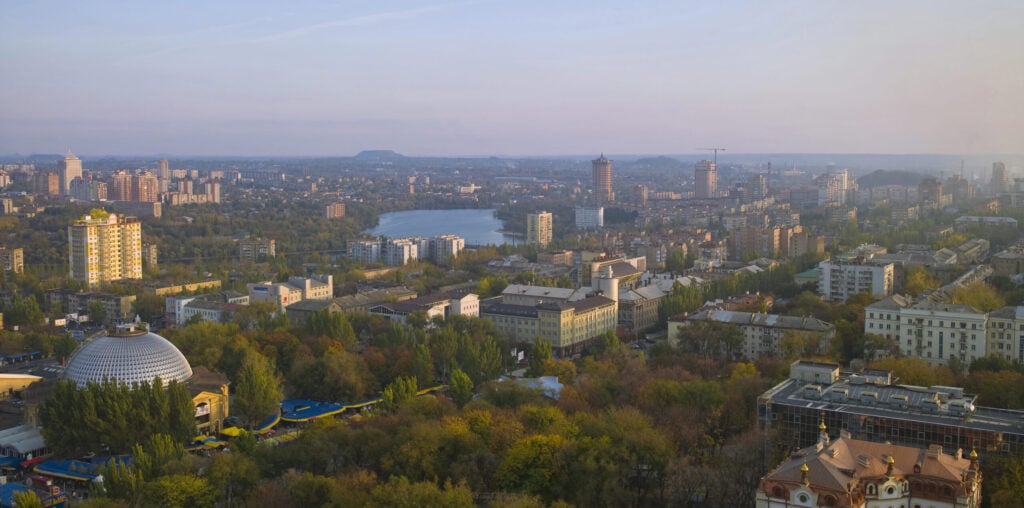
I come from Sloviansk, in Ukraine’s Donetsk region.
For anyone who has followed Russia’s war against Ukraine since 2014, the name will probably be familiar. Sloviansk was where armed men led by Russian citizen and former FSB officer Igor Girkin seized government buildings in April 2014, and where one of the first major battles of Russia’s war in eastern Ukraine unfolded.
And yet, more than twelve years later, I still regularly encounter versions of the same story: “that something happened in Donbas in 2014 because the people there were fundamentally different from the rest of Ukraine; that Ukraine somehow fractured naturally between a Russian-speaking East and a Ukrainian-speaking West; that an internal conflict erupted and Russia subsequently became involved.”
For somebody from the region, it is difficult to overstate how profoundly misleading that narrative is.
I also had an unusual vantage point from which to watch the mythology behind it develop. While I grew up in Donetsk region, part of my family comes from Lviv region, and I spent considerable parts of my childhood travelling between the two. East and West. The two “Ukraines” we were repeatedly told existed.
I saw differences, of course. Ukraine is a large country. Its regions have different histories, accents, traditions, economic structures and experiences of the Soviet period — all of that is normal. But I also saw something else: how genuine regional differences could be exaggerated, manipulated and eventually transformed into supposed incompatibilities.
For decades, Ukrainians were encouraged to see one another through caricatures. The West was supposedly nationalist, hostile to Russian speakers and alien to people in the East. The East was supposedly Russian, Soviet, culturally separate and suspicious of Ukrainian nationalism. Language became political identity. Geography became loyalty. Political campaigns exploited those divisions, while Russian television, culture, information operations and political influence continually reinforced them.
Eventually, the mythology became so familiar that people outside Ukraine — and sometimes Ukrainians themselves — began treating it as an organic description of the country.
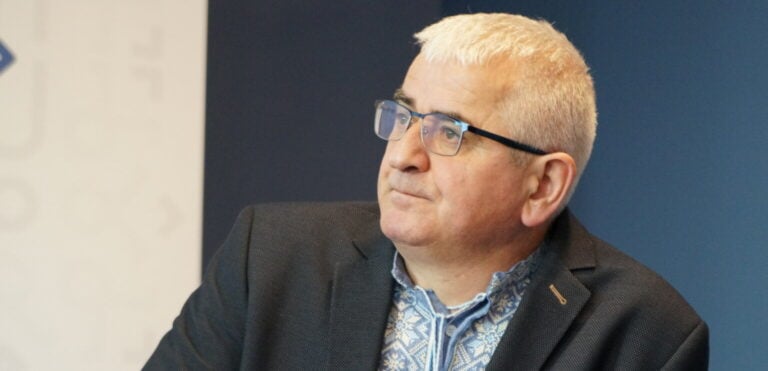
My dear friend Vlad Vernygora, an international relations and political science scholar who now serves as an officer in Ukraine’s National Guard, has given this phenomenon a particularly useful name: Donbasification.
Vlad is also a New Zealander. He studied at the University of Canterbury before building an academic career in Europe, teaching international relations and political science and researching, among other things, contemporary political empires and their strategic narratives. After Russia launched its full-scale invasion, he returned to Ukraine and joined the National Guard. Today, he serves as an officer in the 1st Corps Azov.
In a piece published by Estonia’s Delfi under the striking headline A warning to Estonia: You too can be turned into a Donbas — so learn from us, Vlad describes Donbasification as something much more sophisticated than separatism. It is the deliberate construction of an enemy-made regional identity inside another country: taking real regional characteristics, layering mythology, propaganda and historical distortion over them, exaggerating genuine differences, suppressing inconvenient history, and eventually presenting the resulting artificial identity as evidence that the territory never properly belonged within the nation at all — and using that manufactured division against the state itself.
It is a phenomenon I recognise intimately, both as a Ukrainian from Donetsk region and as someone who spent much of my childhood moving between Ukraine’s East and West. And it is worth examining in full, because Donbasification helps explain not only what Russia did to my home region, but something much larger: how an imperial power can manufacture the very division it later claims merely to have discovered.
First, what exactly is Donbas?
Even the word itself carries part of the story. Donbas derives from Donets Basin — originally an economic and geographical description of the enormous coal and industrial basin that developed across parts of eastern Ukraine and western Russia.
It was not an ethnic territory, nor a nation within a nation. It did not even correspond precisely to an administrative region.
What we commonly call the Ukrainian Donbas broadly encompasses Donetsk and Luhansk oblasts, but the economic basin historically extended beyond them into parts of Kharkiv and Dnipropetrovsk regions and across today’s international border into Russia.
Soviet atlases treated Donbas as an economic region: coal, steel, factories, mines. A resource basin, not a separate homeland.
That distinction matters enormously, because one of Russia’s greatest propaganda achievements was transforming an imprecise term of economic geography into something that sounded almost ethnic, a cultural identity if you will.
Eventually we began hearing about the supposed people of Donbas as though they constituted a separate people with a political destiny fundamentally different from that of other Ukrainians. This is the heart of what Vlad calls Donbasification.
The myth grew through propaganda, Russian popular culture and disinformation, continually reinforcing the idea that Ukraine’s East was fundamentally different from the West and laying the ground for a supposed internal conflict. The most dangerous invention was the idea of a separate people of Donbas — a pseudo-identity that could eventually be used to justify separation and territorial expansion.
Once that proposition becomes accepted, the next steps become much easier. If the people are different, perhaps they require autonomy. If they require autonomy, perhaps Kyiv is oppressing them. If Kyiv is oppressing them, perhaps resistance is inevitable. And if resistance is inevitable, perhaps Moscow is not invading at all, perhaps it is simply helping.
That is how an imperial project is gradually rewritten as an internal dispute.
Before Donbasification came Russification
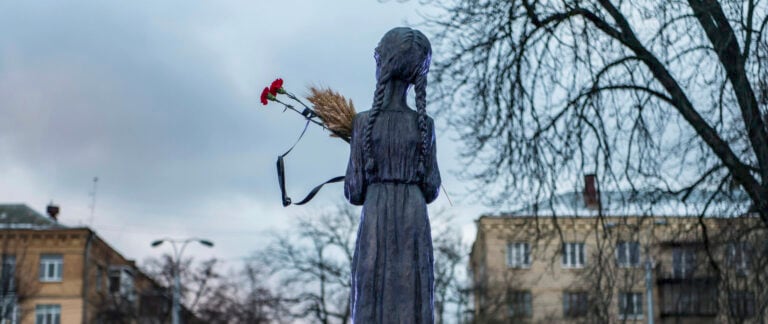
None of this began in 2014. Donetsk and Luhansk suffered terribly under Soviet rule, including through the Holodomor and Stalinist purges. Communities were destroyed, populations changed. Workers were brought from Russia and elsewhere in the Soviet Union to supply the enormous industrial machine being built around the mines and factories.
And forced Russification followed.
This happened throughout Ukraine, but its depth in the industrial East was particularly profound. A whole region was taught to forget its own voice. Russian language became dominant in urban public life, administration, higher education, professional advancement and media. Ukrainian schools disappeared or were converted to Russian-language instruction. Ukrainian was increasingly pushed into the private sphere and associated with villages, while Russian carried status, opportunity and power. Speaking Ukrainian could mean losing a career. Street names, newspapers, institutions — everything reinforced Moscow’s dominance.
That distinction is essential because language would later be used as supposed evidence of national identity.
Millions of Ukrainians were Russified and then their Russification was presented back to them as proof that they were Russian. It is an extraordinary circular argument.
First an empire suppresses your language. Then it points to the prevalence of its own language as evidence that the land belongs to it.
The demographic consequences of Soviet terror and industrial migration reinforced the process. Soviet symbols dominated public space. Russian television and publishing dominated cultural consumption. Generations grew up inside an information environment in which Moscow remained the cultural centre of gravity even after Moscow ceased formally to govern Ukraine.
But none of this transformed Donetsk or Luhansk into Russia. We have an unusually clear historical test of that proposition.
On 1 December 1991, Ukrainians were asked directly whether they supported an independent Ukraine. Every administrative region of the country voted yes.
Nationally, support exceeded 90 percent. In Donetsk oblast, 83.90 percent voted for Ukrainian independence. In Luhansk oblast, 83.86 percent did the same. Crimea and Sevastopol returned majorities for Ukrainian independence too.
That referendum is extraordinarily inconvenient for the mythology subsequently built around Ukraine’s East. When people there were actually asked which country they wanted to belong to, the answer was Ukraine.
Manufacturing East against West
But independence did not end Russian influence. Ukraine emerged from the Soviet Union politically and institutionally weak, with elites shaped by the system they had inherited. Russian economic leverage remained enormous. So did Russian media penetration, cultural influence and political networks.
The Soviet architecture was not dismantled overnight. Russian-language television remained everywhere. Soviet monuments and street names remained. Russian cultural products saturated the information space.
And alongside them came something more corrosive: the constant political construction of an East-West divide.
This part of Donbasification is particularly personal for me because I knew both sides of the country that were supposedly incapable of understanding one another.
I knew Donetsk region and I knew Lviv region. Growing up I watched narratives about each being fed to the other.
People in the East were repeatedly warned about dangerous western Ukrainian nationalists who supposedly hated Russian speakers. People in the West were presented with an East supposedly incapable of imagining itself outside Russia’s cultural orbit.
Real political disagreements existed, so did regional differences. But those differences were repeatedly inflated into questions of identity and belonging. The trick was subtle.
You do not necessarily have to persuade somebody that they are Russian. You only have to persuade people that they are not quite like other Ukrainians: that Kyiv does not understand them, that another part of their country despises them, that their language and way of life are somehow under threat, that their history is separate, and ultimately that perhaps they are being governed by somebody else’s state. Repeat that story often enough and for long enough, reinforce it through politics, media and culture, and gradually what were once ordinary regional differences can be turned into a fault line — one that, when the moment comes, can be deliberately exploited.
The ground was prepared before the soldiers arrived
Under Viktor Yanukovych — himself from Donetsk — corruption and Russian penetration of the Ukrainian state deepened dramatically, reaching extraordinarily high levels inside Ukraine’s political, security and defence institutions, while Moscow continued applying economic and political pressure.
The narrative was that Donbas was strong, different, and that it would not be dictated to by Kyiv, while Russian television, popular culture and news reinforced the information environment in which these ideas circulated and became increasingly normalised. Then came 2014. In Crimea, Russian soldiers appeared without insignia while Moscow initially denied what it was doing, and in eastern Ukraine, Russia similarly sought to present its aggression as something indigenous — a local uprising rather than an operation directed and supported by Moscow. Sloviansk became one of the places where that fiction was born, which for me makes this far more than an abstract historical argument: it is my hometown.
Russia would spend years describing the war that followed as a rebellion of Donbas against Ukraine. The mythology created before the war now became the explanation for the war.
Russia did not simply exploit an existing separatist identity; it manufactured it.
And yet the roots survived
There is another part of Vlad’s argument that matters just as much. Donbasification did enormous damage, but it never entirely succeeded.
Beneath decades of Russification, Sovietisation and propaganda, Ukrainian identity survived. The history of the region itself makes that clear.
Vasyl Stus, one of Ukraine’s greatest poets and dissidents, came from Donetsk. He refused to surrender his Ukrainian identity to the Soviet system and eventually died in a Soviet prison camp.
Anatolii Solovianenko, the extraordinary tenor from Donetsk, carried Ukrainian song onto the world’s stages.
Volodymyr Sosiura, born in Debaltseve, gave Ukraine one of its most enduring declarations of national love: Любіть Україну — Love Ukraine.
These people did not somehow exist in spite of the region, they were of it.
And before 2014, something else was happening across Donetsk and Luhansk. New cultural spaces were emerging. Artists, activists, festivals and civic initiatives were beginning to reconsider what a modern eastern Ukrainian identity could look like — industrial, often Russian-speaking, carrying a complicated Soviet inheritance, and completely Ukrainian.
Russia’s great miscalculation was assuming Russification had killed those roots.
Azov and the contradiction Russia cannot explain
That becomes particularly visible in the story of Azov.
Few Ukrainian military formations have been subjected to as much Russian propaganda as Azov. Its early history has been endlessly extracted from context and weaponised by Moscow to construct one of the central justifications for Russia’s war: the absurd proposition that Russia invaded Ukraine to denazify it.
Whatever debates may be had about individuals and symbols in the formation’s earliest period, turning that history into a description of today’s Azov — or, more extraordinarily, of Ukraine itself — is pure propaganda.
Today the 12th Special Forces Brigade Azov is part of Ukraine’s National Guard and part of the 1st Corps Azov. Its soldiers come from across Ukraine. And, as Vlad points out in his article, its current brigade commander comes from Donetsk oblast.
There is something wonderfully destructive to the Kremlin narrative in that simple fact.
A man from the region Russia claims it came to rescue commands one of the Ukrainian formations fighting Russia. I am from Donetsk oblast too. And our stories are hardly exceptional.
There are thousands upon thousands of Ukrainians from the East, many of them Russian-speaking, serving in Ukraine’s Armed Forces, National Guard and other formations. Others support Ukraine from abroad. Some, like Vlad, returned and put on a uniform. Others, like me, work from countries such as New Zealand to build political, humanitarian and public support for Ukraine. And some remain inside territories Russia occupies.
Resistance behind the occupation
Perhaps nowhere is the failure of Donbasification clearer than there.
The Yellow Ribbon civil resistance movement operates throughout Russian-occupied Ukrainian territory, including Crimea and occupied parts of Donetsk and Luhansk.
Its activists live under a regime in which openly expressing Ukrainian identity can bring interrogation, imprisonment or worse. Yet Ukrainian flags, yellow ribbons, leaflets appear everywhere.
In October 2025, activists even unfurled a Ukrainian flag near Donbass Arena in occupied Donetsk.
They are small acts only if one ignores the circumstances in which they occur. For Russia, these people should not exist.
If the Kremlin’s story were true — if these territories were naturally Russian, if their populations had simply been waiting for Moscow to liberate them — there should be no need to imprison people for displaying Ukrainian symbols or suppress Ukrainian education. There should be no Yellow Ribbon.
Donbasification is still happening
Donbasification is not merely something Russia did before 2014; Vlad’s concept is strikingly contemporary, and we can watch its machinery operating today.
In July 2026, Human Rights Watch documented what Russia is doing to Ukrainian children living under occupation. Ukrainian-language education is being suppressed. Children are pushed into Russian curricula. Accessing Ukrainian education online can bring surveillance and punishment. Russian passports are required to graduate. Schools deliver anti-Ukrainian propaganda and militarised education.
An OSCE expert mission reported this year on the systematic militarisation and indoctrination of Ukrainian children and the displacement of Ukrainian language and identity from education in occupied territories. The process is familiar: suppress Ukrainian education and history, make Russian the language of authority, reshape the information environment and teach children that Russia is their country, only to later point to the resulting Russification as evidence that the population was Russian all along.
This is Donbasification in perhaps its most concentrated form, and a reminder that Russia’s war has never been only about territory, but also about determining the identity of the people who live on it.
A lesson from home
There is a reason this subject stays with me.
I come from the place Russia spent years telling the world was not really Ukrainian. Russia tried to turn my city into evidence of its own mythology.
And because another part of my family comes from western Ukraine, I also grew up knowing the people we in the East were supposedly so fundamentally different from.
Russia told eastern Ukrainians one story about western Ukrainians and told the world another story about us. Eventually those stories became part of the justification for war.
This is also why the lesson of Donbasification matters far beyond Ukraine. Russia’s ability to identify genuine differences within societies, exaggerate them into supposed incompatibilities and then weaponise the resulting divisions is not unique to Donbas, nor is it confined to conventional warfare. For Western democracies confronting Russian disinformation, political interference and other forms of hybrid warfare, understanding how those narratives are constructed — and how easily they can become accepted as organic divisions within a society — is part of understanding the threat itself.
But the deeper story of Donbas is not that Russia successfully created another people. It is that, despite extraordinary efforts to do exactly that, it failed. Ukrainians stood up when the invasion came and continue to fight together. The roots survived.
They survived in Ukrainian poets writing under Soviet repression. In miners and workers who voted for Ukrainian independence. In the cultural revival beginning before 2014. In people from Donetsk and Luhansk who fought for Ukraine when Russia arrived. They survive today in soldiers from the East serving in Ukrainian formations, including Azov. In Vlad, serving Ukraine in the National Guard. In those of us abroad who continue advocating for the country from which we came.
And they survive in a yellow ribbon tied somewhere in occupied Donetsk by a person who cannot safely tell us their name.
Russia’s great strategic fiction was to transform an economic region into an identity, that identity into a grievance, the grievance into a supposed conflict and the conflict into justification for conquest.
That is Donbasification. Understanding it matters because Russia’s most effective weapon was never simply the lie that Donbas was Russian.
It was persuading people, slowly and repeatedly, that Ukrainians on opposite sides of their own country had less in common with one another than they actually did.
Regardless of where we were born, what language we spoke, or what lies Russia told, Ukrainians chose Ukraine. And that is the warning: never let an enemy write your identity for you.
Ukraine has paid an unimaginable price for that lesson. Others should learn it without having to do the same.
Cover: DepositPhotos
Latest news
 #GlobalAdvocacy
Russia seizes foreign businesses: Turning Kremlin blackmail into advocacy tool
 #LocalAction