



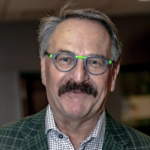
Lubomyr Luciuk, Professor Emeritus of The Royal Military College of Canada, a Senior Research Fellow with the Chair of Ukrainian Studies at the University of Toronto
Source: Kyiv Post
Ukraine’s plan to build a National Pantheon has drawn sharp criticism abroad. Some argue that certain individuals and national liberation movements – figures like Col. Yevhen Konovalets, a founder and the first leader of the Organization of Ukrainian Nationalists (OUN) – should never receive official recognition. Fair enough – legitimate debate isn’t precluded. But an obvious question follows: do those making these arguments apply the same standard to their own countries?
Rarely.
Collective memory is never neutral. Every nation constructs a historical narrative rooted in its own experience rather than any universal consensus. And outsiders seldom interrogate their own traditions; more often they object to someone else’s.
Britain celebrates Oliver Cromwell as a defender of parliamentary government, though in Ireland he is associated with massacres and dispossession. France celebrates Napoleon as a state-builder and architect of its modern institutions, despite wars that caused millions of deaths across Europe. Poland reveres Józef Piłsudski as the restorer of its independence, even though Ukrainians associate him with the brutal 1930 “Pacification” campaign in occupied western Ukraine.
Israel commemorates Menachem Begin as a pivotal figure in the creation of the Jewish state, even though the Irgun, the underground organization he led and which the British classified as a terrorist group, carried out the 1947 kidnapping and gruesome hanging of two British sergeants, one of Jewish heritage. Yet no one seriously demands that Britain erase Cromwell, France renounce Napoleon, Poland abandon Piłsudski or Israel banish Begin.
Ukraine’s case follows the same logic. Kyiv plans to repatriate Col. Konovalets’ remains, which have rested in Rotterdam since 1938, where Pavel Sudoplatov assassinated him on Stalin’s orders. In July 2022, after occupying Melitopol, Russian forces raised a monument to the hitman. Later, Moscow named a battalion fighting against Ukraine after him. The irony is striking: Russia celebrates the assassin while objecting to the reburial of his victim. And it is Konovalets who is portrayed as being beyond the pale.
The same double standard appears elsewhere. In 1926, Symon Petliura, respected by many Ukrainians as a great leader, was murdered in Paris by Sholom Schwartzbard. The slayer’s remains were reinterred in Israel in 1967, in a cemetery established by Jewish Legion veterans, portrayed as a “Jewish hero.” More than a few Ukrainians would disagree, another reminder that one nation’s hero may be another nation’s villain.
Cover: DepositPhotos
Latest news
 #LocalAction
Kyiv, Warsaw, and Russian threat: How Ukrainians in Poland preserve dialogue
 #CallToAction