

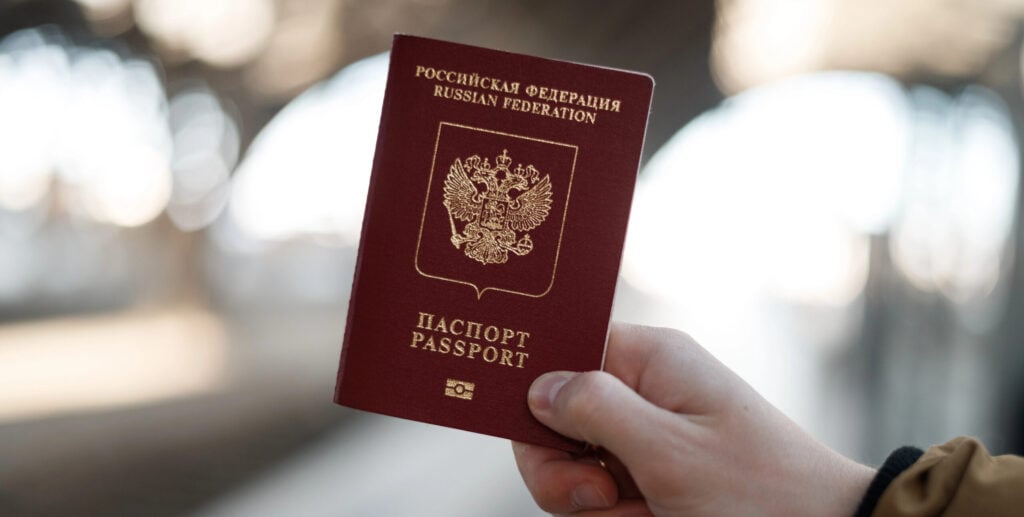


Despite the EU’s consistent financial and military support for Ukraine, the bloc remains deeply divided over visa policy for Russian citizens.
On 9 July, Euronews reported that the EU had begun discussing a significantly watered-down proposal to ban visas for Russian military personnel and veterans. The original, tougher proposal was scaled back after France and Italy opposed it.
The debate comes despite Brussels maintaining uncompromising rhetoric toward Russia and formally keeping sanctions pressure in place. Yet seemingly minor decisions like these often reveal more about the consistency of European leaders’ policies toward citizens of the aggressor state than official statements do.
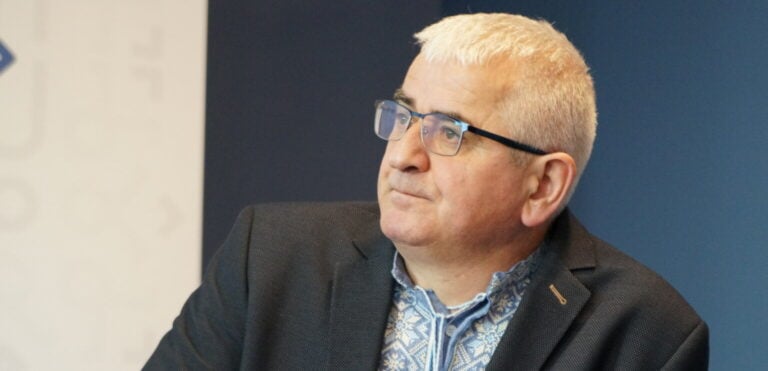
In an interview with the Ukrainian World Congress (UWC), Zenon Kowal – a member of the UWC Executive Committee, political adviser to the European Congress of Ukrainians and the Association of Ukrainians in Belgium, as well as former Special Adviser to the Embassy of Ukraine in Belgium – explained the underlying motives driving European capitals and outlined what Ukrainian communities can do to influence EU policy.
From 4 million visas to 500,000
Until 2022, Russia benefited from a special visa facilitation agreement introduced in 2007, which simplified Schengen visa procedures and made it easier to obtain multiple-entry visas. That arrangement was suspended after Russia’s full-scale invasion of Ukraine.
The impact was substantial. While the EU issued around 4 million visas to Russian citizens in 2022, by 2025 that number had fallen to about 500,000 – a 75% decrease. Last November, the EU also stopped issuing multiple-entry visas to Russians, adding another layer of restrictions.
However, those 500,000 visas are not distributed evenly across member states. The overwhelming majority are issued by just three countries:
- France – about 180,000 visas
- Italy – about 160,000 visas
- Spain – the third-largest issuer
It is no coincidence that these southern European countries are also among the most dependent on tourism. According to Kowal, economic interests are always a key factor behind decisions to tighten or relax restrictions.
The issue escalated when 11 countries – mostly from northeastern Europe, including Iceland and Norway (which are not EU members but belong to the Schengen Area) – publicly challenged the policies of France, Italy, and Spain. Among the initiators are the Czech Republic, Denmark, Estonia, Sweden, and Poland. They are calling on the European Commission to introduce a complete ban on Schengen visas for Russian citizens.
Kowal says this highlights a fundamental institutional issue. While the Schengen Area is governed at the EU level, decisions on issuing individual visas remain the responsibility of each member state.
He also notes that countries geographically closer to Russia and the front line have taken the strongest stance in favor of restrictions. They perceive the threat more directly, making their position far more political and security-driven than that of countries located thousands of miles from the war.
Security and morality
Among the arguments capable of influencing the positions of France, Italy, and Spain, Zenon Kowal highlights first and foremost the security argument, framed within the context of hybrid warfare:
- Uncontrolled visa issuance creates a channel through which individuals posing as tourists or businesspeople can enter with missions to destabilize society, sow division, and support extremist movements.
- This is not a matter of tourism, but a security policy issue for all of Europe, not just an individual country.
- Countries that have already experienced elements of hybrid warfare (cyberattacks on digital hospital systems and infrastructure, including nuclear facilities) are natural allies in this discussion – it is easier to explain the risks to them.
Importantly: the moral argument (“ordinary people should not be punished for the actions of their government”) also exists in the debate. However, in the expert’s view, the security argument has the greatest potential to persuade countries that are physically distant from the conflict zone and do not yet feel the threat firsthand.
Regarding the specific decision to ease entry for Russian military personnel, Zenon Kowal notes that the risk depends on whether a specific individual has covert assignments in addition to military experience. The security services of the visa-issuing countries usually keep such individuals under surveillance. At the same time, there is an economic factor – Russian spending in the tourism sector is significant, and southern European societies have, to some extent, become accustomed to the presence of Russians at resorts.
If this is not tourism for tourism’s sake but rather a partnership with Ukraine, then the free and unrestricted movement of citizens of the aggressor state contradicts the very logic of support. The categories of people who should retain access to visas – dissidents, journalists, civil society representatives, and individuals with family ties in the EU – must be defined by clear criteria, rather than a general easing of restrictions.
The easing of the visa regime for military personnel is happening in parallel with other signals – for example, Russia’s return to participating in certain sporting and cultural events (specifically, this year’s Venice Biennale).
At the same time, Kowal cites an example of a counter-movement: the European Commission canceled funding (about €2 million) for Russia’s participation in future Biennales. This illustrates a logic that communities should understand: the EU sometimes “tests the waters” regarding Russia’s reaction with minor concessions, and if there is no appropriate response, the concessions are revoked. This is not a linear process, but rather a series of test steps in both directions.
A practical guide for communities
Zenon Kowal outlined specific courses of action for the Ukrainian community and non-governmental organizations in EU countries.
1. Understand the structure of the problem before acting
It is not effective to address appeals to the European Union as a whole – the issue of issuing visas is the competence of individual member states. The most effective approach is to:
- Appeal directly to the governments of France, Italy, and Spain, as they issue the most visas.
- Support and amplify the voices of the 11 initiating countries (the Czech Republic, Denmark, Estonia, Sweden, Poland, and others) that already advocate for a total visa ban – coordination with their civil society organizations strengthens joint pressure.
2. Use the security argument, not just the moral one
In communications with southern European governments and media, it is important to:
- Emphasize specific examples of hybrid threats (cyberattacks on hospitals, energy infrastructure), rather than just the general moral responsibility of Russians for the war.
- Explain the mechanism: uncontrolled visa issuance = a potential channel for agents of influence, not just tourists.
- Avoid rhetoric that is easily dismissed as “emotional” – appeal to specific precedents of security incidents in Europe.
3. Build pressure through letters and appeals to governments
Although governments already have access to intelligence and security information, organized and systematic pressure through official appeals, petitions, and letters to relevant ministries remains an effective tool – especially when coordinated among communities in several countries simultaneously, rather than being an isolated initiative.
4. Respond publicly to specific decisions
The example of easing visas for military personnel shows that the reaction must be swift, concrete, and tied directly to the decision itself, rather than general. It is important to:
- Prepare brief public statements immediately following such news.
- Engage local media in the country where the community is active, explaining the implications of the specific decision for that country’s security.
5. Support parallel areas of pressure – culture, sports, funding
The case of canceling funding for the Russian pavilion at the Biennale shows that results can be achieved beyond the visa sphere. Communities should track and respond to:
- Russia’s participation in cultural and sporting events funded or supported by European institutions.
- Instances where the cancellation of support for Russia was the result of public pressure – and use these precedents as arguments in other campaigns.
6. Trust professional diplomatic work, supplementing it with public pressure
Kowal emphasizes that a significant portion of effective work takes place through professional, not always public channels – both diplomatic and security-related. The role of civil society is not to replace this work, but to:
- Maintain constant oversight and pressure so that official representatives do not lose focus.
- React immediately to high-profile decisions, demonstrating that society is watching.
7. Do not expect linear progress
It is important to explain to community members and the broader audience that the EU process is non-linear: easing of restrictions may alternate with tightening, depending on Russia’s behavior. This is crucial for managing expectations and preventing disappointment or apathy within communities.
The EU visa policy toward Russians is not a single, unified position of 27 countries, but rather a field of constant internal conflict between the economic interests of several southern European nations and the security concerns of countries geographically closer to the front line.
Ukrainian communities have the greatest impact when they work in a targeted manner – with specific governments, utilizing specific security arguments, and in coordination with those European partners who already share the position of completely restricting visas for citizens of the aggressor state.
Cover: DepositPhotos
Latest news
 #UWC news
UWC funded armored ambulances evacuate wounded after deadly Russian attack on Kramatorsk
 #LocalAction