



In late July 2026, a school in South Africa shared a social media post celebrating one of its students for winning a photography competition held in Russia and co-funded by a presidential foundation.
The photo showed the South African schoolboy wearing a Russian military uniform in front of military equipment. Next to him was an image depicting the Ukrainian flag in a derogatory manner.
The incident raised concerns within the Ukrainian Association of South Africa (UAZA), which called on the country’s authorities to investigate the circumstances of the trip and suspend schoolchildren’s participation in similar programs in Russia until there are guarantees that they are not being used for military propaganda, the legitimization of violence, or ideological influence.
The post, intended as a celebration of the child’s achievement, instead exposed a Russian mechanism that has operated for years on a much broader scale than a single school or a single country.
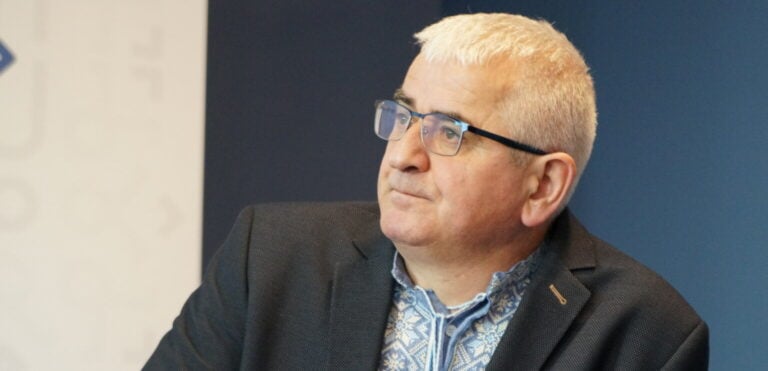
In an interview with the Ukrainian World Congress, Kateryna Rashevska, an expert in international humanitarian law and international criminal law, explained what truly lies behind Russia’s so-called “children’s diplomacy” initiatives and outlined the legal and practical steps Ukrainian communities can take to counter them.
Part of a broader system
The case involving the South African schoolboy was not a mistake or an isolated incident, but rather part of a large-scale propaganda campaign that Russia disguises as cultural exchange or “children’s diplomacy,” Rashevska says. The goal of this policy is to legitimize Russia’s aggression against Ukraine and whitewash its war crimes by promoting an alternative narrative of the so-called “special military operation.”
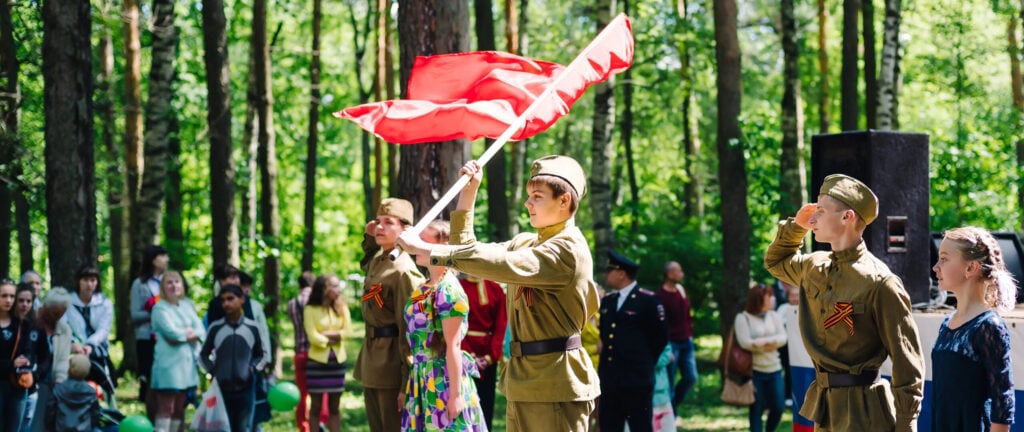
The mechanism operates through presidential grant foundations, cultural initiatives, and the network of Russian Houses abroad. The format of the competitions varies by region: in EU countries, they are more often essay or short video contests, while in South Africa it took the form of a photography competition. The prize for the winners, however, remains the same – a trip to the Russian Federation. Previously, winners were also sent to the Artek summer camp in occupied Crimea, which is under sanctions imposed by numerous jurisdictions, including the European Union, the United Kingdom, and Canada.
As Ukraine’s security and defense forces have intensified operations in the Crimean direction, some of these events have been relocated to Russia itself, including to Chelyabinsk, as well as to Belarus and North Korea. Rashevska notes that, alongside the photography competition in South Africa, an international camp session involving children from North Korea, Russia, and – for the first time – China is currently taking place at the Songdowon International Children’s Camp in Wonsan, North Korea. Whether Ukrainian children from the occupied territories are also being taken there remains unknown, as organizers have become far more cautious following previous scandals and are now attempting to conceal details of such programs.
“South Africa is the leader of its region and a member of BRICS, a bloc with growing geopolitical influence. That is precisely why it was important for Russia to bring even a handful of South African children there, even if these are only isolated cases. It allows Moscow to present such trips as supposedly legitimate cultural exchanges or examples of ‘children’s diplomacy,'” Kateryna explains.
These cases are later used as evidence that children from “all over the world” travel to Russia, reinforcing the claim that its cultural programs are supposedly free of political motives.
This helps Russia blur the line between legitimate international cultural exchanges and its unlawful programs for transferring Ukrainian children from occupied territories. That is why the Kremlin actively promotes the narrative that “culture is outside politics.”
Rashevska points out that this was the same rhetoric repeated by representatives of the South African school when explaining the student’s trip. However, she stresses that the participation of individual children from other countries does not mean those countries endorse such programs.
“The fact that citizens of certain countries are present in the Russian Federation in no way reflects the official position of the US, Norway, or any other country.”
Despite the similarities in the methods used, the militarization of Ukrainian children and foreign children constitutes two distinct policies under international law, Rashevska explains.
According to her, in the case of Ukrainian children, Russia, as the occupying power, is bound not only by international human rights law and the UN Convention on the Rights of the Child, but also by international humanitarian law. As a result, their militarization, Russification, and ideological indoctrination are strictly prohibited and, under certain circumstances, may amount to war crimes. This policy of cultural assimilation is aimed at destroying Ukraine as a sovereign state and subjugating the Ukrainian nation.
By contrast, Russia is not an occupying power in relation to children from South Africa or other countries. As a result, classifying similar cases involving foreign children as war crimes would be far more difficult.
“When we are talking about children from South Africa or any other neutral country, Russia is required to comply with international human rights law, including the Convention on the Rights of the Child.”
At the same time, the expert does not rule out other possible legal assessments. She points to a report by independent OSCE experts, published on July 9, which concluded that the systematic militarization and ideological indoctrination of Ukrainian children may constitute a crime against humanity. In theory, similar legal questions could also arise with regard to foreign children. However, Rashevska emphasizes that the two policies serve different purposes and therefore require different legal assessments.
“One policy is aimed at cultural assimilation, Russification, and the eradication of Ukrainian identity. The other is aimed at instrumentalizing childhood to legitimize Russia’s war of aggression.”
Children as a future reserve for war
An even more overlooked risk, Rashevska says, is that Russia may use these programs as a tool of long-term influence, cultivating a future pool of recruits abroad while fostering positive attitudes toward its military.
“These programs may be aimed at building a reserve for future mercenary recruitment. In that case, we are already talking about preparations for another war of aggression.”
Earlier this year, South African authorities repatriated citizens whom Russia had recruited under the guise of civilian employment but in reality sent to fight against Ukraine. For this reason, the expert argues, children’s programs cannot be viewed in isolation from Russia’s broader strategy.
“Most likely, the Russian Federation is simply creating a pool of people who, next time, will believe promises of education or training in Russia, when in reality they will be thrown into the meat grinder of war,” Kateryna says.
Mercenary activity has been criminalized in South Africa since 1998, and criminal investigations have already been launched against individuals accused of organizing the participation of South African citizens in the war on Russia’s side.
For that reason, Rashevska says, South African authorities could view such children’s programs not only as a matter of education or international cultural exchange, but also as a potential element of preparing citizens for future recruitment into Russia’s wars.
One of the few countries that has already responded to such Russian programs through legislation is Estonia.
In late 2024, Estonia introduced restrictions on children and young people under the age of 21 participating in events held in Russia, Belarus, and the Russian-occupied territories of Ukraine if those events are intended to justify Russia’s aggression, promote service in the Russian military, or spread Kremlin propaganda.
According to Rashevska, this demonstrates how protecting children can be balanced with respect for freedom of movement.
“Freedom of movement is not absolute. If a state understands that such activities may pose a threat to its national security, it has the right to restrict them.”
The law provides for parental liability, and its provisions apply not only to Estonian citizens but also to foreign nationals who permanently reside in the country. In Rashevska’s view, this approach could serve as a model for other democratic states as well.
Practical guide: How communities can respond
Ukrainian communities can respond effectively to incidents like these by building their advocacy around three key arguments, the expert says.
- Appeal to international law
Russia’s so-called “cultural” trips are not politically neutral. They may violate children’s rights guaranteed under the UN Convention on the Rights of the Child and broader international human rights law.
In addition, Russia is violating Article 20 of the International Covenant on Civil and Political Rights, which prohibits propaganda for war.
“Russia will never describe its aggressive actions as a war. That is precisely why children effectively become targets of propaganda that international law explicitly prohibits,” Kateryna says.
- Highlight the occupation of Ukrainian territories
If such trips take place in occupied Crimea or other Russian-occupied territories of Ukraine, they contradict the international policy of non-recognition of Russia’s occupation and may violate Ukrainian immigration law.
Even when an event is held inside Russia itself, the participation of Ukrainian children who have been unlawfully transferred from occupied territories effectively legitimizes the consequences of the occupation.
- Challenge the myth that “culture is outside politics”
According to Rashevska, Russia has used culture as an instrument of state policy for decades.
“Russian doctrinal documents explicitly stated that culture clears the way for Russian weapons.”
For that reason, so-called “children’s diplomacy” cannot be viewed separately from Russia’s full-scale war.
The expert also points to another recurring pattern: Russian programs often target children from socially vulnerable families or small communities. For them, winning an international competition and receiving an all-expenses-paid trip may appear to be a once-in-a-lifetime opportunity.
That is why, Rashevska argues, the most effective response is not only reacting after such incidents occur, but also carrying out sustained public awareness efforts aimed at parents and schools.
“Parents should ask themselves one simple question: if Russia is paying for these trips in full, what does it gain in return? There is no such thing as a free lunch.”
Cover: DepositPhotos
Latest news
 #UWC news