

On Oct. 25, the International Weightlifting Federation (IWF) made a decision that would have seemed unthinkable just a few years ago. Moscow will host the 2030 World Weightlifting Championships. This is the first time since the start of Russia’s full-scale invasion of Ukraine that an international federation governing an Olympic sport has awarded Russia the right to host a senior world championship.
Ukraine has already announced that it intends to challenge the decision. But the issue goes beyond sports diplomacy. It is yet another test of whether an aggressor state can regain its place in the international community without facing any consequences.
Decision in the making
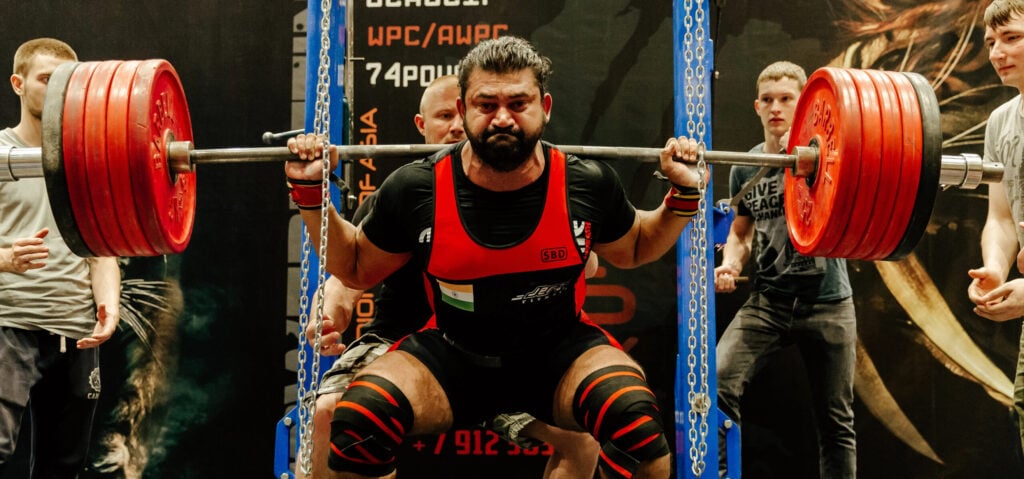
The IWF Executive Board selected host cities for four World Championships scheduled for 2028-2030. In 2028, Pristina will host the Youth World Championships, while Caracas will host the Junior World Championships. In 2029, the senior World Championships will take place in Ahmedabad, India. The final event in this series will be held in Moscow in 2030, with exact dates to be announced later.
IWF Secretary General José Quiñones publicly praised all the bids submitted and expressed confidence that the upcoming competitions would be a “great success.” Moscow will host the senior World Weightlifting Championships for the fourth time in its history. The previous editions took place during the Soviet era, in 1975, 1980, and 1983.
The decision is a logical continuation of the IWF’s policy of reintegrating Russian and Belarusian athletes into international sports. In June 2026, the federation fully lifted restrictions on athletes from both countries, allowing them to compete under their national symbols, flags, and anthems.
In July, the International Olympic Committee (IOC) updated its recommendations, leaving decisions on holding competitions in Russia to the discretion of individual international federations. The IWF took advantage of this change.
Ukraine’s response
Ukraine’s Minister of Youth and Sports, Matvii Bidnyi, announced that Ukraine is preparing official appeals to the IWF and IOC, demanding that the decision be reconsidered. Kyiv will call on the federation to reverse its decision and hold a new, transparent selection process for the host country.
Bidnyi also plans to raise the issue internationally, including at upcoming meetings involving sports ministers from Council of Europe and European Union member states. Ukraine’s goal is to build a common international position and secure public condemnation of the IWF decision from the global sports community.
The minister emphasized that holding international competitions in a country that continues to wage a full-scale war against Ukraine is unacceptable. He said the decision was particularly cynical given Russia’s escalating attacks on Ukrainian cities and energy infrastructure ahead of winter.
Action plan for Ukrainian communities worldwide
The Ukrainian government’s voice alone will not be enough if the international community treats this decision as a purely technical matter, says Volodymyr Kogutyak, UWC Vice President for Western Europe and Association of Ukrainians in France (AUF) Vice President, and Chair of the UWC Advocacy Committee.
“Russia has spent years using sports as a tool to legitimize its aggression against Ukraine. When major international tournaments return to Moscow and Russian athletes compete under their flag and anthem, the world receives a message that war comes at no cost. Our task is to ensure that this message does not become the norm,” he says.
The key arguments for our advocacy efforts are:
- “Sports are not above politics.” A tournament in Moscow would become a propaganda event for the Kremlin, demonstrating to domestic and international audiences that Russia is “back in the game.”
- Double standards. A country that attacks Ukrainian cities and energy infrastructure every day cannot host a world championship where athletes and participating countries are expected to uphold the principles of fair play.
- A dangerous precedent. If the IWF decision goes unchallenged, other international federations may follow the same path. That is why a coordinated and public response is essential.
To strengthen Ukraine’s position, the UWC Advocacy Committee recommends taking the following steps:
- Engage with national sports organizations
Contact the national weightlifting federations, national Olympic committees, and sports ministries in your country of residence. Urge them to publicly oppose holding the World Championships in Russia and support Ukraine’s call for a new selection process to determine the host country.
- Advocate at the governmental and parliamentary levels
Send letters to elected representatives and parliamentary committees responsible for sports, paying particular attention to Council of Europe and European Union member states, where the issue will be discussed at the level of sports ministers.
It is important that your governments hear Ukraine’s arguments and have an opportunity to consider them before these meetings take place.
- Engage with the media
Offer local media interviews, expert commentary, and op-eds on the topic: “Sports and War: Why Moscow Cannot Host International Competitions.” Emphasize why holding international sporting events in Russia while its war against Ukraine continues is unacceptable.
Also remind media outlets that the decision was made against the backdrop of Russian attacks on Ukraine’s energy infrastructure ahead of winter.
- Engage with the sports community
Reach out to athletes, coaches, and sports clubs in your country and urge them to publicly express their position on holding international competitions in Russia. Use official statements from Ukraine’s Ministry of Youth and Sports as a reliable source of verified facts and up-to-date information to support your arguments.
The cost of silence
The IWF decision demonstrates that without sustained pressure, international organizations may return to “business as usual” with Russia. At the same time, it gives Ukrainian communities an opportunity to remind the international community that the war is ongoing and that normalizing relations with an aggressor is impossible as long as it continues to kill.
“Every community that writes to its national federation or government today contributes to building a united position. We must make it clear that the World Championships in Moscow are not simply a sporting event but a political decision – and that decision must have consequences,” Kogutyak says.
Cover: DepositPhotos
Latest news
 #LocalAction
Ukrainians in Angola: ‘We came together and built community of our own’
 #Opinion
The European Forum of the Ukrainian diaspora in Augsburg: Unity, solidarity, shared responsibility for Ukraine’s future
 #UWC news