



For years, Ukrainian communities around the world have held protests outside the offices and stores of companies that chose to remain in the Russian market after the start of the full-scale invasion. Civil society organizations warned Western businesses that trying to preserve profits in an aggressor country was not only a moral failure and a way of financing the war through taxes, but also a strategic trap.
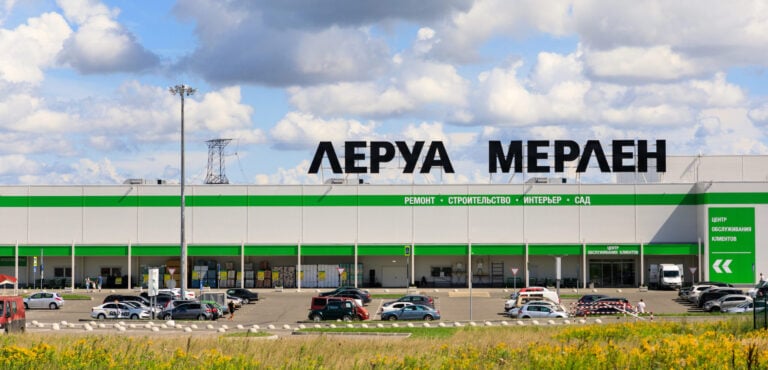
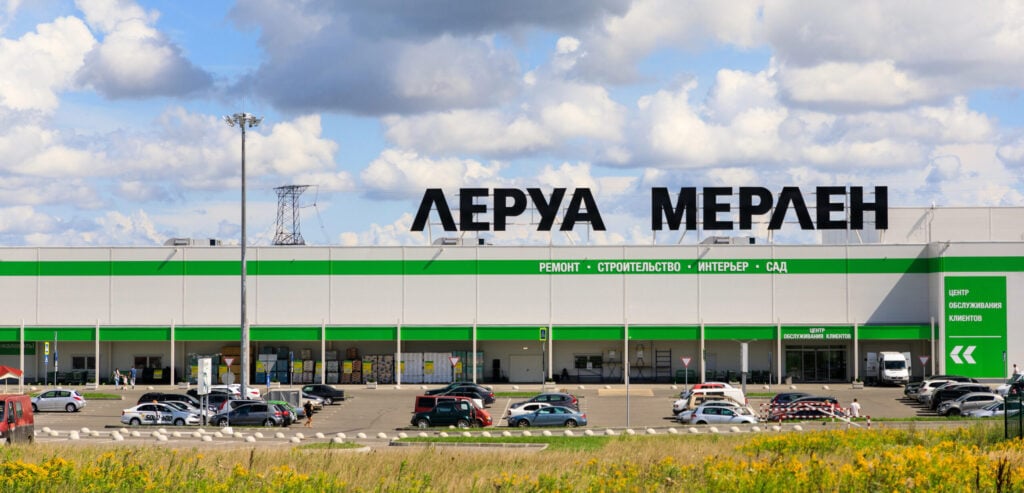
The Kremlin eventually confirmed the communities’ warnings itself and began another phase of outright plunder. On Sept. 17, Russian President Vladimir Putin signed a decree placing L.E.V. Management, a company holding assets belonging to French retail chain Auchan, Swiss company Nestlé, and Lemana PRO, which received Leroy Merlin’s property, under “temporary state administration.”
Meanwhile, on Aug. 4, the Kremlin officially authorized the withholding of assets from foreign companies that had left the Russian market. Moreover, according to sources cited by Bloomberg, Russia is developing a new mechanism for the rapid privatization and sale of foreign assets as a “response” to any European moves to confiscate Russian funds held abroad.
This exposes the entire illusion of “neutral business” and gives Ukrainian communities a powerful advocacy tool, says Volodymyr Kogutyak, UWC Vice President for Western Europe and Association of Ukrainians in France (AUF) Vice President, and Chair of the UWC Advocacy Committee.
The new argument for Western governments and societies is clear: any attempt to reach a compromise with Russia ends in expropriation, while Western capital left in the country becomes a direct resource for financing the war against Ukraine.
Changing the advocacy paradigm
“We are moving from emotional calls for boycotts to hard economic and security arguments. The Kremlin’s takeover of Western businesses shows that Russia has definitively turned to economic piracy,” Kogutyak says.
The key messages for our advocacy efforts are:
- “The price of compromise is expropriation.” Companies that stayed in Russia to preserve their profits ultimately lost their profits, their property, and their reputations. Trying to reach an agreement with an aggressor always leads to defeat.
- Financing the war in circumvention of sanctions. Assets placed under state control or handed over to Kremlin oligarchs will directly serve Russia’s war machine. Auchan and Leroy Merlin, now under new ownership, are becoming direct sources of revenue for Russia’s military budget.
- Blackmail through confiscation. Russia’s intention to sell off Western assets in retaliation for the transfer of frozen Russian funds to Ukraine is an attempt to hold European capital hostage. European governments must not give in to this blackmail.
An action plan for Ukrainian communities
To turn these developments into concrete decisions by Western governments and municipalities, the UWC Advocacy Committee recommends the following steps:
- Engage local and national media
- Pitch this story: “How our taxpayers’ and investors’ money ended up in the pockets of Putin’s oligarchs.”
- Submit press releases and opinion pieces to local media using specific brands as examples, including Auchan, Nestlé, and Leroy Merlin. Use figures to show that companies refused to leave Russia under the pretext of “concern for civilians,” only to have their assets seized by the Russian state.
- Advocate at the government and parliamentary levels
- Send appeals to the relevant ministries in your country of residence, including those responsible for the economy, foreign affairs, and finance.
- Demand strong national legislation that holds the management of companies whose assets in Russia have been nationalized or privatized accountable if those companies continued operating after 2022.
- Urge governments not to respond to Kremlin blackmail over frozen Russian assets. Putin himself caused the losses suffered by Western companies through his decrees of Aug. 4 and Sept. 17, so European taxpayers must not become hostages to the business mistakes of individual corporations.
- Public pressure and demonstrations
- Organize public awareness campaigns near the headquarters or flagship stores of the companies concerned.
- Use posters featuring brand logos intertwined with Russian military symbols and the message: “Your tax dollars in Russia became Russian tanks, and your stores became Putin’s property.”
- Public audits and “blacklists”
- Use analytical platforms such as Leave Russia as a source of verified data on businesses from your country that have not left the Russian market.
- Work with local partners and think tanks to update lists of companies operating in Russia and submit them to municipalities, demanding that these companies be excluded from public procurement processes and tenders. European national and municipal funds must not go to entities that support the aggressor’s economy.
Economic security as an argument
The privatization of foreign assets in Russia is the final nail in the coffin of the myth that doing business with a totalitarian regime is possible. The Kremlin has demonstrated that international law and the right to private property no longer exist in its eyes.
“The task of Ukrainian communities today is to make every European politician, journalist, and citizen understand that the only appropriate response to Russia’s economic and military terror is the aggressor’s complete isolation, the immediate transfer of all frozen Russian assets to support Ukraine’s reconstruction and defense, and unwavering support for our victory,” Kogutyak concludes.
Cover: DepositPhotos
Latest news
 #LocalAction
Russia’s nickel in Finland: Ukrainians demand closure of sanctions loophole
 #UWC news