

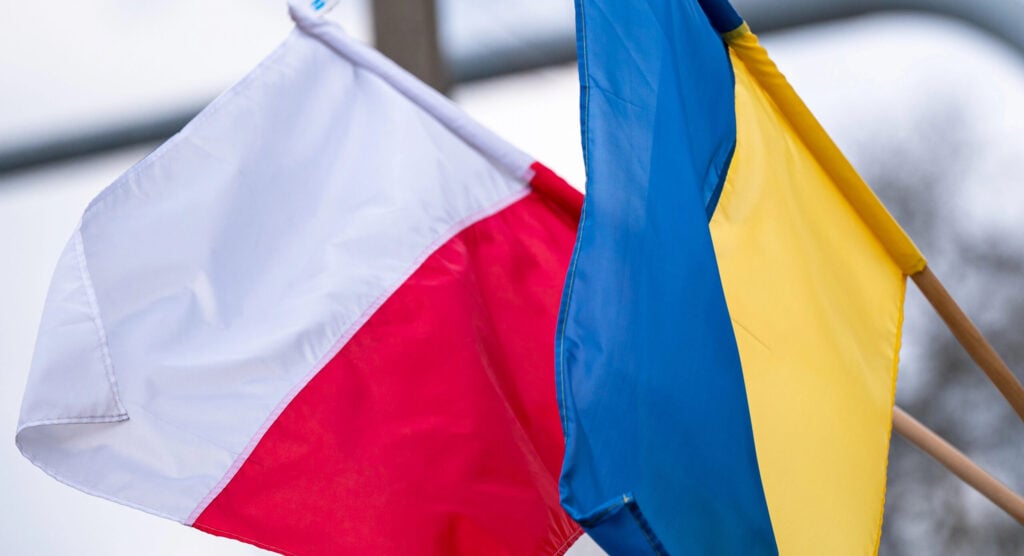


Polish President Karol Nawrocki’s decision to revoke the Order of the White Eagle – the country’s highest state honor – from Ukrainian President Volodymyr Zelenskyy has sparked a new wave of tension between Ukraine and Poland. The move was triggered by the naming of a Ukrainian Special Operations unit after UPA heroes. Warsaw’s response was swift and forceful, and the fallout has been felt not only by diplomats but also by ordinary Ukrainians, particularly the millions who live in Poland.
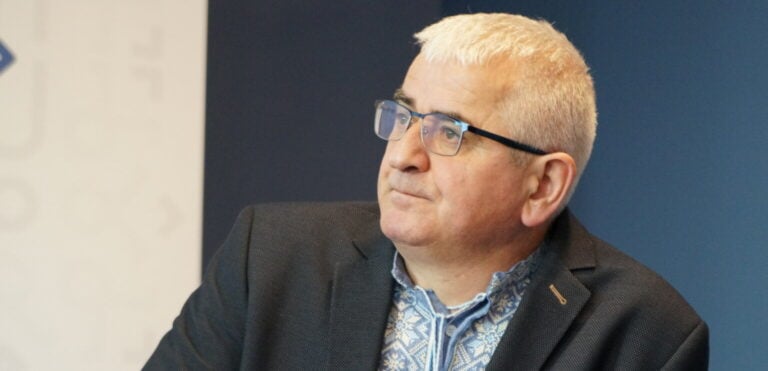
To better understand how Poland’s Ukrainian community should navigate these circumstances, the Ukrainian World Congress (UWC) spoke with someone who has spent years at the center of Polish-Ukrainian relations: Miroslaw Skorka, head of the Association of Ukrainians in Poland.
Tensions driven by politics
The conflict surrounding the award and historical names is not accidental, Skorka believes. The head of the Association of Ukrainians in Poland sees the situation as a deliberate strategy fueled by electoral processes within Poland.
“First and foremost, this is a political signal connected to Poland’s domestic politics,” Skorka says. “President Nawrocki has repeatedly demonstrated a critical attitude toward Ukraine. Against the backdrop of a political campaign, he and his political camp are trying to mobilize part of the electorate by appealing to sentiments related to Ukrainian issues. This decision became a convenient vehicle for such a message.”
The situation is further complicated by the fact that since 2024, the Polish political establishment has once again returned to a one-sided interpretation of shared history, reacting to Ukraine’s internal processes of identity formation during wartime. The consequences of this conflict may extend far beyond public statements, the community leader stresses.
“This is a very serious issue. Regardless of the extent to which it is driven by Poland’s domestic politics, such decisions can negatively affect Ukrainian-Polish relations. Therefore, it is important to assess the situation soberly and understand that support for Ukraine in Poland is neither unconditional nor guaranteed, but requires ongoing work and dialogue.”
Moreover, this escalation affects the community itself. Political slogans about Bandera and the UPA are once again being brought off the shelf, which “stirs emotions” and provides certain centers of power with tools to restrict the rights of Ukrainian refugees. However, Skorka calls for a rational and pragmatic response rather than panic.
A practical guide for communities
If you have a strong voice within the Ukrainian community, run a volunteer hub, or lead a civic organization, your strategy should be based on three pillars: depoliticization, preserving relationships, and a rational approach to history.
- Do not become a tool in someone else’s game
The community should not allow itself to be drawn into political disputes between Polish and Ukrainian parties. Our task is to protect the achievements of people-to-people diplomacy, Skorka says.
“First, we should refrain from participating in the current political polemics, because they are being conducted by the main political forces in both Poland and Ukraine. Instead, we should express our own position: it is in the interests of both Ukrainian and Polish communities to preserve good relations and the achievements that have been built over the years. These are the result of tremendous work by civil society and ordinary people, and it is they – not political forces – that have played the key role.”
- Hold on to Polish allies
Despite the authorities’ radical steps, Polish civil society continues to demonstrate solidarity (for example, the initiative to create an alternative “Order of the Future” for Zelenskyy). Contacts with these people should be strengthened.
“We remain in constant contact with these communities and organizations because our cooperation has been ongoing for many years. This is also part of our participation in the social and political processes taking place in Poland,” the head of the Association of Ukrainians in Poland adds.
- Move emotions into the realm of scholarship
Instead of arguing on social media, the community should support systematic historical research free from manipulation – such as the research underway at the Ukrainian Catholic University to reassess the number of victims of the conflict.
“From the Ukrainian side, it is important to clearly articulate the need for thorough, objective, and unbiased scholarly research into the events of the past – with specific identification of locations, facts, scale, and those responsible. This means rigorous historical work based on facts, not political interpretations or manipulation.”
How ordinary Ukrainians should respond
What should an ordinary person do if, because of heightened political tensions, they encounter aggression or provocation on the street, in a store, or on a bus?
Do not be afraid and do not remain silent about the conflict. You are living in a country governed by the rule of law. Any attacks or insults based on nationality are criminal offenses in Poland.
Contact the police. If you face threats or discrimination, document the incident immediately and call law enforcement.
Remember that the law is on your side, Skorka stresses.
“All people residing in Poland are protected by Polish law and have the right to contact law enforcement authorities and report such incidents without fear. It is important not to be afraid to do so. Polish law enforcement agencies understand that such incidents may have political or national motivations, and actions of this kind are criminal offenses in Poland,” he adds.
The most important task is to use common sense, says the head of the Association of Ukrainians in Poland. The worst-case scenario right now is to give in to emotions and respond to aggression in kind, because that is exactly the reaction that provocateurs and Russian propaganda are hoping for. The Association is currently deliberately distancing itself from political struggles, focusing instead on advocacy and legal documentation.
According to Skorka, the optimistic scenario is to “lower the emotional temperature as much as possible” and focus on building positive narratives, without allowing ourselves to be drawn into a trap of mutual grievances.
“A dangerous situation for us is an emotional reaction without understanding the context – both in Poland and in Ukraine. When people begin to react purely emotionally and fail to distinguish where provocations or traps exist, we risk falling into them and effectively drowning in them,” the community leader concludes.
Cover: DepositPhotos
Latest news
 #UWC news
UWC funded armored ambulances evacuate wounded after deadly Russian attack on Kramatorsk
 #LocalAction