

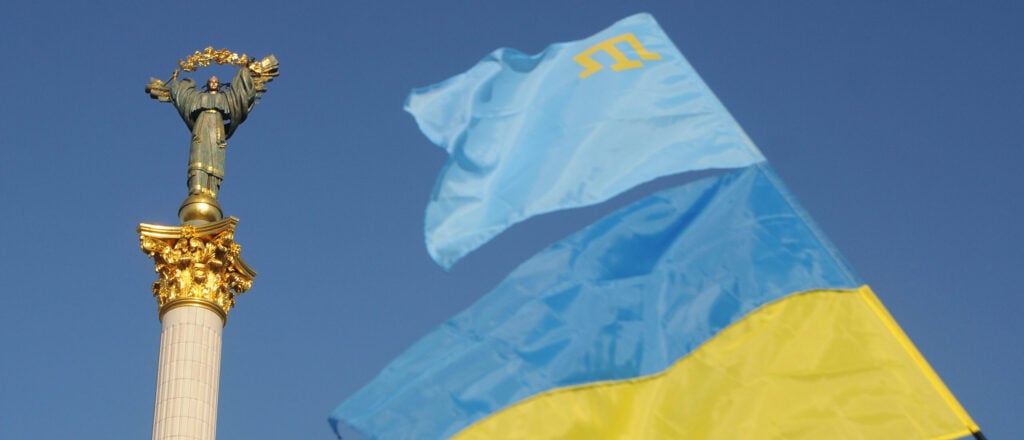


On the eve of the Day of Remembrance for the Victims of the Crimean Tatar Genocide, the Ukrainian World Congress (UWC) calls on Ukrainian communities around the world to keep Crimea and the Crimean Tatars present in their work, advocacy efforts and public events.
On May 18, Ukraine honours the memory of the victims of the 1944 deportation of the Crimean Tatar people – one of the gravest crimes of the Soviet regime. Over the course of just a few days, hundreds of thousands of people were forcibly removed from their homeland in Crimea and deported to Central Asia, the Urals and Siberia. Thousands died en route or in the first years of exile due to starvation, disease and inhumane conditions.
Today, more than 80 years later, Russia is once again attempting to silence the Crimean Tatar voice – this time through the occupation of Crimea, repression, political persecution and the forced displacement of people from the peninsula.
Crimea should not be mentioned only on May 18 or on the anniversary of its occupation. It must be part of every conversation about Ukraine, victory, justice and our shared future.
The UWC consistently advocates for the liberation of Crimea and the restoration of justice. In 2021, it joined 44 participating states at the inaugural Crimea Platform Summit in Kyiv.
The joint declaration of the international Crimea Platform participants recognizes Russia as an occupying state, condemns its illegal and aggressive actions in Crimea, and confirms the commitment of participants to a policy of non-recognition of the annexation of the peninsula and the city of Sevastopol, as well as any attempts by Russia to legitimise its temporary occupation.
On May 14 this year, the Ukrainian parliament once again called on foreign governments, parliaments and international organisations to honour the memory of the victims of the Crimean Tatar genocide and to consolidate efforts in responding to Russia’s human rights violations in Ukraine’s temporarily occupied territories.
In the appeal, Members of Parliament also urged states to recognise the 1944 deportation of the Crimean Tatars as an act of genocide.
Why this matters today
Following the occupation of Crimea, Russia launched a systematic campaign of pressure against the Crimean Tatar community – including searches, arrests, the banning of the Mejlis, and the persecution of activists and journalists. Many families have been forced to leave the peninsula due to constant threats and repression.
At the same time, Moscow is trying to erase Crimea itself from international discourse – its Ukrainian and Crimean Tatar history, culture and identity.
One of the key tasks for Ukrainian communities abroad is to consistently include Crimea in their activities.
This goes beyond commemorative events on May 18. Ukrainian organisations can host joint Ukrainian–Crimean Tatar events, invite Crimean Tatar activists and human rights defenders, organise lectures on the 1944 deportation and on current repression in occupied Crimea.
It is also important to highlight the situation of Crimean political prisoners, support their families, write letters of solidarity and take part in international advocacy campaigns.
Countering Russian propaganda
Another key area of work is countering Russian disinformation. For years, the Kremlin has promoted the myth of “Russian Crimea”, seeking to legitimize the occupation and erase Ukrainian and Crimean Tatar presence on the peninsula.
That is why Ukrainian communities should actively engage with local media, politicians, universities and civil society organisations, explaining Crimea’s history, the crimes of the Soviet regime and the ongoing repression in the occupied territory.
It is equally important to raise the issue with local MPs and governments, urging them not to remove Crimea from the international agenda and to continue supporting Ukraine.
What to watch and share
Ukrainian communities can use visual and educational materials to tell the story of the Crimean Tatar people, the 1944 genocide and current repression in occupied Crimea.
Films and documentaries:
- “Haytarma” (2013) – the first feature film about the deportation of the Crimean Tatars, based on real memories and events of 1944
- “1944. Crimea. Deportation” – documentary testimony of survivors and historical context of the tragedy
- “Mustafa” – documentary materials about Mustafa Dzhemilev and the struggle for the right of return to Crimea
- “Crimea: How It Happened” – projects by Crimean Tatar and Ukrainian media on the 2014 occupation and its consequences
Educational and human rights resources:
- Materials and campaigns of the Crimean Tatar Resource Center on political prisoners, repression and human rights violations in occupied Crimea
- Publications of the Mejlis of the Crimean Tatar People, including official positions and analysis of the situation on the peninsula
- Archival materials and testimonies on the 1944 deportation collected by Crimean Tatar organisations and memory institutions
Videos worth sharing:
- Survivor testimonies of the 1944 deportation
- Speeches by Crimean Tatar leaders in international institutions
- Documentaries about Crimean political prisoners and their families
- Reports by Ukrainian and international media on repression after 2014
Sharing such materials in communities, schools, universities and local media helps preserve historical memory and counter Russian propaganda that seeks to erase Crimean Tatar history and legitimise the occupation of Crimea.
How to support Crimea – a short checklist
- Ukraine, Latvia, Lithuania, Canada, Poland, Estonia, Czechia, the Netherlands and Luxembourg have recognised the deportation of the Crimean Tatars as genocide. Call on every democratic state to do the same
- Talk about Crimea consistently, not only on May 18 or the anniversary of the occupation
- Organise joint Ukrainian–Crimean Tatar events
- Invite Crimean Tatar activists and human rights defenders
- Hold lectures and film screenings on the deportation and occupation of Crimea
- Highlight Crimean political prisoners and support their families
- Engage with local politicians and media
- Counter Russian propaganda and the myth of “Russian Crimea”
- Remember: Crimea is Ukraine, and the Crimean Tatars are an Indigenous people of Ukraine
The memory of the deportation of the Crimean Tatar people must not remain just a date in the calendar. It is a reminder of the cost of Russia’s impunity and of our shared responsibility – to speak about Crimea, support its people and ensure the world does not grow accustomed to occupation.
Cover: DepositPhotos