



Ecuador is a small South American country where the Andes meet the Amazon and the Pacific opens to the west. It’s not a place Ukrainians moved to in waves. There are no century-old communities, no Ukrainian neighborhoods, no streets named after hometowns left behind.
There are only a few hundred Ukrainians in Ecuador, scattered across cities. Most are women, often brought here by love, chance or curiosity. Many Ukrainian women in Quito work in the flower business. And yet, one of the loudest Ukrainian voices in the region comes from here.
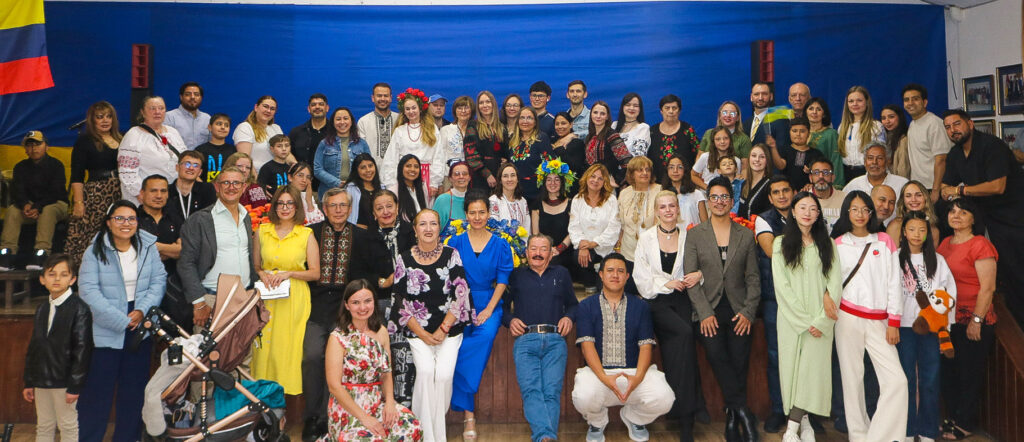
The broader community numbers around 200–300 people. On that basis, the Ecuadorian-Ukrainian Association was formed. It now has 11 members, no steady funding and no physical office. At the same time, it has organised five festivals, concerts at the conservatory, an evening at the EU ambassador’s residence, appearances on radio and television, and raised $21,000 for Ukraine in three years.
The Ukrainian World Congress spoke with Iryna Gryshchuk, president of the association, to find out how this was achieved. Below is her account, edited for clarity.
Found by war
Most Ukrainians live in the capital, Quito, with others on the coast and in Cuenca, the country’s cultural capital. It’s a diverse group: different ages, backgrounds and reasons for emigrating.
Unlike Brazil or Argentina, where Ukrainian communities date back to migration waves in the late 19th century, nearly all Ukrainians in Ecuador arrived after Ukraine regained independence. The first came in the 1980s.
Since the full-scale invasion, only a small number of new arrivals have joined them. Most were from mixed families who already had roots and resources to adapt. Others came one by one, Gryshchuk says.
“There was no real community before 2022. There were individuals who knew each other, often through the flower business. Ecuador exports a huge number of roses, and many Ukrainians here work in that field,” she says.
Everything changed when the full-scale war began. People took to the streets and found each other.
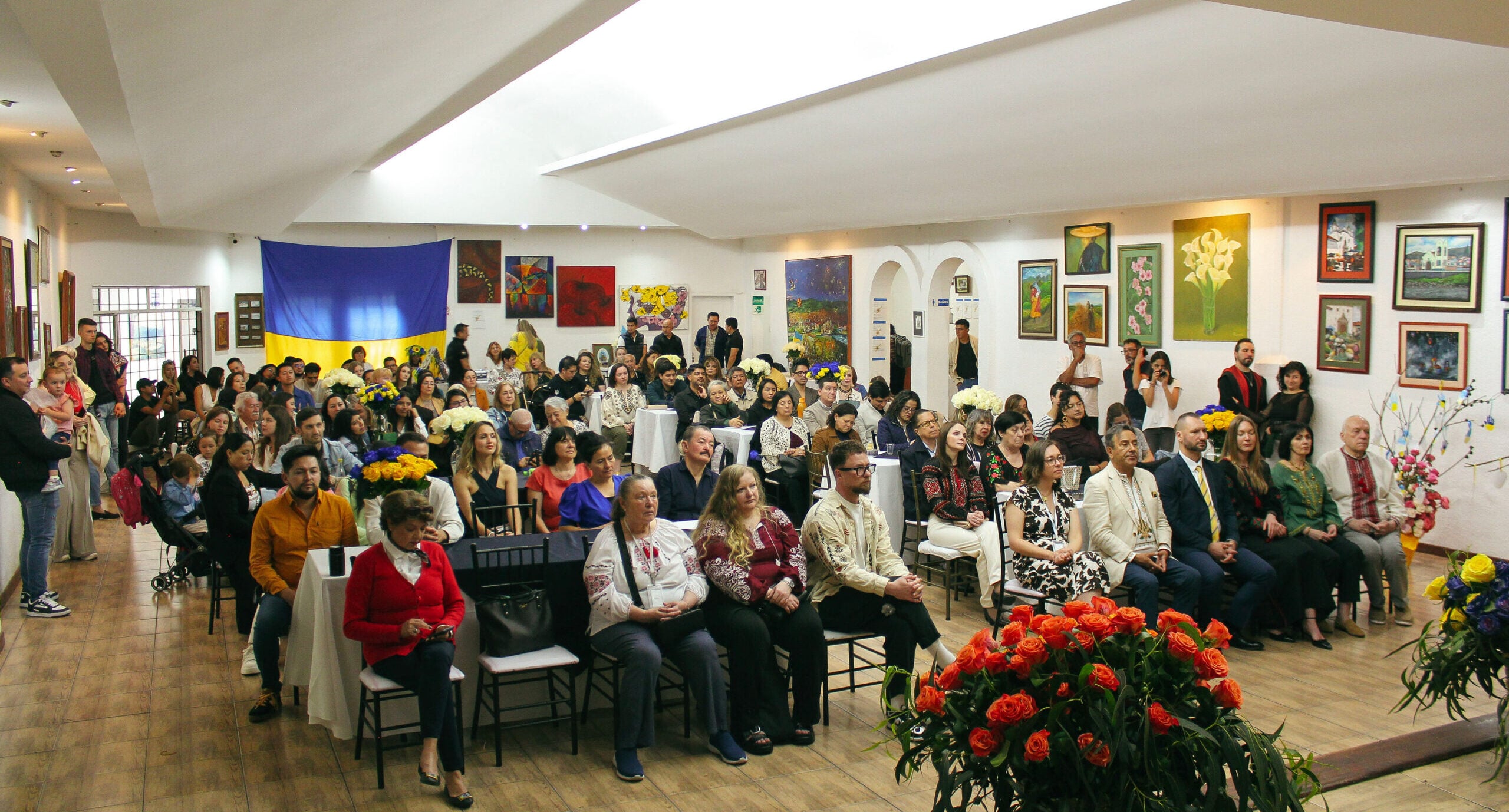
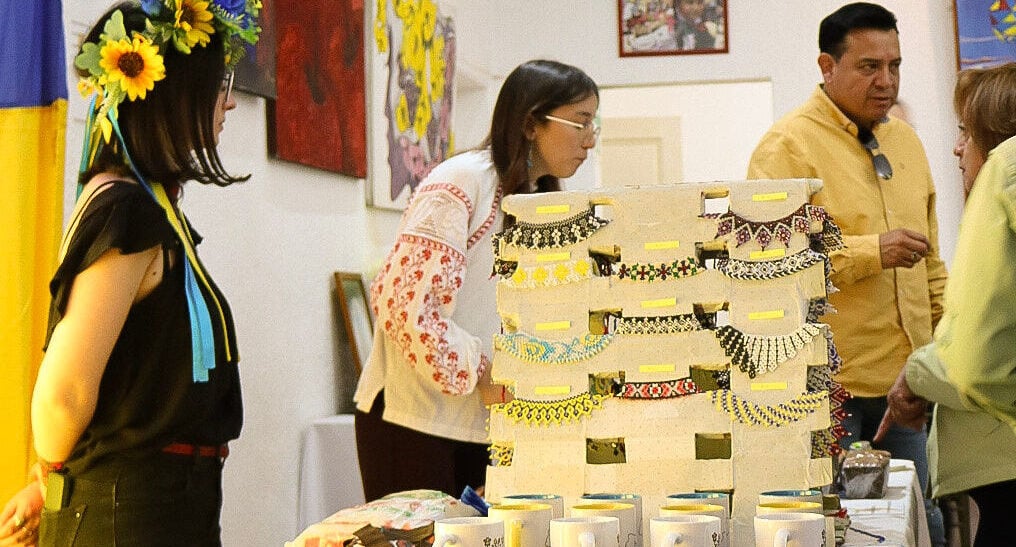
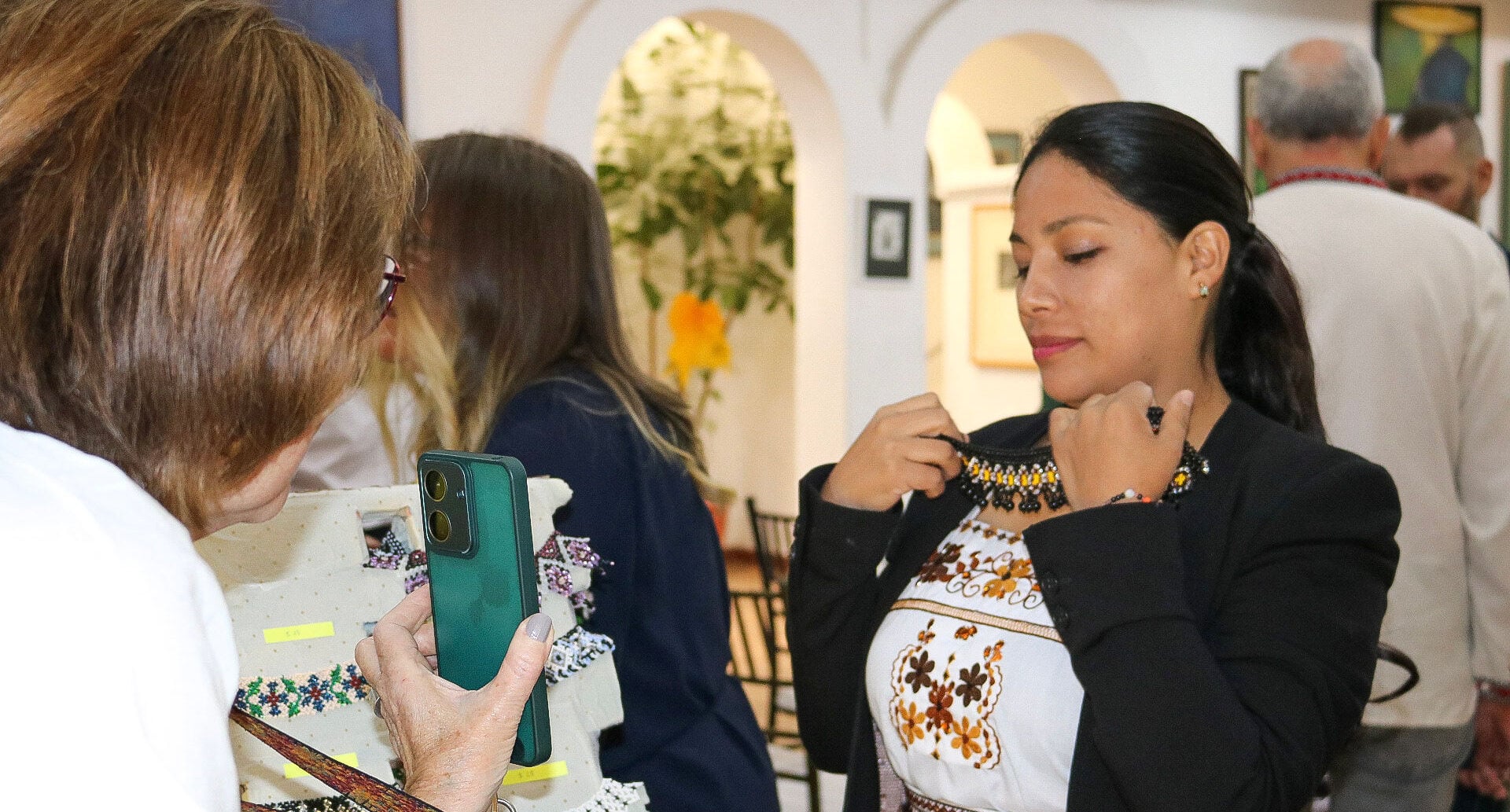
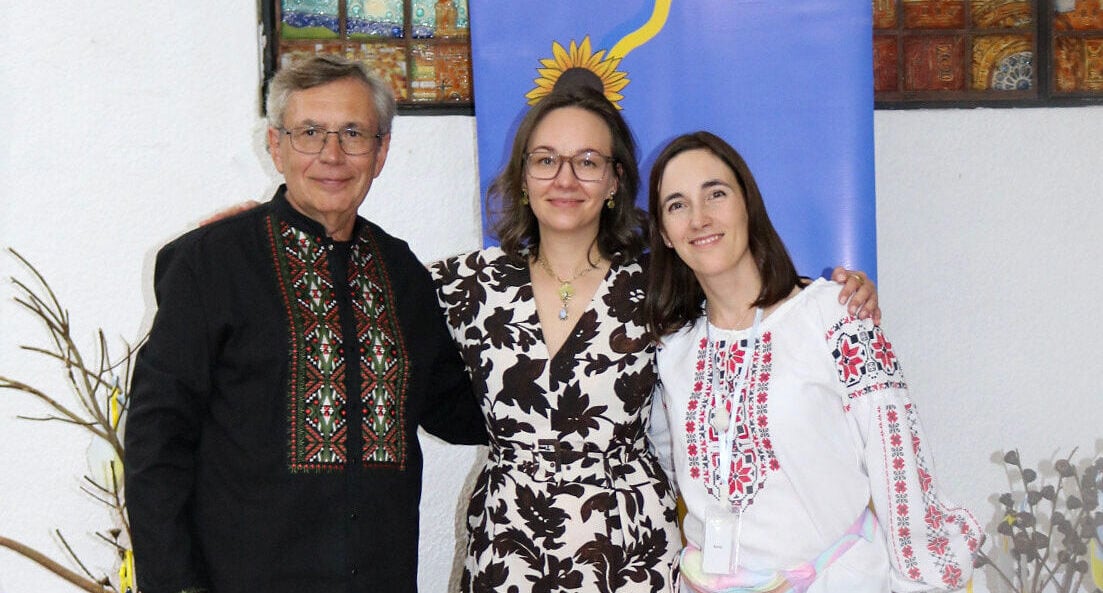
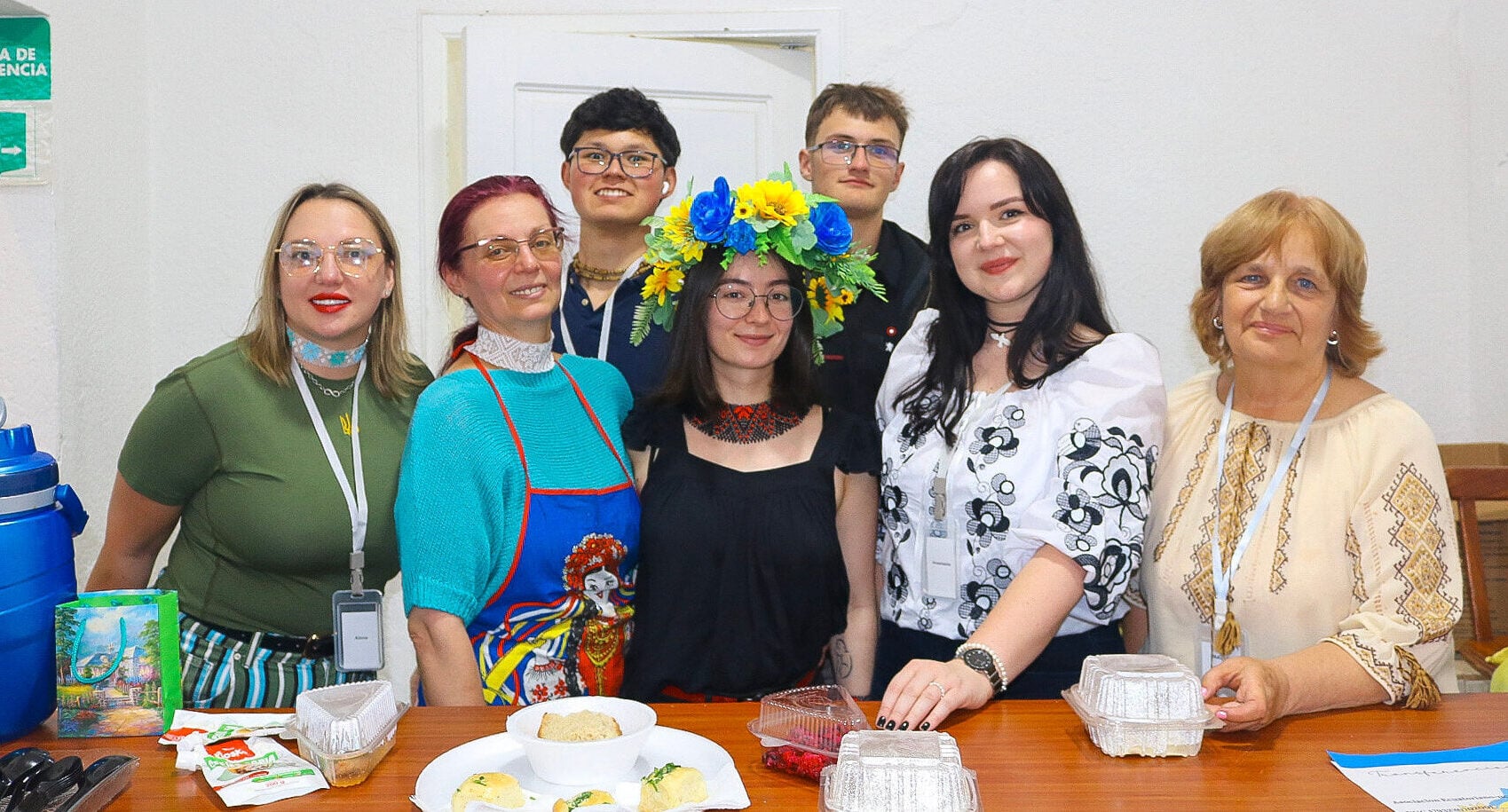
Regular protests began in Quito in 2022. Activists who had never met before started talking. From that circle came the first major joint initiative: a Ukrainian cultural charity festival, Ecuador&Ucraїna. This year, it was held for the fifth time.
The festival takes place each April or May, around Easter. Each time, it offers several hours of packed programming: concerts, workshops in Petrykivka painting and pysanka-making, children’s activities, Ukrainian food, a charity lottery and sometimes auctions. Two years ago, performers dressed as Mavka appeared after the animated film gained popularity in Ecuador.
Each year, the event draws 150 to 250 visitors. For a community of roughly 250 people spread across the country, that’s a strong turnout. This year, Gryshchuk says, there were more Ecuadorians than Ukrainians. The festival also attracts diplomatic guests, including the Canadian ambassador, Iceland’s honorary consul and, this year, representatives from El Salvador and the European Union.
“Every year we manage to raise the bar and make it better,” she adds.
Over five years, the festivals alone have raised more than $16,000 for Ukraine. Together with other initiatives, the total exceeds $21,000.
Official status and new opportunities
In early 2025, the association officially registered with Ecuador’s Ministry of Culture. It now brings together 11 members across five cities. Most of the work is done online. Registration has opened doors for cooperation with universities and cultural institutions.
“We don’t have many hands, but we have a lot of enthusiasts,” Gryshchuk says.
Over time, the community deliberately shifted its focus from information campaigns to cultural diplomacy. Protests, open letters against Russian ballet tours and petitions had limited impact in Ecuador, so Ukrainians changed their approach.
“It’s very hard to care about a war in a country you know nothing about. It’s abstract. And when we know nothing about someone, we have less capacity for empathy,” she explains.
The plan became simple: spark interest in Ukraine first, then move to more complex topics. Borscht on Ecuadorian television. Petrykivka workshops at universities. A screening of the documentary Shchedryk at one of the country’s top institutions, the University of San Francisco in Quito. A presentation of “Our Quiet Genius,” a book by Larysa Semenko about Mykola Leontovych, with the author joining via Zoom.
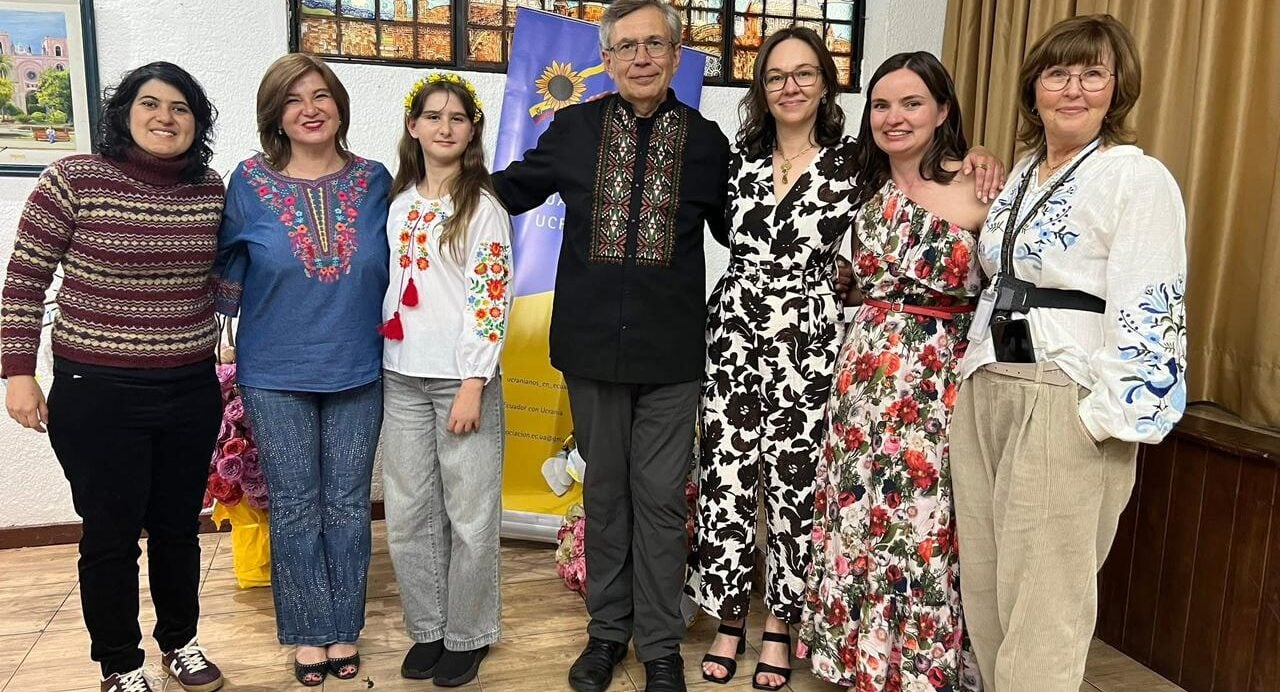
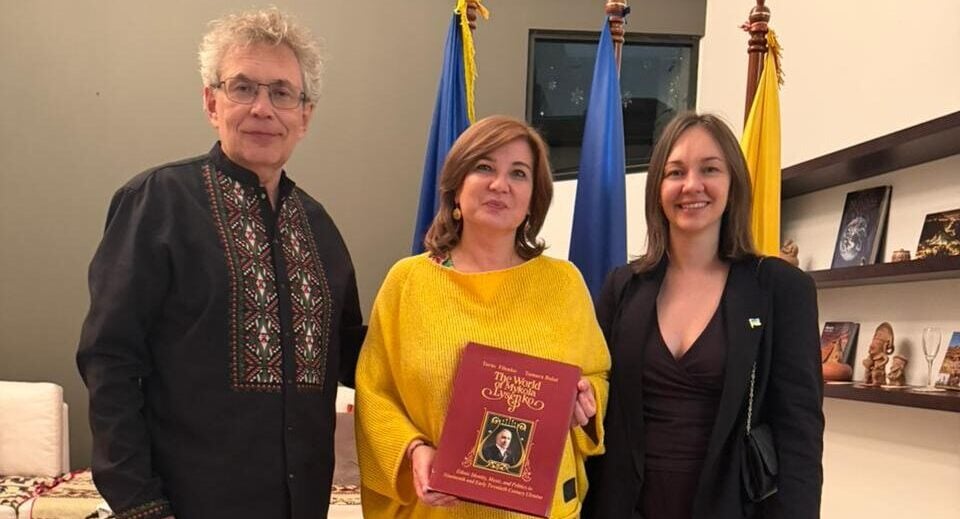
This year, the association also brought a Ukrainian pianist to Ecuador for the first time. Taras Filenko performed three concerts featuring only Ukrainian composers, including Mykola Lysenko, Dmytro Bortniansky and Myroslav Skoryk, including a performance at the National Conservatory in Quito. The highlight was a “Night of Ukrainian Music and Poetry” at the EU ambassador’s residence, attended by diplomats and UN representatives. Ambassador Jekaterina Dorodnova even performed Ukrainian songs herself.
Challenging black-and-white thinking
There are relatively few Russians in Ecuador. This is not Europe or North America. Still, their presence has an impact.
Ecuador officially supports Ukraine internationally. But in society, especially among left-wing groups and Indigenous communities, pro-Russian narratives are common. According to Gryshchuk, this stems less from support for Russia and more from long-standing anti-American sentiment.
Russia is often seen as an “anti-colonial” force, and in black-and-white thinking, that can translate into automatic support.
“There’s basically no understanding of Ukraine here. But there is an idea of Russia, and it’s quite entrenched. Not always accurate, but it exists. That’s what we’re trying to work with,” she says.
Ukraine’s first strategy for Latin America and the Caribbean appeared only in 2024, she notes. Before that, the region was not a priority for Kyiv.
“Better late than never. We’re glad there’s now understanding, interest and possibly resources to work with our region.”
The community is also awaiting the opening of a Ukrainian embassy. Last year, the Foreign Ministry announced plans to launch four new diplomatic missions in the region, including in Ecuador. For the community, this is more than a formality. It means a stronger Ukrainian presence in the country’s information space.
Alongside the festival, the community has launched ongoing initiatives. A Ukrainian conversation club ran online for over a year. In Quito, there is a Ukrainian book club with monthly meetings and the country’s first Ukrainian library. There is also an embroidery club.
In the coming months, the association plans to take part in Eurofest on May 9 in Quito, where it will represent Ukraine, and to hold its third Independence Day charity picnic in August. It also aims to expand cooperation with universities and cultural institutions to reach wider audiences and access resources the small organization lacks.
Gryshchuk says it’s hard to assess their impact from the inside. But one thing, she adds, is certain:
“We’re heard far more than the Russian community in Ecuador. That’s 100 percent.”