



by Eugene Czolij
former president of the Ukrainian World Congress
president of the Ukraine-2050 nongovernmental organisation
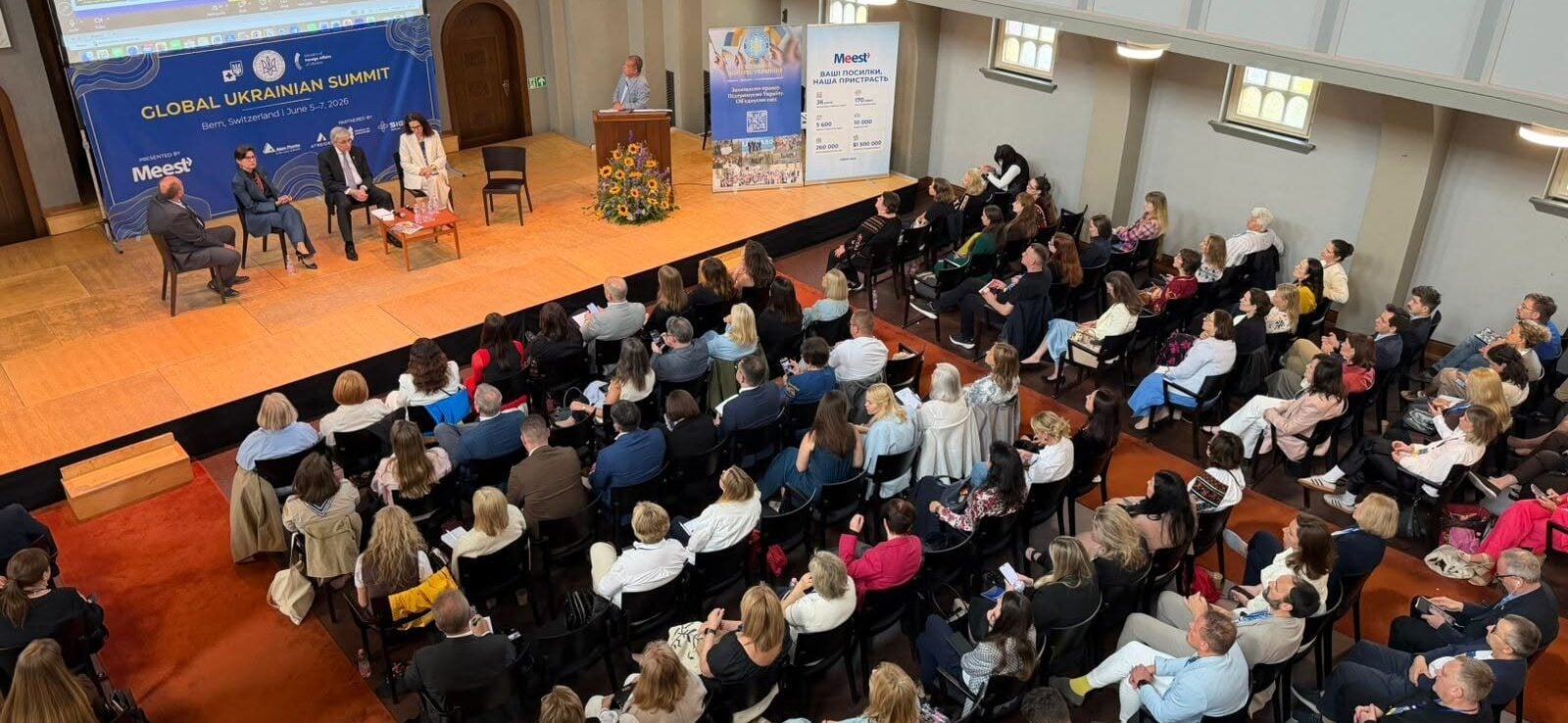
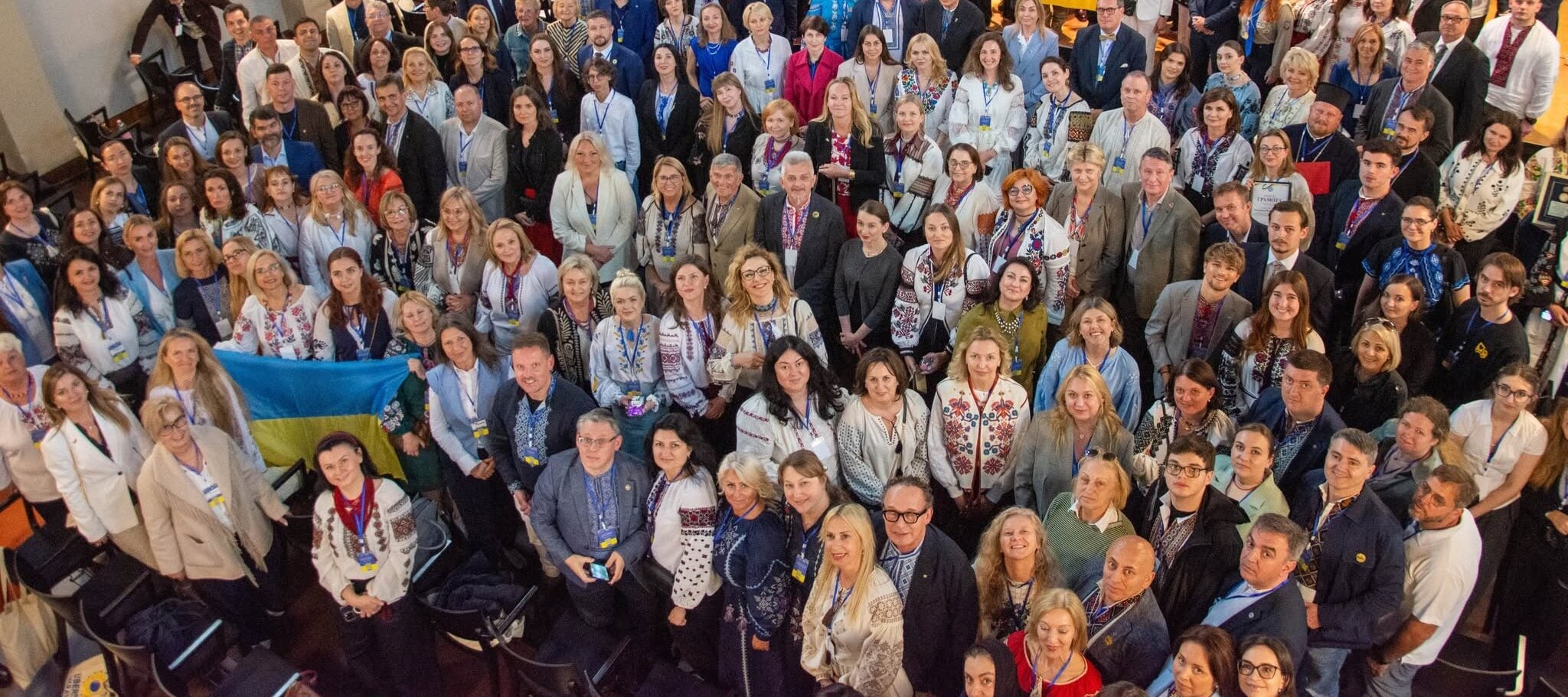
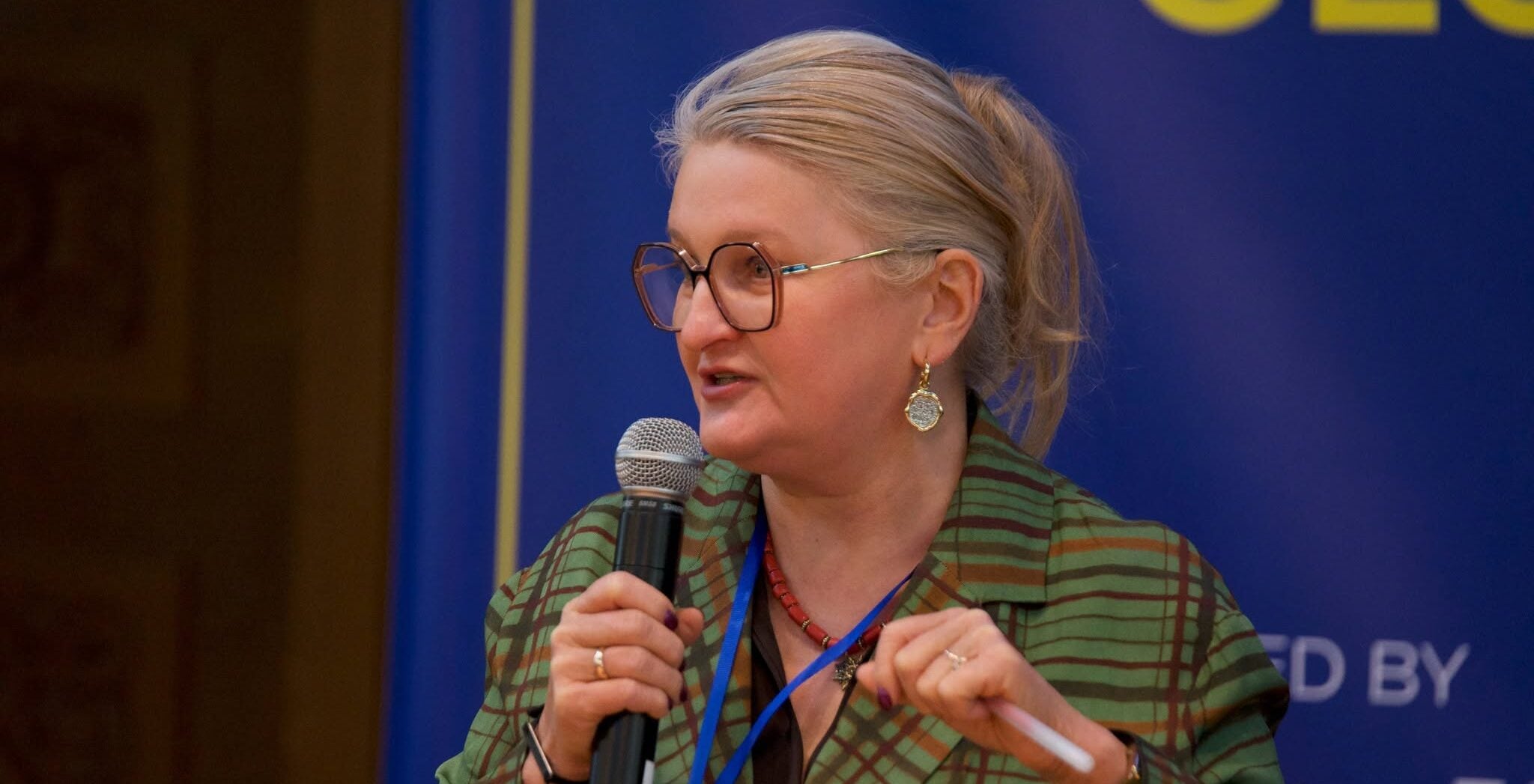
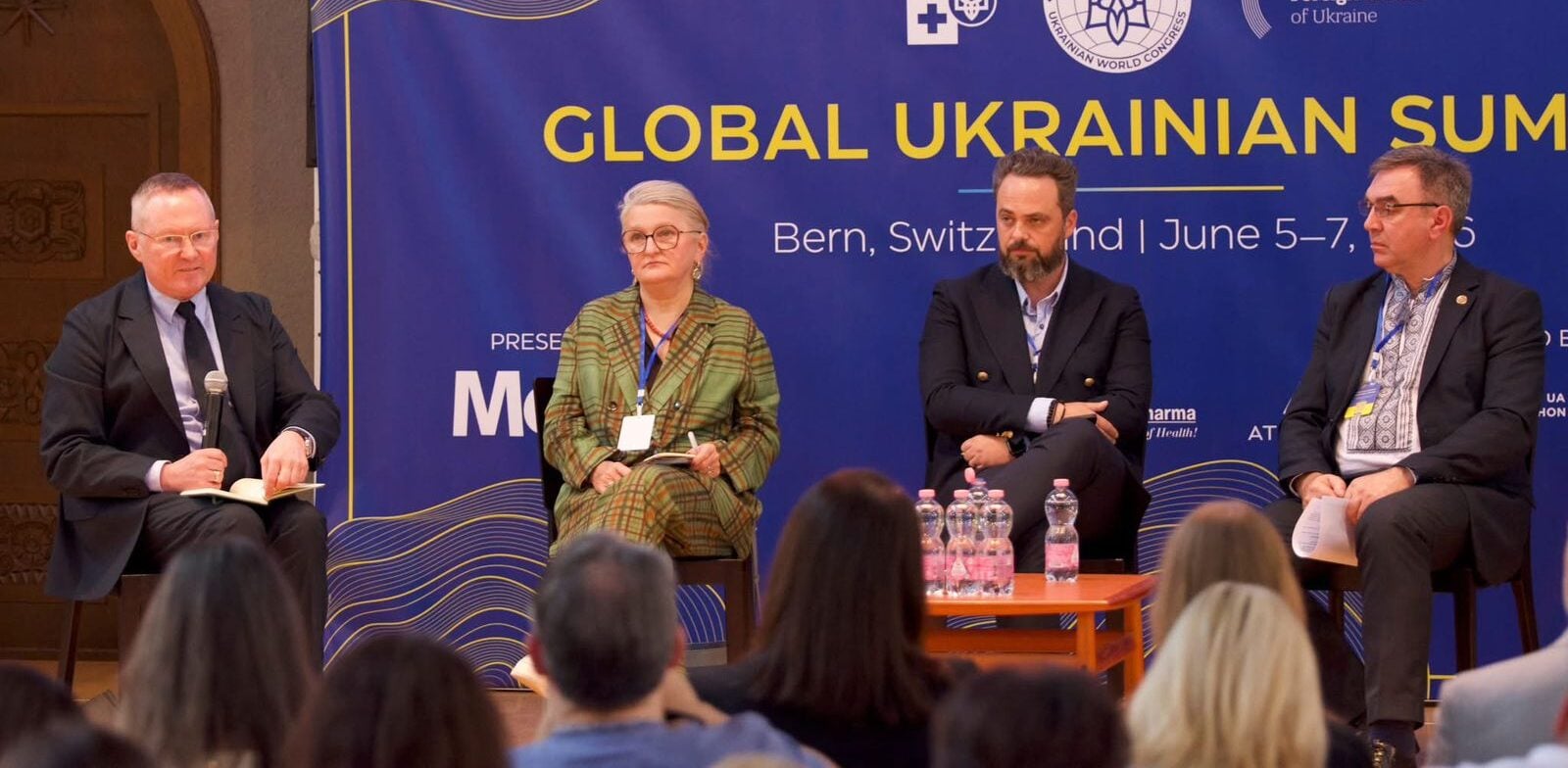
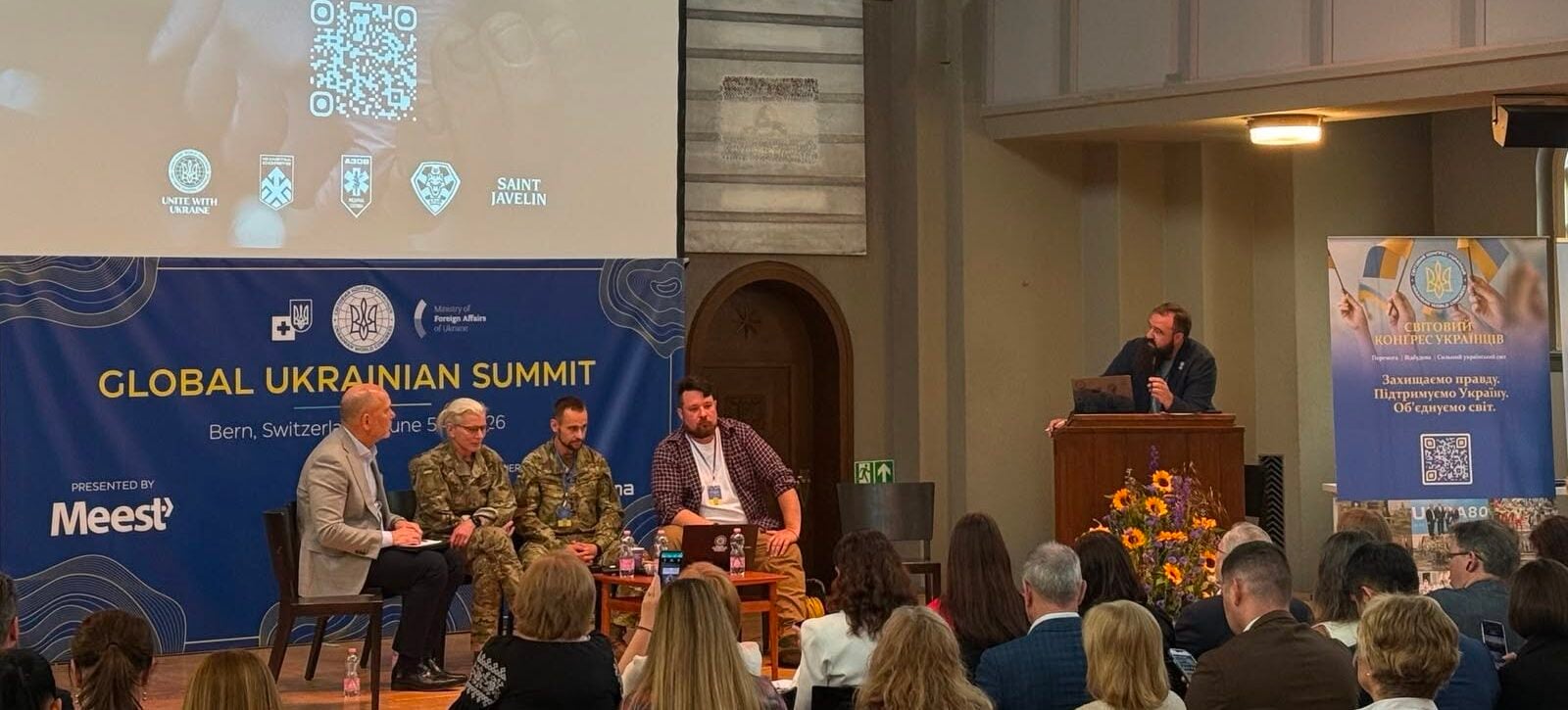
Address by Eugene Czolij, President of the Ukrainian World Congress (2008–2018) (UWC), Honorary Consul of Ukraine in Montreal and President of NGO “Ukraine-2050”, at the Global Ukrainian Summit in Bern, Switzerland, on June 6, 2026.
Distinguished participants:
Since we are here to discuss effective strategies for global advocacy, I will start by saying that to be effective in advocacy, we must have a clear goal and objective.
On this issue, I differ somewhat from the President of the Ukrainian World Congress, who, at the opening of this Summit, outlined three objectives, one of which is the strengthening of our communities. I believe that when a genocidal war is ongoing, when Ukrainians are being killed or injured every week, if not every day, and when Ukrainian children are being forcibly transferred from Ukraine to Russia, which constitutes one of the five acts of genocide, we, the global Ukrainian community, must have one objective. It must be clear and voiced the same way by representatives of our communities, whether they are in Canada, the United States, Australia, Romania, Estonia, Brazil, Argentina or Japan. And it should be composed of four words: “Help Accelerate Ukraine’s Victory”. Period. Full stop.
The second question is: what kind of help should it be?
The support should not be what we believe is needed. It must be what Ukraine determines is needed. Just as Andrew Potichny, Director of UWC’s Unite with Ukraine initiative, remains in constant contact with the Armed Forces of Ukraine to determine what equipment should be supplied, we must also maintain a continuous contact at the highest level of Ukraine’s state authorities to develop clear and consistent messages. There is nothing worse than for Ukrainian ministers and ambassadors to be saying one thing and we – something else. That is the best way to lose the confidence of potential partners.
The third question is: once we have defined the objective and agreed on the message, how do we best communicate it?
I believe that instead of emphasizing what we need, we must convince potential partners why it is in their own interests to act immediately in accordance with our appeals.
Let me give a simple example. Imagine that you are the parent of a schoolchild. You tell other parents: “My child is sick and has lung problems. I think it may be because of the ventilation system at school.” Most likely, they will respond: “We are very sorry and hope your child recovers quickly. If you learn anything more, please let us know.” But if you present the same problem differently and say: “There may be a ventilation problem at our school. My child has already become sick, and to ensure that your child is not next, we must take concrete and immediate action,” the reaction will be entirely different.
How does this relate to Ukraine?
First, instead of only emphasizing that we are victims of a genocidal war and acts of terrorism, we must emphasize that today Ukraine is defending its independence and the territorial integrity of Europe and is preventing the outbreak of a Third World War. That is why it is in everyone’s interest to help Ukraine.
We must remind the world that Vladimir Putin, in his address to the Russian people in 2005, declared that the collapse of the Soviet Union was the greatest geopolitical catastrophe of the 20th century. Since then, he has been trying to restore the Soviet Union and the so‑called Warsaw Pact. He is really testing different methods, both diplomatic and military. For example, in 2025, Russia violated the airspace of seven NATO member countries: Estonia, Latvia, Lithuania, Norway, Poland, Romania and Finland.
Therefore, we must deliver a straightforward message: if, God forbid, Ukraine was to lose this war, Russia will go further, and NATO member countries will have to defend Europe from further Russian aggression. Then their children will be dying on the battlefield or, at best, returning home injured.
We must convey to the Western world that helping Ukraine is not only about helping Ukrainians. It is about helping yourself, because Ukraine’s victory is the best guarantee of security and stability in the world.
Second, instead of speaking only about Russian attacks on Ukraine’s civilian population and civilian infrastructure, we must emphasize that Russia is also attacking American and European firms.
On May 12 of this year, The New York Times published an article under the headline “Russia Keeps Attacking U.S. Firms in Ukraine.” If someone responds, “Well, they are in a country where there is a war, so that is understandable,” our answer must be a clear: No. The problem is not that Western companies are in a country at war. The problem is that Russia systematically violates all international norms and rules of warfare by attacking civilians and civil infrastructure. As a result, not only Ukrainian citizens, businesses and residential buildings suffer, but also American and European firms. Therefore, attacks on Ukraine’s civilian population and civil infrastructure must be stopped immediately, not only for the sake of Ukrainians, but also to protect Western businesses and international investments.
Third, is the issue of the frozen assets abroad of the Central Bank of Russia, amounting to more than $300 billion U.S.
At a time when many countries are facing economic challenges, we must convince our partners that assistance to Ukraine should not be financed exclusively from the budgets of European states, Canada or other allies. First and foremost, it should be financed from the frozen assets of the aggressor state. There is no justification for not using frozen Russian assets abroad to compensate for the damage caused by Russia during its war.
Here, the Ukrainian World Congress can play an important role, since these assets are frozen mainly in Belgium, as well as in Luxembourg, France, Germany, Italy, Austria, the United Kingdom, Switzerland, the United States, Canada, Japan and Australia.
Yesterday, the President of the Ukrainian World Congress spoke about the UWC network in 86 countries around the world. Practically, all the countries where there are frozen Russian assets are part of the UWC network. This means that we have either member organizations or supporters in those countries who should actively and in a coordinated manner advance this issue.
In Switzerland, where this UWC Summit is taking place, there are frozen assets of the Central Bank of Russia totalling almost 8 billion Swiss francs and those assets must be transferred to support Ukraine. This should have been clearly stated, both at the UWC Summit itself and during meetings with representatives of the Swiss authorities.
In addition, we must work more closely with international organizations, umbrella organizations of other national communities and various influence groups so that, at such summits, the voice heard is not only that of Ukrainians speaking about Ukrainian issues, but also that of civil society in democratic states around the world.
That is why I would like to see at a Summit of the Ukrainian World Congress, representatives of NGOs from many national communities. Then, when we issue statements, they would be made not only on behalf of Ukrainian communities, but on behalf of a broad coalition of democratic forces around the world.
Finally, we must make more active use of the world’s various languages. Our key messages must be heard in the languages of the communities we are addressing.
Ahead of this UWC Summit in Switzerland, we should have circulated its main objective and key appeals to the Swiss authorities and population in at least German, French and Italian.
I call on us to formulate such messages with quality and precision in various languages of the world, and to mobilize the international community so that our appeals are voiced not only by Ukrainians, but also by NGOs from many democratic states around the world.
Then our advocacy work will become significantly stronger and more effective.