



Ukrainian refugees are not only integrating into their host countries but are also making a significant contribution to their economies, participants of the Global Ukrainian Summit 2026 in Bern said.
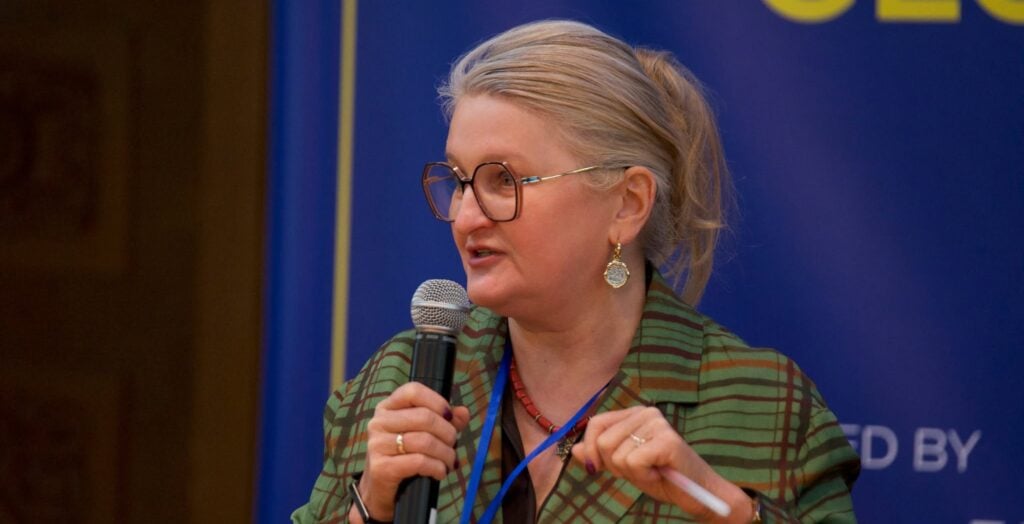
Myroslava Keryk, head of the Ukrainian House Foundation in Warsaw, presented findings from a study conducted together with Deloitte on the contribution of Ukrainian refugees to the Polish economy.
According to her, in 2024 Ukrainian refugees accounted for around 2.7% of Poland’s GDP. Keryk said that 69% of adult Ukrainian refugees in Poland are employed and pay taxes and social security contributions.
“The data show that Ukrainian refugees contribute significantly more to Poland’s budget than they receive in assistance. This is important in the context of widespread but false claims about an alleged excessive burden on social systems,” Keryk said.
She added that in 2023 alone, Ukrainian refugees contributed around 15 billion zloty to the Polish budget in the form of taxes and social contributions, while the level of state assistance was several times lower.
“About five times more money went into the budget than was spent on support. This matters because in many countries there is an argument that refugee welfare costs more than refugees contribute to the economy. In reality, the data do not support this,” she stressed.
Keryk said that an important factor in Ukrainian employment was Poland’s decision to grant refugees fast access to the labor market and the ability to start businesses.
“The right to work and the ability to immediately start entrepreneurial activity helped many Ukrainian women launch their own businesses and secure an income,” she said.
At the same time, she noted that a significant number of Ukrainians are employed in jobs below their qualification level and receive relatively low wages.
Despite this, Ukrainians continue to financially support their homeland.
“Even with low incomes, Ukrainians continue to send money back to Ukraine and donate to the Ukrainian army,” Keryk said.
She also emphasized that major challenges remain, including mental health issues and a sense of temporariness linked to uncertainty about the future status of Ukrainians in the European Union.
“This sense of temporariness is closely tied to temporary protection status. For many people, it is important to understand what comes next, because certainty is what allows them to plan their future,” she said.