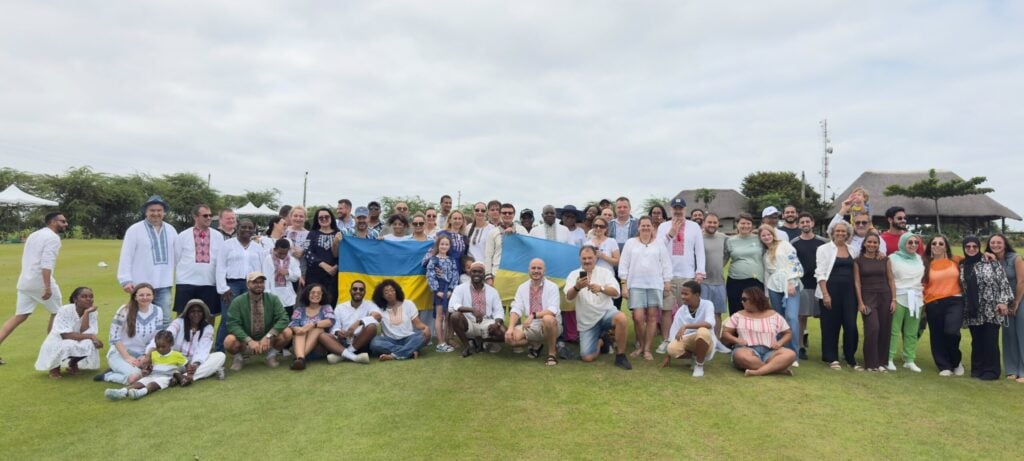


Around 500 Ukrainians live in Angola, including medical professionals, aviation specialists, entrepreneurs, and members of Ukrainian-Angolan families. For years, they mostly connected through personal networks. Today, however, they have an officially registered community association, are preparing to open a Ukrainian Saturday school, and are introducing local residents to Ukrainian culture.
Oleksandr Stefanyk, head of the Association of the Ukrainian Community in Angola, talks about how the community came together, why Angolans still sometimes confuse Ukraine with Russia, and what helps Ukrainians maintain their connection to their homeland thousands of miles away.
From Chernivtsi to Angola
Angola is located in southwestern Africa, along the Atlantic coast. Its capital, Luanda, is a major port city that became one of the country’s economic centers following the end of the civil war in 2002. Angola’s official language is Portuguese, a reminder of its colonial past. Today, it is also home to a growing Ukrainian community that seeks not only to bring fellow Ukrainians together but also to introduce Angolans to Ukraine and its culture.
Oleksandr’s journey to Africa took an unusual path. He was born in Chernivtsi, Ukraine, but his parents moved to Portugal in the late 1990s, so he grew up with strong ties to the country. At 15, he received a scholarship through the Future Leaders Exchange (FLEX) Program and spent an academic year in the United States. He later enrolled at Chernivtsi University to study international relations but moved to Portugal for family reasons, where he continued his education. Eventually, he decided to change career paths and entered the beauty industry.
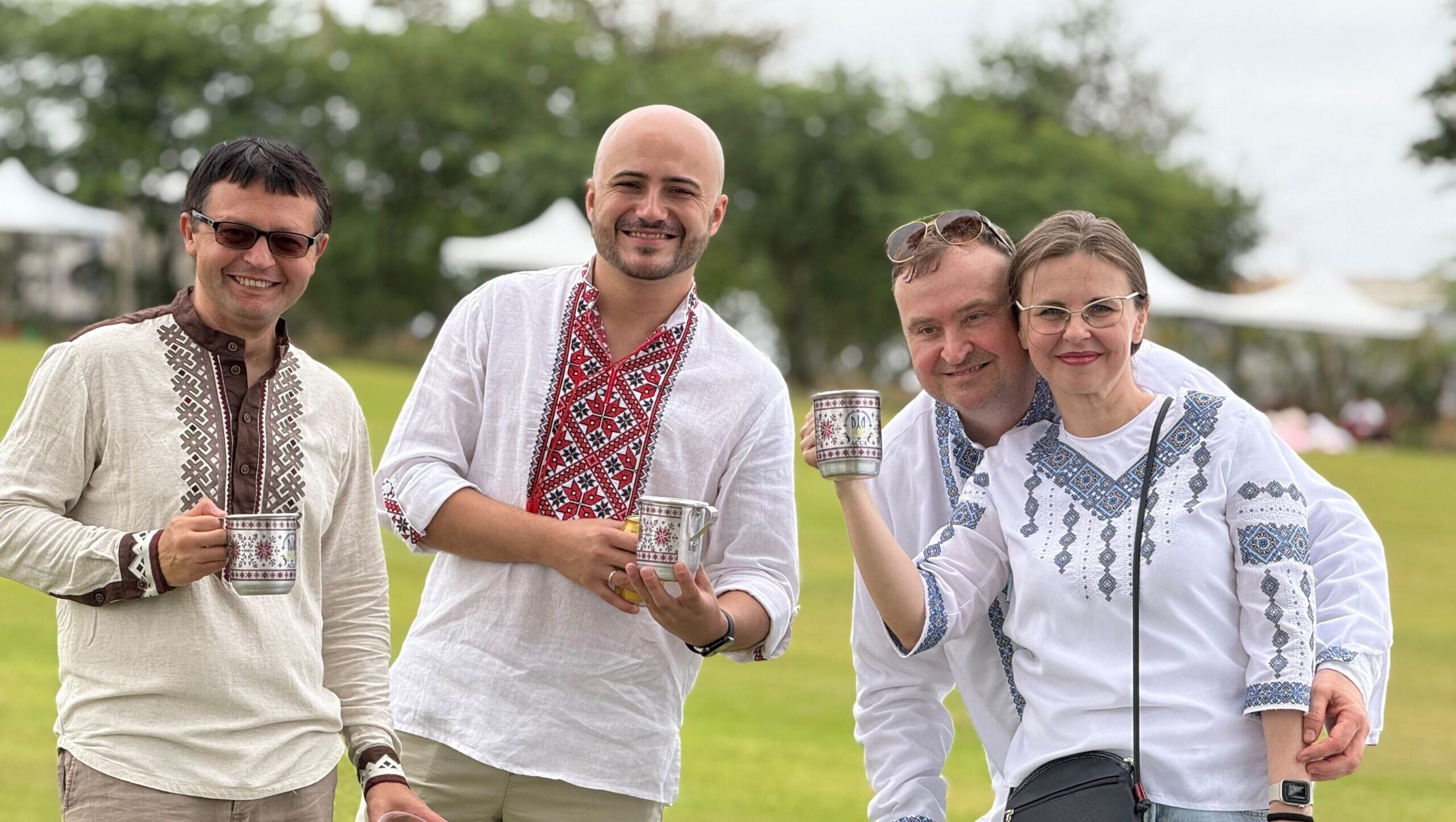 It was his work that brought him to Angola. In 2014, a salon in Luanda invited Oleksandr to conduct training sessions for local beauty professionals. At the time, the country was undergoing a period of rapid reconstruction following decades of civil war, and its growing economy was attracting foreign professionals and entrepreneurs.
“That was Angola’s golden age. People even called it El Dorado. After the war, the country was rebuilding, money was flowing in, and a wealthy middle class was emerging, eager for high-quality services. Foreigners were welcomed and encouraged to start businesses and work in various industries,” Oleksandr recalls.
He decided to stay. In 2022, he opened his own beauty salon. Over time, running the business helped him build relationships with local entrepreneurs, lawyers, government officials, and, of course, other Ukrainians.
From WhatsApp group to official association
When Oleksandr first arrived in Angola, he assumed there were hardly any Ukrainians in the country. But as he gradually met more people, he discovered a much larger community than he had expected.
Many Ukrainians in Angola work in healthcare, having arrived through professional employment programs. Others are aviation specialists, including people involved in servicing Antonov aircraft, as well as military personnel. There are also many Ukrainian-Angolan families. Some Angolans studied at Ukrainian universities and returned home after graduation with their Ukrainian spouses.
Despite the community’s size, it had no formal organization for many years. The turning point came in October 2024, when Ukraine’s Foreign Minister Andrii Sybiha visited Luanda. Following his meeting with members of the Ukrainian community, it became clear that the small Ukrainian diplomatic mission needed more active support from local Ukrainians.
“I looked around and realized that there were only a handful of Ukrainians in our group, so I suggested creating a WhatsApp group. I collected people’s phone numbers, became the administrator, and that’s how it all started,” Oleksandr explains.
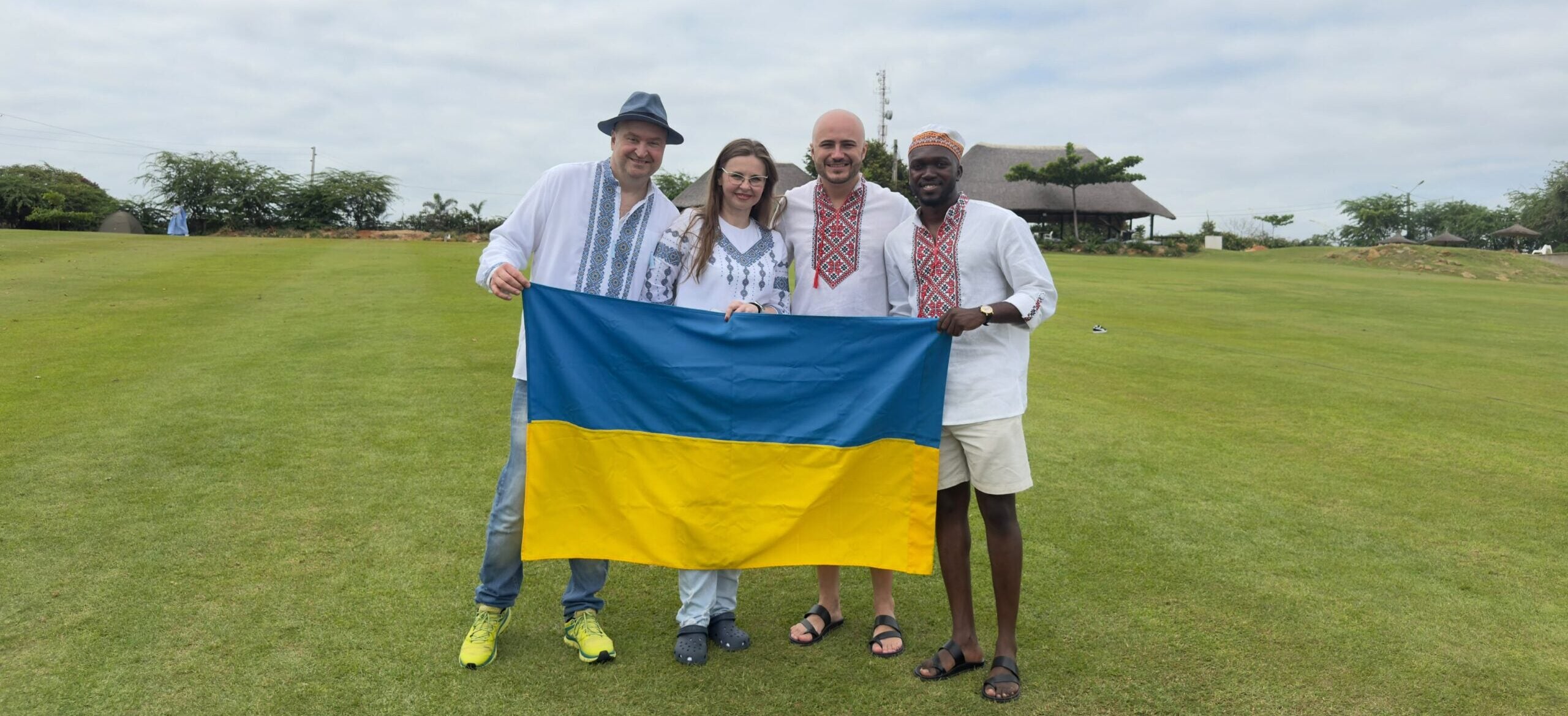 The idea soon evolved into the creation of a formal community organization. Oleksandr brought in lawyers, and the team began working on the necessary paperwork. In the summer of 2026, the association was officially registered with Angola’s Ministry of Justice. The community is now completing the process of opening a bank account, which will allow it to formally accept members and expand its activities.
The organization has five people on its leadership team, while its events typically attract several dozen participants.
Borshch for Angolans
One of the association’s first major projects will be a Ukrainian Saturday school. Some children in Ukrainian families living in Angola do not speak Ukrainian, even though their parents want them to maintain a connection with their heritage.
Thanks to cooperation with the Ukrainian Embassy and American Schools of Angola, the community has already received permission to use facilities at an international school in Luanda. Initial estimates suggest that around 20 children could take part in the classes.
At the same time, Oleksandr plans to offer Ukrainian language lessons to adult foreigners. According to him, there is plenty of interest, including among people who have no family ties to Ukraine.
Cultural events are another important part of the association’s work. The community has already organized a Ukrainian food festival, as well as picnics celebrating Vyshyvanka Day and Ukraine’s Independence Day. These gatherings attract not only Ukrainians but also Angolans and people from other nationalities.
“Angolans message me asking when the next picnic will be and whether they can come. They’re genuinely interested. They want to get to know our culture and learn Ukrainian,” Oleksandr says.
The next idea is a borshch festival. The inspiration came from the Ukrainian community in Mauritius, which has already organized a similar event. Oleksandr believes food is one of the best ways to introduce people to another culture.
Ukraine is not Russia
Another important part of the community’s work, as well as Oleksandr’s personal efforts, is challenging misconceptions about Ukraine. Angola still feels the influence of its Soviet-era historical ties, and many locals tend to view Russia as the successor to the Soviet Union’s former ally without recognizing the individual contributions of its constituent republics.
“When I first arrived, people everywhere called me ‘Sovietico.’ We were all lumped into one category, whether you were Ukrainian, Bulgarian, or from some other country,” Oleksandr recalls.
 The situation is gradually changing. Russia’s full-scale invasion has made Ukraine more visible in Angola’s media and public discourse, and more Angolans are becoming interested in the country’s history and culture.
Oleksandr uses social media, particularly TikTok, to help change perceptions. He shares insights into the life of a Ukrainian in Angola, talks about Ukrainian traditions, and responds to disinformation. He also tells Angolans about the contribution of Ukrainian peacekeepers to United Nations missions in the 1990s and points out that Angola supported a 2022 UN resolution affirming Ukraine’s territorial integrity. His TikTok account now has more than 11,000 followers.
Community that brings home little closer
Oleksandr’s personal motivation is deeply rooted in his family history. His grandmother served as a courier for the Ukrainian Insurgent Army (UPA), was persecuted by the Soviet authorities, and spent five years in Siberia.
“I simply cannot do otherwise. This is the least we can do: support our culture, share it with others, and defend it,” he says.
When Oleksandr arrived in Angola, he knew almost no other Ukrainians. Rather than accept that isolation, he decided to build the kind of community he himself had been missing. What began as a WhatsApp group has grown into an organization that helps newcomers, hosts cultural events, prepares to open a Ukrainian school, and introduces Angolans to Ukraine.
“We came together here and built a community of our own to feel a little closer to Ukraine,” Oleksandr says.
Latest news

 #Opinion
The European Forum of the Ukrainian diaspora in Augsburg: Unity, solidarity, shared responsibility for Ukraine’s future
 #UWC news