

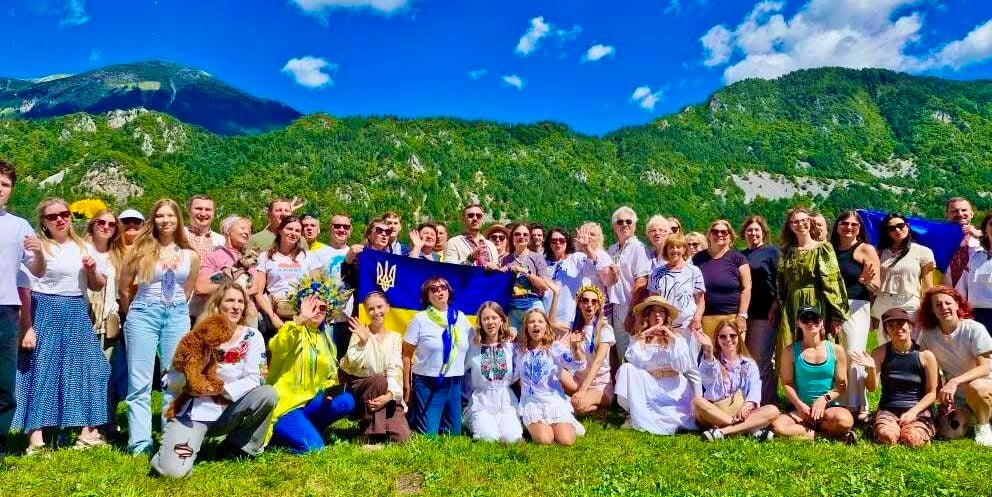


When people in Slovenia began gathering in March 2022 to help Ukraine, they did not yet know that this volunteer initiative would eventually grow into an organization with a president, a supervisory board, an executive director, committees, and its own development strategy.
At the first meetings, there were eight or nine people. They met at rallies, humanitarian aid warehouses, and other volunteer events. Although some eventually stopped participating in the initiatives, those who remained began thinking not only about what they could do for Ukraine today, but also about what a Ukrainian organization in Slovenia should look like several years from then.
This led to the registration in July 2023 of Razom, a public organization of Ukrainians in Slovenia (Društvo Ukrajincev v Sloveniji Razom).
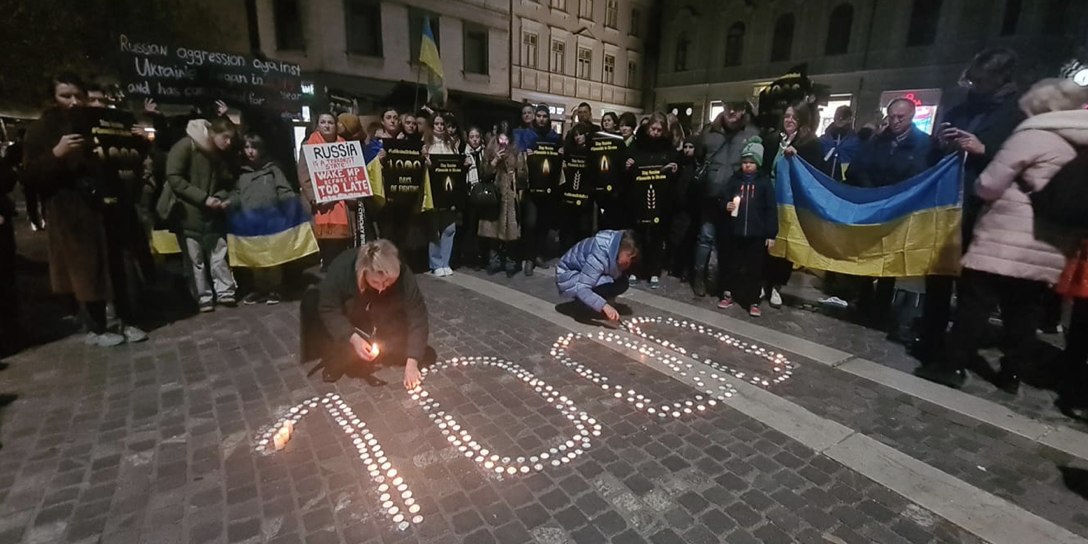
Today, the organization has around 100 permanent members, while some of its online events attract more than 600 participants. Razom holds cultural events, helps Ukrainians integrate into Slovenia, raises funds for Ukraine, engages in advocacy, works with young people, and cooperates with Slovenian government institutions.
But according to Supervisory Board Chair Alla Savchenko and Vice President Oleg Rohoza, their main difference is not the number of events they organize. From the beginning, they have tried to build a system that will not fall apart if one person leaves.
From volunteering to an organization
Oleg Rohoza moved to Slovenia with his parents in 2012. He learned Slovenian there, studied, spent some time living in other countries, and eventually returned to Slovenia permanently.
When the full-scale invasion began, Oleg found himself in a unique position: he knew both the Ukrainian and Slovenian contexts, spoke the languages, and had contacts in both communities. He quickly became one of the people helping to organize the Ukrainian community.
Alla Savchenko arrived in Slovenia after the full-scale war had begun. She works for an international company with offices in 166 countries and could have chosen practically any of them as her destination. Ultimately, she stayed in Slovenia, where she had often visited before the war because her daughter was studying there.
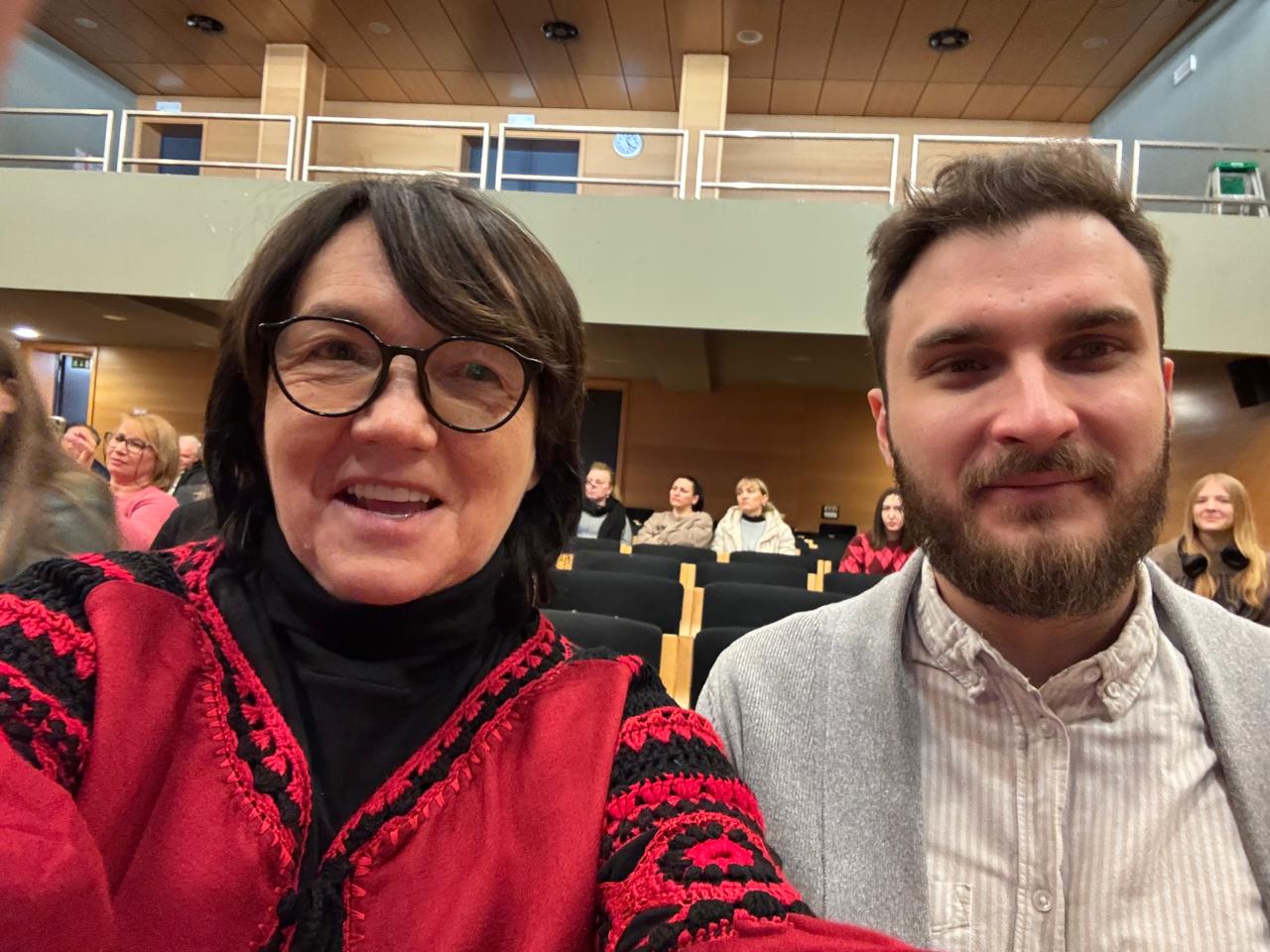 Alla Savchenko and Oleg Rohoza.
In May 2022, Savchenko attended her first rally in support of Ukraine and began looking for ways she could help. There, she met activists who later invited her to join the organization.
At first, the activists operated as a volunteer initiative. But it quickly became clear that more serious work required a legal entity.
“We wanted to somehow direct this flow of energy and desire to help where it was needed and preserve it for the time when that desire would be weaker,” Rohoza explains.
An organizational structure was also needed for practical reasons: without a legal entity, it was difficult to open an account, receive funds, purchase things, or enter into official agreements. So in July 2023, Razom was officially registered.
One of the organization’s first decisions was not to remain simply a group of activists who came together for specific campaigns.
From the beginning, Oleg proposed using digital tools – meeting on Zoom, storing documents on Google Drive, and moving daily communication from numerous Facebook and Telegram chats to Slack. The transition was not easy, but it made it possible to create a single working environment.
At the same time, they began working on the organization’s mission, vision, and strategy. “From the very beginning, we tried to look at our work strategically: we met, discussed what we wanted the organization to look like, what goals we wanted to achieve, and what role it should play for Ukrainians in Slovenia,” Savchenko recalls.
Over time, the structure developed to include a supervisory board, president, vice presidents, and an executive director. Such a model is not typical for Ukrainian communities abroad, but Rohoza considers it important even when an organization is still small.
It is not about a complex hierarchy, but about dividing responsibility. Administrative and accounting matters have their own people in charge, official communications have theirs, and strategic decisions have their own level of management.
“If we hadn’t done this and had continued working as one large group, it would be even harder now to divide responsibilities and have a structure,” Rohoza says.
The next step is project management. For example, the legal team initially had one person in charge, but other lawyers later joined. Now the organization wants to have similar teams in every area – three, five, or seven people.
The reason is simple: if an entire area of work depends on one person, they will eventually burn out. Community work requires a great deal of time and energy, and combining it with a job, family, and personal life for years without a team is practically impossible.
“No matter how strong the person leading an area is, they cannot develop it on their own. So our task is to gradually build a team around each leader that can change over time but will always remain,” Savchenko says.
This is where Razom’s model differs most from a community that depends on a few indispensable activists. For the organization, it is important not only to find people willing to work, but also to create a system in which responsibilities can be passed on.
Working where it is difficult
“We wanted to be a mass organization. We wanted to unite as many Ukrainians as possible,” Savchenko says.
But scale creates its own problems, she adds. People come with different experiences, motivations, and expectations. Some activists eventually become tired or leave Slovenia. Every year, it becomes harder to find people who are willing not simply to attend an event but to take responsibility for organizing it.
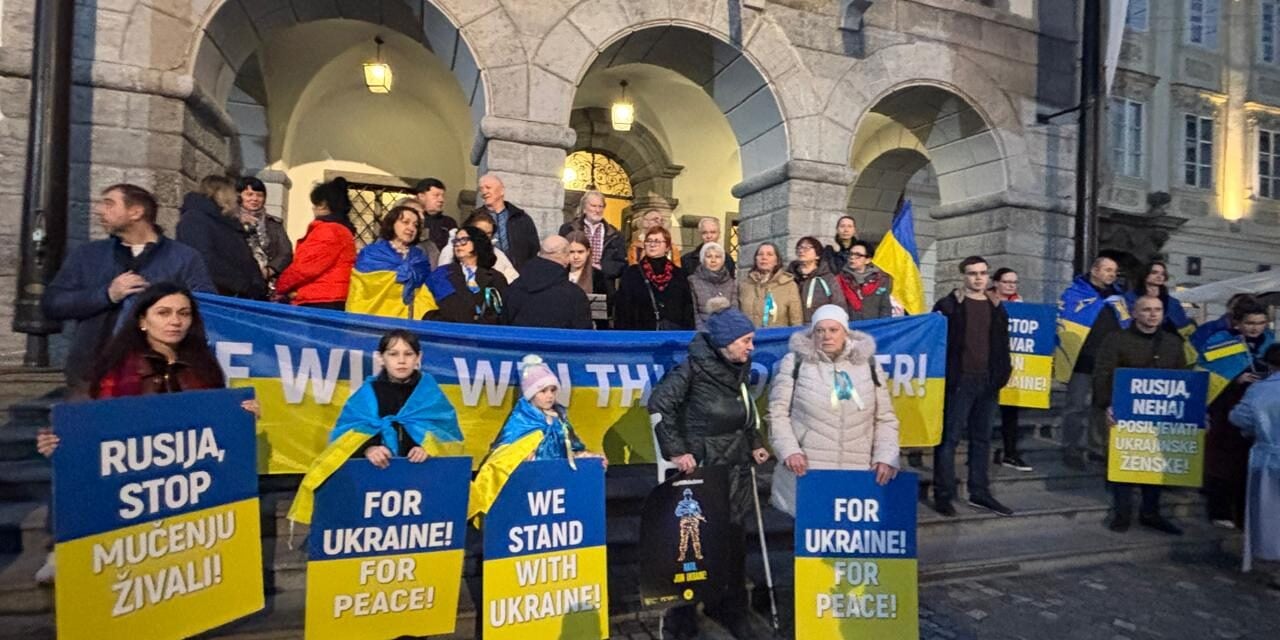
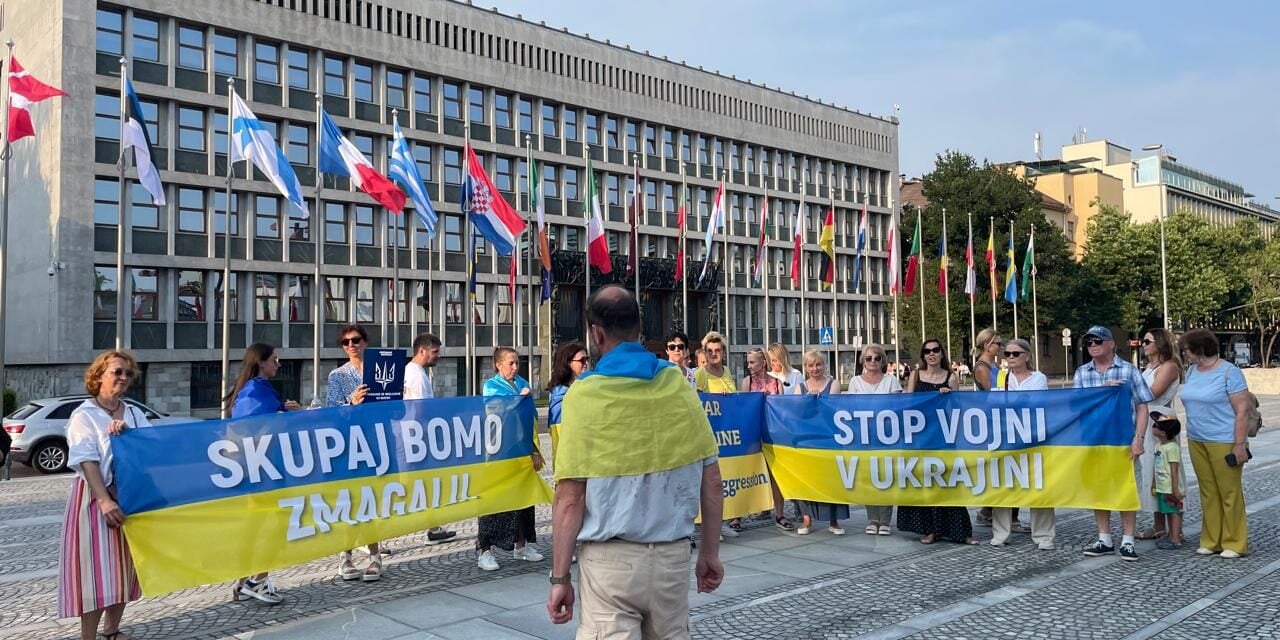
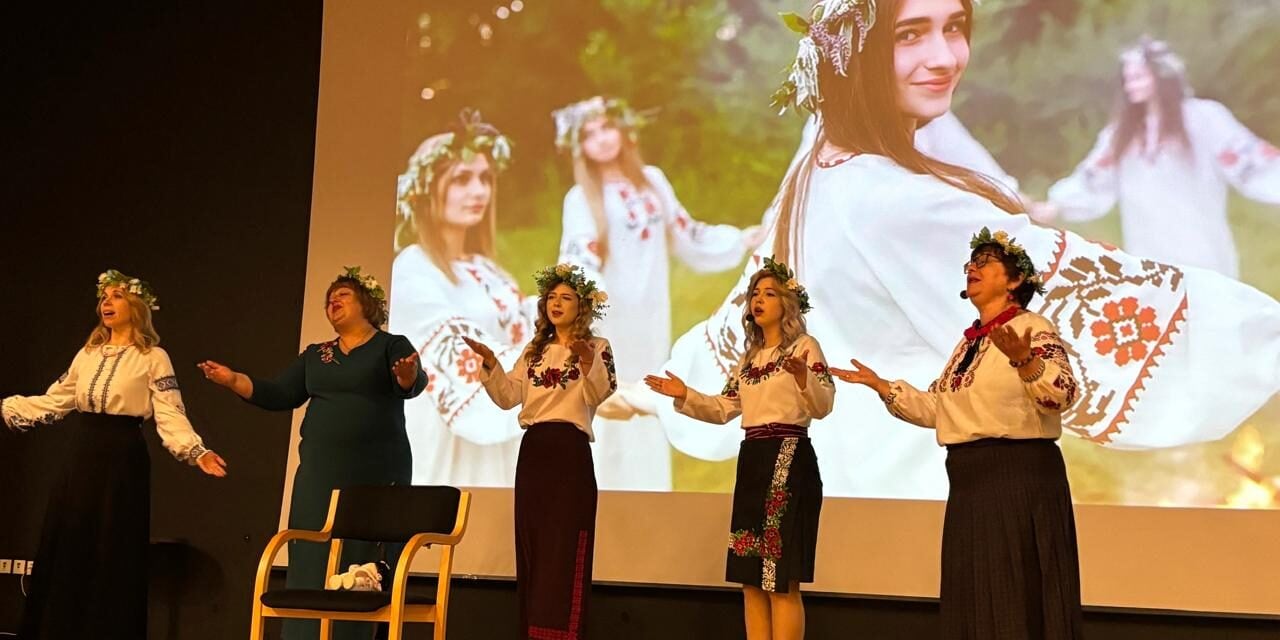
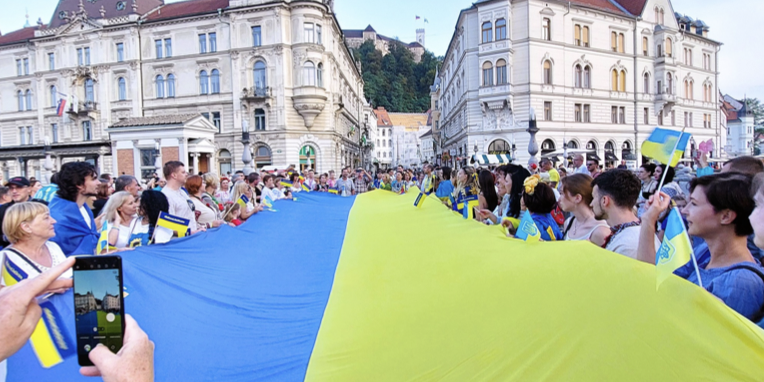
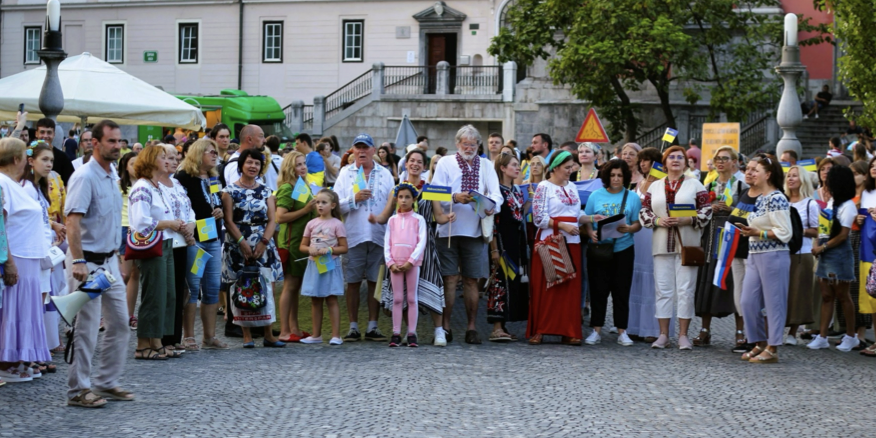
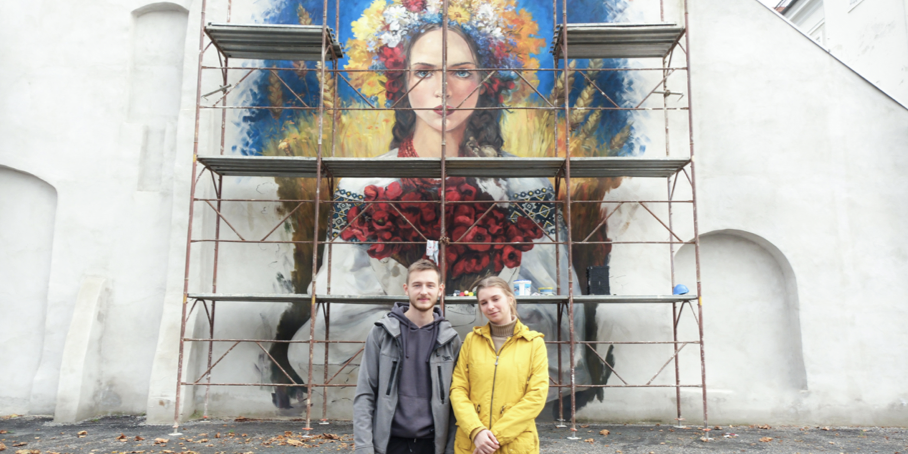
That is why Razom believes it is important not only to increase its membership, but also to create different opportunities for people to participate in community life. This is especially important for young people. People are more likely to attend events where they are united not only by the common goal of helping Ukraine, but also by the opportunity to meet, socialize, and spend time together. That is why the organization holds family and informal gatherings. Through this kind of interaction, activists gradually try to involve young people in other community projects.
“When people find themselves abroad, they need not only an opportunity to help Ukraine, but also a space for their own social life and for living within a Ukrainian environment,” Rohoza explains.
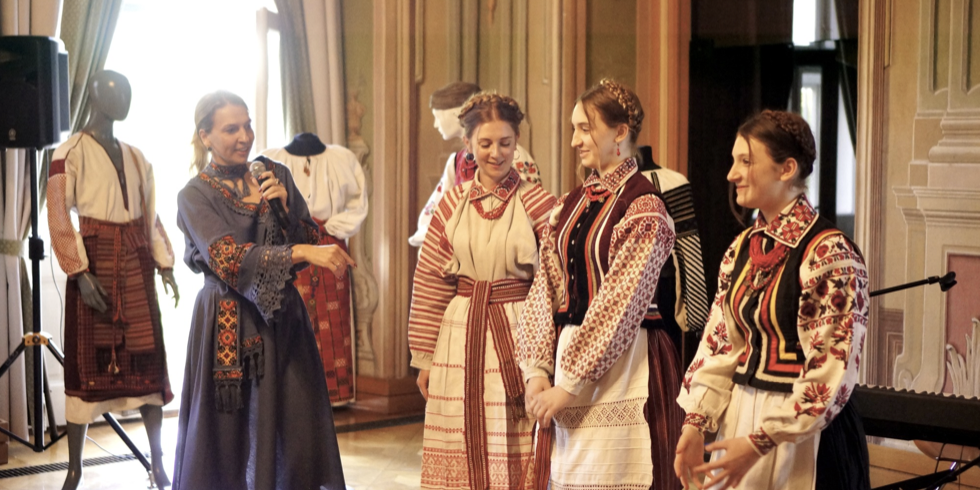
Culture is one of the organization’s most active areas. It holds events dedicated to Ukrainian embroidered clothing, music, and cuisine, and organizes exhibitions and Christmas nativity plays.
Savchenko is particularly proud of an exhibition of traditional Ukrainian embroidered clothing organized in cooperation with an ethnographic museum in Ljubljana. The event was primarily organized by collector and Razom Supervisory Board representative Natalia Kholod. The aim of the exhibition is not simply to showcase traditional clothing, but to present Ukrainian culture as part of the world’s cultural heritage. The organizers are now planning to take the exhibition to 10 countries.
At the same time, cultural events help address another goal – engaging Slovenians. Unlike political advocacy, culture is less likely to provoke resistance and provides a way to talk about Ukraine with a broader audience.
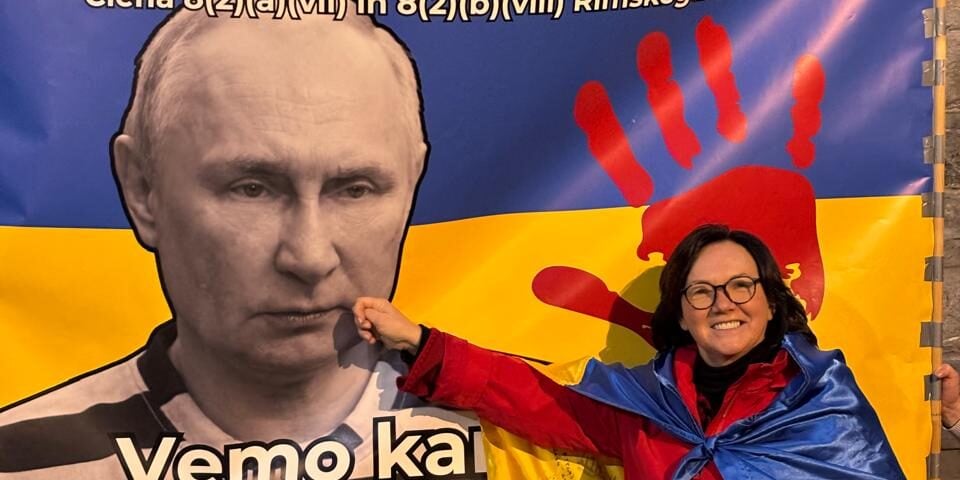
Political work also remains important. Razom regularly organizes rallies, writes open letters, and promotes Ukrainian interests in Slovenia. One result of this work was Slovenia’s recognition of the Holodomor as genocide of the Ukrainian people.
The Ukrainian community worked on this together with the Embassy of Ukraine – collecting signatures, writing to lawmakers, and involving Slovenian and Ukrainian organizations. During parliamentary discussions, lawmakers directly cited letters from the Ukrainian community as an argument in favor of the decision.
Slovenia has its own specific context. Unlike countries in Central and Eastern Europe, Slovenian society does not have experience of Soviet occupation or direct confrontation with Russia. As a result, attitudes toward Russian aggression are often more neutral.
Rohoza also points to strong Russian propaganda on social media. People carrying Russian flags come to Ukrainian rallies and try to disrupt the events by playing Russian music. According to him, comments on Slovenian materials about Ukraine are often dominated by pro-Russian or Ukraine-skeptical reactions.
That is why systematic advocacy is important to Razom, not just helping Ukrainians – working with Parliament, the government, Slovenian ministries, the embassy, and other organizations.
Razom comes of age
Savchenko and Rohoza speak about Razom’s development almost as a separate stage of growing up. In its first few years, the organization went from being a volunteer group to a structure that official institutions now work with. Its next task is institutionalization.
This means involving more people, securing stable funding, developing fundraising, and creating mechanisms that will allow the organization to operate independently of specific individuals.
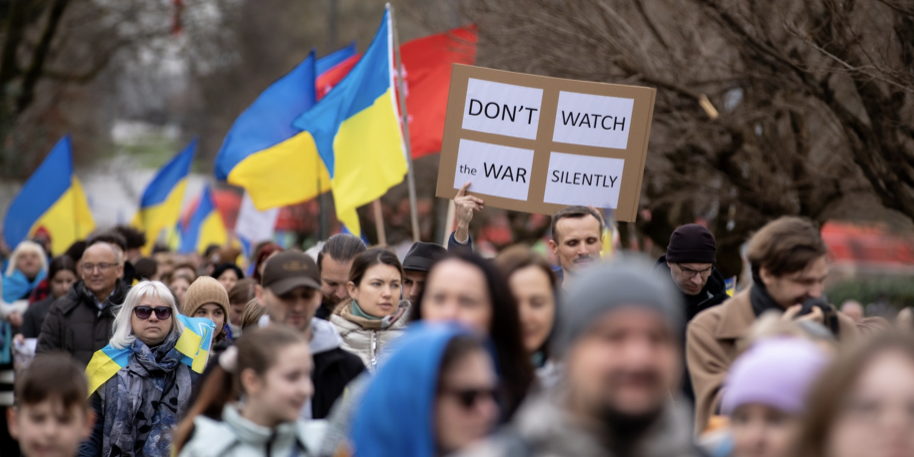
Savchenko is already thinking about how the organization will function after some of its current leaders return to Ukraine.
“Build an organization that will outlive its founders,” she advises.
To achieve this, the organization needs a shared knowledge base, documented processes, rules, a code of ethics, and the ability to transfer responsibility from one person to another.
At the same time, Razom is trying not only to build its own system, but also to share the tools it has developed with others. The team adapted a guide on using artificial intelligence for Ukrainian communities, particularly organizations working with limited human and financial resources that nevertheless want to develop projects and attract grant funding.
The guide is available to other Ukrainian organizations and can be used in their own work.
This approach reflects the community’s philosophy well: experience should not remain within the organization itself. If a tool works, it can be passed on to another community facing the same problem.
Joining the Ukrainian World Congress (UWC) was also an important step for Razom. Savchenko says she identifies with the UWC’s three strategic focuses – Ukraine’s victory, its reconstruction, and building a strong Ukrainian world. This framework is increasingly shaping how the organization sees its own role in Slovenia: not only helping Ukrainians, but representing Ukraine, contributing to its reconstruction, and building a strong Ukrainian community.
Razom’s logic can be reduced to a simple formula: start with people, but don’t stop with people. People are the most important resource, but without a common goal, strategy, and trust, they will quickly go their separate ways. And if all the work depends on one leader, the organization becomes vulnerable.
That is why the organization is trying to expand the community while simultaneously building a system capable of withstanding its growth.
“Don’t be afraid. Direct your anger against the Russians, direct your energy,” Savchenko says, recalling her own motivation to work for Ukraine. She believes that after the war ends, some Ukrainians will return, while others will remain abroad. Those who stay will have an important role to play – representing and advocating for Ukraine in their new countries.
For Razom, therefore, a capable community is not one where a few people can do everything. It is one that can ensure that the work of a few people is gradually taken up by dozens, and eventually by hundreds.
Latest news
 #GlobalAdvocacy
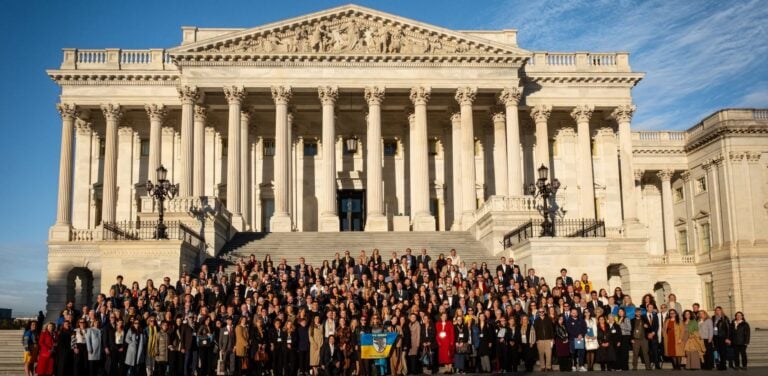
Beyond the Lindsey Graham act: How Ukrainians are lobbying Washington to keep supporting Kyiv
 #LocalAction
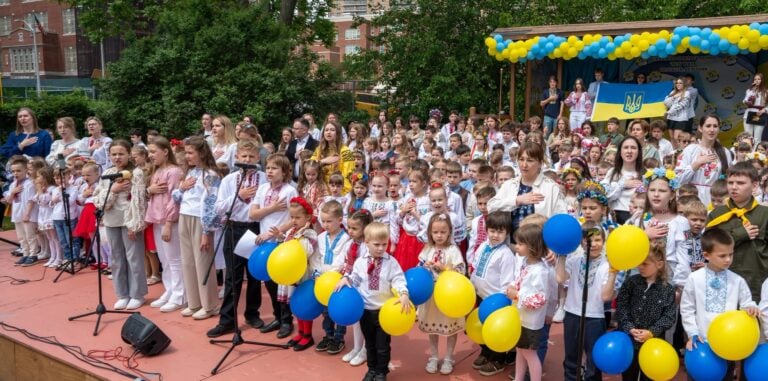
From New York to California: Inside America’s Ukrainian school network
 #LocalAction
Documentary film ‘A Simple Soldier’ available for online viewing, community screenings
 #UWC news