



At the request of World Federation of Ukrainian Women’s Organization (WFUWO) the information and research in this report was prepared and provided by Motrya Kokoris, Environment Specialist and former WFUWO Representative to UN/ECOSOC. The purpose or this report was to identify key developments between the onset of russia’s full-scale invasion of Ukraine in February 2022 through December 2025. Primary sources for the information summarized in the report were the American Nuclear Society and the publication Nuclear Newswire; International Atomic Energy Commission reports and statements; UN Security Council reports and statements, and Ukrinform – the national news agency of Ukraine.
In 2009, all Member States of the International Atomic Energy Agency (IAEA) adopted a decision that “any armed attack on and threat against nuclear facilities devoted to peaceful purposes constitutes a violation of the principles of the United Nations Charter, international law and the Statute of the Agency.”
Numerous times IAEA Director General Rafael Grossi has stated that “A nuclear accident in Ukraine could involve a massive radioactive release into the atmosphere… The risk of an accident increases the longer the war continues due to the degradation of infrastructure and the stress on personnel.”
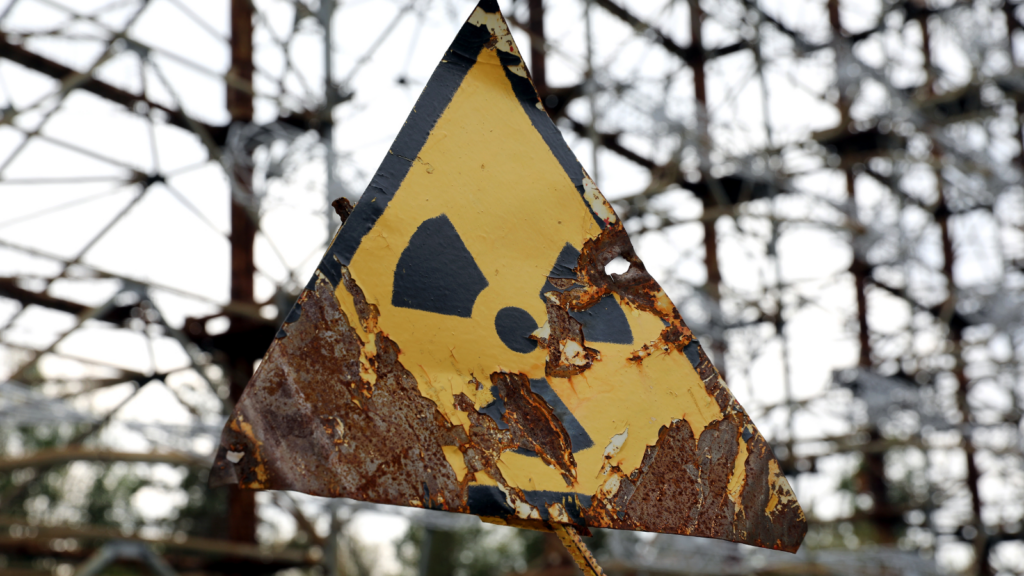
February 24, 2022, marked the beginning of the armed conflict in Ukraine with russia’s full scale invasion and Ukraine’s nuclear power plants (NPPs) have faced unprecedented military threats, marking the first time in history that operational civilian nuclear facilities have been caught in active war zones. Numerous events, such as shelling, air attacks, difficulties with staffing levels and working conditions and losses of off-site power supply, severely impacted and continue to impact on-site nuclear safety and security.
Two nuclear facilities have come under the control of russian armed forces: the Chornobyl NPP site from February 24 through March 31, 2022, and the Zaporizhzhia NPP on March 4, 2022, that currently remains under the control of the russian federation. In Spring 2022, the IAEA promptly took steps to help stabilize the critical nuclear safety and security situation and to prevent a nuclear disaster in Ukraine.
IAEA Director General Rafael Mariano Grossi has frequently travelled to Ukraine to lead IAEA missions to assess the situation and conduct high-level talks. Within three years between Spring 2022 and 2025, DG Grossi visited Ukraine a dozen times. The IAEA is in continuous contact with officials from Ukraine and from the russian federation. A full timeline of the IAEA comprehension security efforts in Ukraine can be viewed at: https://www.iaea.org/interactive/timeline/169792
Continue reading the WFUWO report here
Latest news


 #GlobalAdvocacy
Russia seizes foreign businesses: Turning Kremlin blackmail into advocacy tool
 #LocalAction