



In late April, Ukrainian President Volodymyr Zelensky publicly announced the creation of a Pantheon of Outstanding Ukrainians and the launch of a process to rebury prominent figures who died in exile.
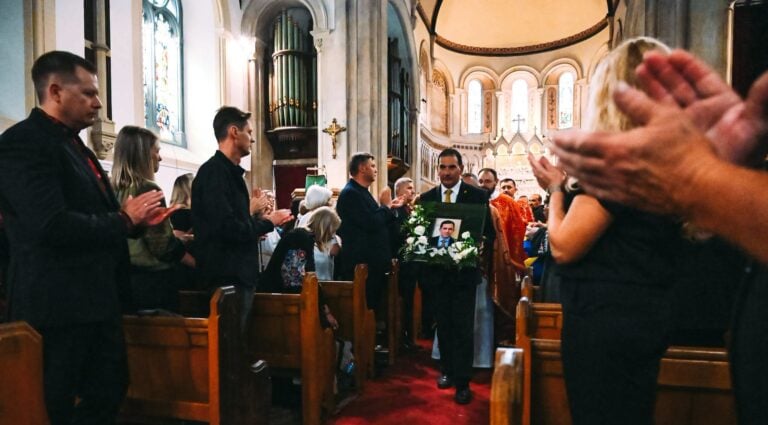
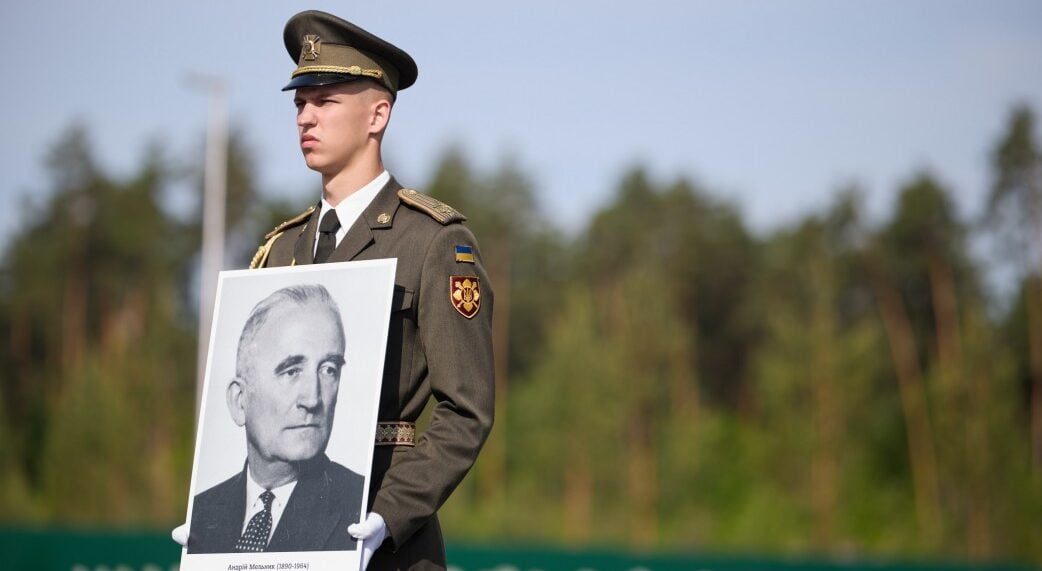
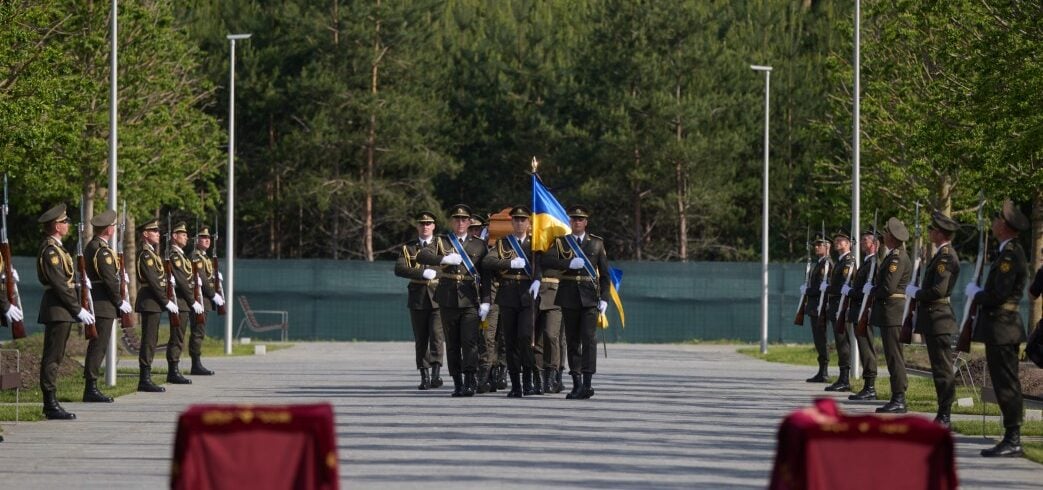
The first to be brought home were Andriy Melnyk, leader of the Organization of Ukrainian Nationalists (OUN) and a colonel in the army of the Ukrainian People’s Republic (UPR), and his wife, Sofiia Melnyk (Fedak). The couple was reburied on May 25 at the National Military Memorial Cemetery (NMMC) near Kyiv.
These first reburials marked the practical beginning of the initiative. But the work had started much earlier – quietly and painstakingly, through diplomatic correspondence and discussions with Ukrainian communities abroad.
On May 19, President Zelensky also announced preparations to repatriate and rebury Colonel Yevhen Konovalets from the Netherlands.
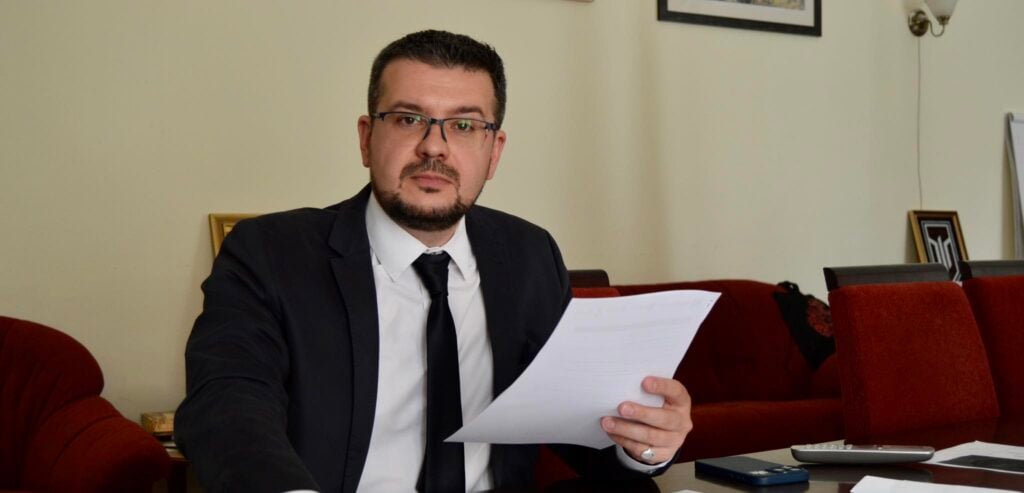
In an interview with the Ukrainian World Congress (UWC), Oleksandr Alfiorov, Head of the Ukrainian Institute of National Memory (UINM), explained why the state has taken on this task now, what the process looks like behind the scenes, the indispensable role Ukrainian communities abroad play in preserving memory, and why a burial site is only one way of remembering.
Not an initiative, but a strategy
Reburials to Ukraine have taken place before thanks to individual initiatives by cities or communities, Alfiorov says. One example was the rescue of the remains of poet Oleksandr Oles in January 2017, when the lease on his grave in the Czech Republic expired and, without intervention, the burial site would have disappeared. But those efforts were isolated and fragmented, the historian notes.
Today, he says, the situation is fundamentally different because the Office of the President, the Ministry of Foreign Affairs, the Ministry of Veterans Affairs, and the UINM are all involved in the process.
“This is now a state strategy,” Alfiorov says. He adds that preparatory work had already begun on the president’s instructions before the public announcement of the pantheon. Officials were reviewing legislation, assessing the current situation, and exploring possibilities for reburials in various countries.
The work is ongoing and multifaceted. A draft law is being prepared, financial and architectural aspects are being developed, a design competition will be announced, and complex discussions are underway regarding the list of individuals who should be included in the pantheon.
 “This is an extremely difficult task. The most important thing right now is not to bury the process in endless discussion. If we immediately move to orders and directives, we risk creating bureaucracy and opportunities for manipulation. First, there must be meticulous professional work, and only then formalization through decisions and legislation,” the head of the UINM says.
As for the reburials themselves, Alfiorov explains that each ceremony is backed by complicated and often bureaucratically exhausting work. Every country has its own laws and regulations governing burials and cemeteries.
In many cases, the consent of relatives is required. When no relatives can be found, the process becomes even more complicated. If the lease on a grave expires and no one continues making payments, remains may be transferred to communal burial plots and the original site cleared. In some cases, civic organizations such as Plast, or even anonymous donors whose identities are protected by privacy laws, take responsibility for maintaining graves.
“There is no single solution that fits every case,” Alfiorov says. “Each reburial is its own diplomatic and legal story.”
Communities as guardians of memory
For decades, it was Ukrainian communities abroad that preserved historical memory and cared for the graves of prominent Ukrainians. They assumed responsibility for burial sites, safeguarded archives, published books, and maintained libraries – all through their own initiative and at their own expense – ensuring the continuity of Ukrainian life beyond the borders of the state.
Burial sites became one of the most visible dimensions of this work. In countries where successive waves of Ukrainian emigrants settled, communities maintained graves, paid cemetery fees, cared for the sites, and organized memorial services. Ukrainian organizations took responsibility for preserving these resting places when no relatives remained. Without this long-term and often unseen effort, a significant number of graves would simply have disappeared, Alfiorov says.
For that reason, even when there are clear grounds for reburial, the process can be sensitive for communities that have cared for these sites for years. One such case emerged in Luxembourg, where some members of the local Ukrainian community reacted critically to the reburial of Andriy Melnyk. Those who had maintained his grave did not feel fully involved in the process.
Alfiorov acknowledges that communication may have been insufficient and that some community members responsible for caring for the grave were not included in the discussions.
At the same time, he argues that the reaction stems from more than procedural concerns. For many communities, a grave is not simply a burial site but a symbol of Ukraine’s presence in the world – a tangible expression of a historical connection. Caring for such places became a way of preserving heritage and identity.
The head of the UINM stresses, however, that reburial does not negate the work of these communities but rather changes its form. He specifically recognizes those who have spent years maintaining burial sites.
“Ukraine is deeply grateful to everyone who has cared for these graves,” Alfiorov says.
He also argues for a broader understanding of remembrance that extends beyond cemeteries alone. While graves remain important places of commemoration, they are not the only ones.
“It is a shared responsibility of both the state and communities to move beyond cemetery-centered remembrance and, with Ukraine’s support, create new forms of memorialization in cities and towns. We need spaces where people can honor an individual and preserve their memory, where children can be brought, where military and patriotic songs can be heard,” he says.
In this context, the Luxembourg case illustrates the complexity and multiple layers of such decisions. It underscores the importance of thoughtful and proactive communication with communities that have preserved these sites for decades as part of their identity and historical continuity.
“Did Andriy Melnyk want to be reburied in Ukraine? There is probably no explicit testament saying so. But the question is broader: did he want to return to Ukraine? And did the tens of thousands of Ukrainian soldiers who found themselves in exile – not because they wanted to live abroad, but because they were forced to save themselves while preserving the hope of returning to an independent Ukraine – want the same?” Alfiorov asks.
The head of the UINM also announced that an expedition of historians and experts will depart from Ukraine in early July. Participants will include Alfiorov himself, Vakhtang Kipiani, Yurii Yuzych, and staff members of the institute. The group will travel through several European countries to study cemeteries where Ukrainians who fought for independence are buried.
Over a two-week period, expedition members will visit burial sites, assess their condition, help restore and maintain them, and pay tribute by lighting memorial candles and laying flowers. The route will cover approximately 8,000-10,000 kilometers.
According to Alfiorov, it will be “difficult but important work” that combines research, memorialization, and preparation for future reburials, including diplomatic outreach and engagement with families and caretakers of burial sites.
Atlantis that can still be saved
Alongside the issue of reburials lies a much broader question: how to preserve the Ukrainian heritage that communities abroad have spent decades building beyond the Soviet and post-Soviet world.
This is not merely about archives or libraries. It concerns an entire parallel intellectual Ukraine that lived and developed at times when such work was impossible or severely restricted within the country itself.
Alfiorov recalls an unplanned visit to a Ukrainian archive-museum in London, supported by the local community and, in particular, Hennadiy Ivanushchenko. Inside were shelves filled with books published in exile over many decades.
“I realized these books were written on subjects that scholars in Ukraine are only now beginning to study. And I understood that independent Ukraine continued to exist abroad – in art, scholarship, and education. Ukraine was alive there,” he says.
This represents a different trajectory of Ukrainian intellectual history – not a supplement to Ukraine’s story, but a continuous extension of Ukrainian statehood during a period when statehood itself was absent.
 It is this heritage that Alfiorov describes as an “Atlantis” now at risk of disappearing.
The threat is not simply the passage of time or natural deterioration. It is also a matter of generational change. The descendants of those who built archives and collections during the 1920s, 1930s, 1940s, and later often lack either the resources or the motivation to continue the work.
As a result, community buildings are sold or leased, archives become scattered, unique libraries are broken apart, and collections are sometimes discarded entirely. What was assembled over decades as the collective memory of the Ukrainian diaspora gradually disappears without public notice.
“We are losing our Atlantis abroad,” Alfiorov says.
In response, the UINM is working on the creation of an international repository, which could be located in a Central European country, with the Czech Republic among the possibilities.
The concept is to collect and safeguard archives, libraries, and private collections belonging to Ukrainian organizations and families whose materials are at risk.
The goal is not centralized confiscation, but preservation: temporary storage, restoration, systematization, and cataloging, with the possibility of returning the materials to Ukraine after the war.
It is an effort to halt the gradual disappearance of documentary memory that may never find its way into museums or textbooks but nonetheless constitutes a significant part of the history of Ukrainians abroad in the twentieth century.
Against this backdrop, the legacy of Andriy Melnyk and the broader network of émigré institutions takes on additional significance. It was this generation of political and intellectual exiles that established the networks that later evolved into modern global Ukrainian institutions, including the Ukrainian World Congress.
What is at stake is not merely the preservation of archives as physical objects, but the recovery of an entire historical experience – fragmented and dispersed, yet not irretrievably lost.
The graves of prominent figures being reburied in Ukraine today represent only the most visible part of that process. Beneath them lies a less visible but equally important layer: archives, books, correspondence, photographs, and intellectual networks that sustained Ukraine’s presence in the world for decades.
As Alfiorov emphasizes, this is a legacy that can still be saved – if action is taken in time.
“To the Dead, the Living, and the Unborn”
As a military officer, Andriy Melnyk was reburied at the National Military Memorial Cemetery, where soldiers of Ukraine’s current war against Russia are also laid to rest. Alfiorov sees this primarily as a symbolic bridge between generations, connecting different chapters of Ukraine’s struggle for independence.
“When the family of a fallen soldier comes to the grave – a wife, children, parents – and sees nearby the burial place of someone who fought for independence in 1918-1920, something important happens. That bridge is tremendously significant for us,” he says.
“I am convinced that if such bridges had existed before 2014, many people who came on school trips from Luhansk or Donetsk would have viewed their country differently.”
Significantly, there are very few graves of major figures from that era in Ukraine. The grave of General Oleksa Almazov in Lutsk survives only as a burial site, while the actual grave was destroyed. The resting places of Vasyl Vyshyvanyi, who was executed and thrown into a mass grave from Kyiv’s Lukianivska Prison, Avgustyn Voloshyn, and Roman Shukhevych are either unknown or have been destroyed.
“Our heroes should rest in Ukrainian soil and help future generations understand continuity: that we are their descendants and that we are continuing their work.”
The question of why Ukraine has chosen to pursue reburials actively at this moment is unavoidable, particularly during wartime. The issue carries special significance as Ukraine is compelled to articulate clearly who it is and who its historical predecessors are, turning memory into an element of the struggle for statehood and the future.
Alfiorov’s answer is unequivocal: now is exactly the right time.
“The Russians learned the lessons of the twentieth century very well. They are not trying to build a second Soviet Ukraine. What they seek is the destruction of both the state and the very idea of Ukrainian statehood,” he says.
In his view, delaying action would mean surrendering initiative not only in historical terms but also in the symbolic realm.
“We are always tempted to stay on the defensive: let’s wait a little longer, not today. But defense is never victory.”
According to Alfiorov, once the war ends, Ukraine will inevitably face enormous reconstruction challenges and competing priorities. In that environment, the memory of those who fought for independence could once again be pushed to the margins.
He also emphasizes a direct historical parallel: the people being brought home today were soldiers who fought Russia for Ukraine’s independence a century ago.
 “Today is the time. Yesterday it was ‘not the right time.’ Tomorrow may be too late.”
At the end of the conversation, Alfiorov articulates what he sees as the core of his work.
“We tend to think of memory policy in dark colors, as something associated with mourning and grief. That is a misunderstanding. Memory encompasses more than a thousand years of statehood – Kyivan Rus, the Cossack era, the struggle for independence, and the current war.
In Taras Shevchenko’s sense, the ‘dead’ are not only those who suffered and perished. ‘The dead, the living, and the unborn’ are the giants on whose shoulders we stand, while the unborn are our descendants, to whom we must pass this memory.
To remain on the defensive when it comes to memory is a road to nowhere. It is a road to defeat. Today we must reclaim our memory,” he says, speaking of a historical reconquista – the recovery of the legacy of Rus, which Russia seeks to appropriate, and of the Cossack heritage, which others attempt to reduce to caricature.
“National memory is not about pain and loss. It is a hyperjump into the future.”
Photos: Office of the President of Ukraine
Latest news
 #UWC news
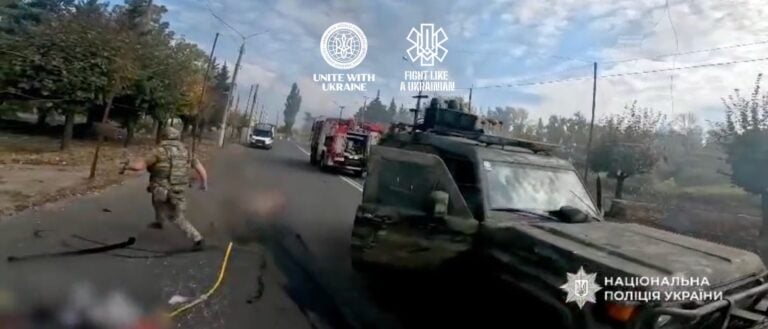
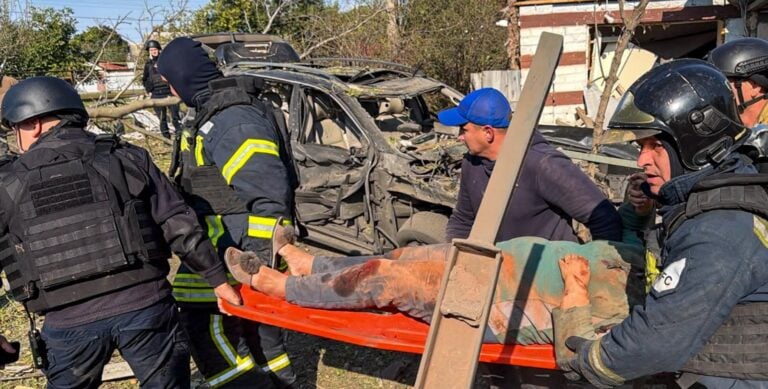
UWC funded armored ambulances evacuate wounded after deadly Russian attack on Kramatorsk
 #LocalAction