

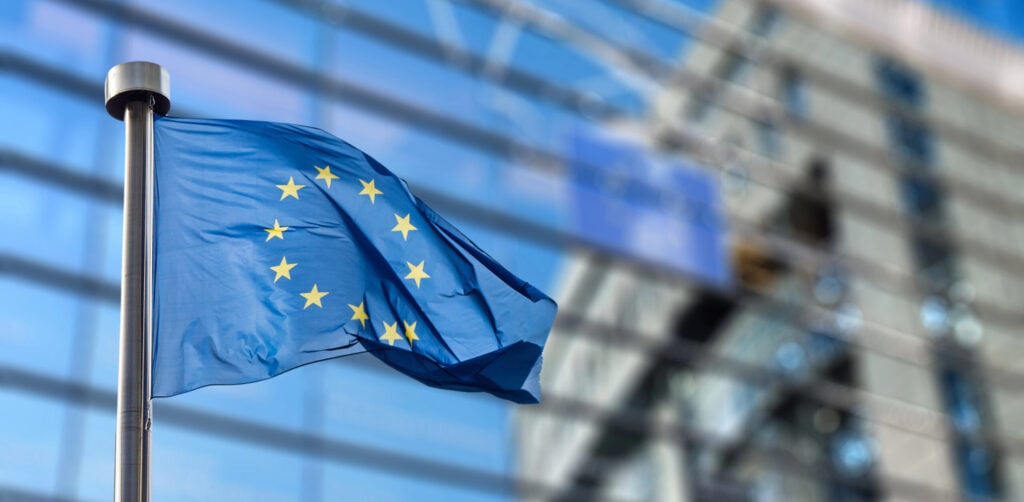


Against the backdrop of the war involving the US, Israel, and Iran in the Middle East – which began shortly after President Donald Trump’s statements regarding a potential withdrawal from NATO – discussions in Europe about the urgent need for strategic defense independence are becoming increasingly frequent.
In this process, Kyiv is viewed as a partner hardened by the experience of a full-scale war against Russia. Simultaneously, Ukraine’s EU accession process remains highly active. Amid internal transformations and external challenges, Ukrainians are forging a path toward their long-awaited membership.
The Ukrainian World Congress (UWC) spoke with Zenon Kowal, a member of the UWC Executive Committee, political adviser to the European Congress of Ukrainians and the Association of Ukrainians in Belgium, as well as former Special Adviser to the Embassy of Ukraine in Belgium (1992-1995).
The following is his analytical assessment of the current state of Ukraine-EU relations, integration prospects, and the role of Ukrainian communities in this process. Direct quotes have been edited and condensed for clarity.
The status quo
Currently, relations between Ukraine and the EU are primarily defined by the accession process. However, this journey is neither linear nor uniform across the EU’s political landscape; it takes place within a constant balance between support for enlargement and differing views among member states regarding its pace.
In this context, periodic blockades of certain decisions – particularly by Hungary – are seen as part of a broader debate within the EU about how and how fast enlargement should occur. This affects not only technical negotiating procedures but also the overall predictability of EU policy toward Ukraine.
Consequently, Ukraine operates under conditions of uneven support, forcing it to simultaneously advance the formal negotiation process while strengthening bilateral ties with individual EU nations. Despite this, a cautious understanding is gradually forming within European institutions regarding the need to move toward a more structured stage of negotiations, specifically the opening of negotiation clusters.
When discussing what Ukraine can do to accelerate its entry and influence the positions of certain European leaders, it is important to understand: it is not about a single country or a single politician. Within the EU, several states remain generally cautious about the speed of enlargement.
This approach is dominated by the logic of “merit-based accession” – entry based on real achievements and the fulfillment of criteria. The idea is simple: Ukraine must maximize its own readiness so that integration appears as the natural result of reforms already implemented.
European integration functions as mutual movement. Both Ukraine and the EU are moving toward one another. For Ukraine, this is primarily about tangible internal changes rather than just political declarations.
Montenegro and Moldova are often cited as examples of countries that made significant progress by fulfilling their obligations. This demonstrates that EU accession criteria serve not as a formality, but as a practical evaluation tool.
However, Ukraine’s reforms are on a more complex scale, partly due to its size. A fitting metaphor explains it well: today, Ukraine is a massive ship. Unlike smaller candidate countries that resemble maneuverable boats, our “liner” requires significantly more time and space to pivot toward European standards.
Among the challenges on the path to membership, the fight against corruption and judicial reform traditionally receive the most attention. Here, it is vital not only to pass laws but to actually implement them.
There is another dimension discussed unofficially but constantly in Brussels: trust and the sense of momentum. It is crucial for partners to see that Ukraine is moving consistently and quickly. This is what gradually builds confidence in its European integration course.
Ukraine in the new European security architecture
Ukraine’s role in the new European security architecture is being shaped by the profound changes that have occurred within the EU following a series of geopolitical crises – most notably Russia’s full-scale war against Ukraine. This war became the key catalyst for Europe to begin viewing its own defense and security through a different lens.
Within the EU, this has already led to new approaches and institutional solutions. Specifically, for the first time in the history of the European Commission, a Commissioner for Defense and Space was appointed – Andrius Kubilius, the former Prime Minister of Lithuania, who understands Ukraine’s importance deeply. This signifies that defense is gradually becoming a permanent part of EU policy rather than just a reaction to crises.
In this context, Ukraine is already perceived as a vital element of European security – not just because of its geography, but primarily because of its combat experience. The Armed Forces of Ukraine (AFU) are considered among the most experienced in the world, having fought an intensive war against a much larger adversary for many years, including the period since 2014.
Therefore, Ukraine is not just a recipient of aid but a partner already influencing Europe’s security system. This is evident in the exchange of expertise, the development of joint defense projects, and the gradual integration of the Ukrainian defense sector into European space.
Three dimensions of Ukraine’s role for the EU
In the long term, Ukraine’s role is increasingly defined by three key areas that represent its real added value to the European Union: security, food stability, and innovation.
Regarding the security dimension, Ukraine acts as a state with unique combat experience gained through a full-scale war. This depth of experience is something Europe has not encountered in modern history, and it is becoming a critical element in rethinking European defense policy and cooperation within both the EU and NATO.
From the perspective of food stability, Ukraine has long served as a key supplier of agricultural products to global markets, and this potential remains vital for the EU. This involves more than just the exportation of grain; it represents a broader role in global food security where Ukraine effectively mitigates the risk of shortages in various regions, including the EU itself.
In the realm of innovation and technology, Ukraine demonstrated a remarkable ability during the war to adapt rapidly and create new solutions under limited resources. This progress is especially visible in drone technology, air defense systems, communications, and military engineering. Many of these developments are already attracting interest from international partners and are being integrated into broader defense and technological projects.
Consequently, Ukraine is increasingly viewed not just as a country moving toward EU membership, but as a partner that can actively strengthen the European system today across security, economic, and technological dimensions.
Ukrainian communities and advocacy
The role of Ukrainian communities abroad is a vital component of the political and communication support for Ukraine’s European integration. This is not just about cultural presence, but about real influence on how Ukraine is perceived within EU countries.
Europe Day holds a special place in this process. The date is gradually gaining a symbolic significance that displaces Soviet historical narratives and forms a new framework of identity. In this approach, May 9 should be established as Europe Day for Ukrainians worldwide, while May 8 remains the European date of remembrance for the end of World War II. This reorientation is part of a broader process of decolonizing historical memory.
The practical work of communities across different countries should not be limited to participation in public events – though their importance cannot be overstated. This activity must also include systematic engagement with political institutions in their host countries. This involves maintaining contact with governments, working with parliaments, and communicating with political parties and Members of the European Parliament.
A major role is also played by efforts in higher education (university exchanges) and working with the media to shape public opinion. It is through professors, students, journalists, experts, and public discourse that the image of Ukraine as Europe’s partner in security, economy, and food stability is built. Cultural diplomacy is exceptionally important in this regard.
As Ukraine undergoes a simultaneous process of internal transformation and integration into the European political space, the role of Ukrainian communities abroad serves as a decisive instrument of influence, bridging academic and political advocacy with communication and the cultivation of public support for Ukraine within EU member states.
Cover: DepositPhotos