icon

‘30 Under 30’ awardee Maria Solomia Bandriwsky: The world has finally understood why we fight so passionately for Ukraine

#LocalAction
May 28,2026 37
‘30 Under 30’ awardee Maria Solomia Bandriwsky: The world has finally understood why we fight so passionately for Ukraine

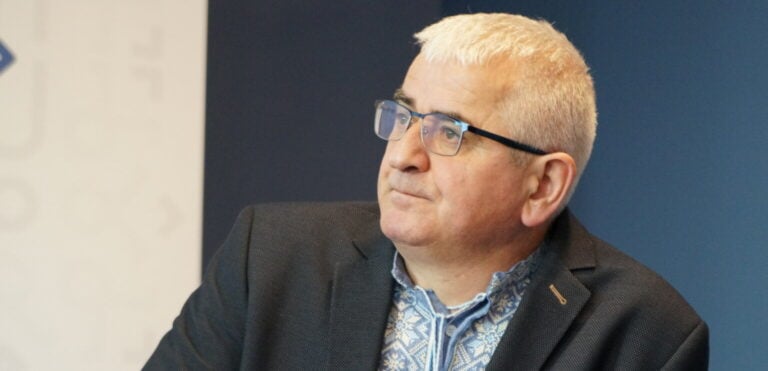
The Ukrainian World Congress (UWC) has announced the winners of its “30 Under 30” award, an initiative recognising young, proactive Ukrainians making an impact around the world. Among this year’s laureates is 27-year-old Maria Solomia Bandriwsky from Chicago.

Maria has been involved with the Ukrainian American Youth Association (UAYA) in the US since the age of four. Today, she serves on its national board and leads communications. Alongside this, she is actively engaged in advocating for Ukraine at the political level and developing projects focused on psychological support for those affected by the war.

In this interview, she speaks about her first reaction to the award, the evolution of her leadership, working with US congressmen, and why mental health has become central to her mission.

From student to leader

Maria, congratulations on your award. How did you find out, and what was your first reaction?

— Thank you! I was actually at work when I got the email. At one point I had started thinking, “Maybe I didn’t get selected,” because some time had passed. Then I opened it, read it, and my first thought was, “Wait, let me read that again to make sure I understood it correctly!” (laughs)

I immediately called my parents. They were incredibly happy for me. It’s an amazing feeling, and I’m deeply grateful for this recognition.

What does this award mean to you globally? Is it recognition of past work or an investment and responsibility for the future?

— It’s both. On one hand, I’m honoured that the UWC values my work. On the other, it’s a huge motivation to keep going. Unfortunately, the war is not over. There is still a lot of work ahead, and it won’t stop even after victory.

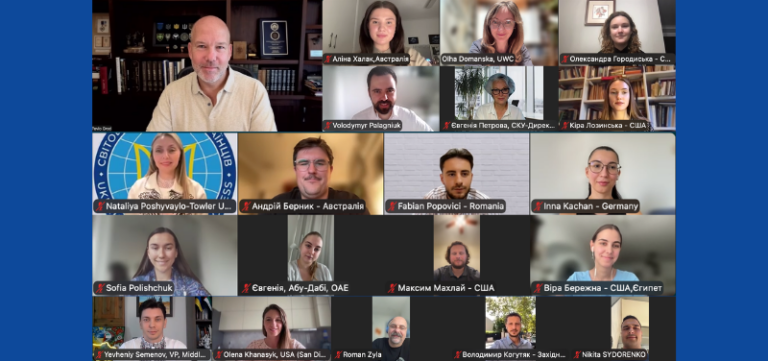
All the laureates feel that weight of responsibility. But I’m also excited that I now have peers from all over the world. It’s a unique opportunity to exchange ideas, build joint projects, and work on a global level.

You’ve been with the UAYA since you were four. When did you realise you didn’t just want to be part of it, but help shape it?

— The turning point came when I was 18. I moved to the senior level and received my blue tie. My father was head of the Chicago branch at the time and invited me to join the board. At first I doubted myself a lot. I thought, “I’m still a kid, what ideas could I possibly bring to adults?”

But I took the risk and became the youngest board member. For the first year, I was very quiet in meetings and mostly listened.

Everything changed in 2018, when I was selected for an exchange programme and went to Ukraine to work as a camp counsellor in Chernihiv.

I was very self-conscious about my Ukrainian. I was afraid of my accent or making mistakes. But people in Ukraine were incredibly warm. They told me, “It’s a big deal that you speak two languages. Just practice, don’t be shy.” That trip changed everything. I came back to the US full of ideas and finally found my voice.

How often did you visit Ukraine before that?

— When my siblings and I were little, our parents would take us every few years to spend the whole summer with our grandmother in a village in the Lviv region. I really miss that time and village life. Unfortunately, I haven’t been back since the 2018 trip.

What was the hardest part of your transformation from participant to leader?

— The biggest challenge is the same as in any organisation: working with people who think differently. Some are very traditional and say, “We’ve always done it this way,” while others want radical change. The hardest part is respecting all views while filtering out the ideas that will actually help the organisation grow long-term.

Young leaders also often struggle with impostor syndrome, thinking they are too young or were chosen by mistake. Mentorship helped me a lot. You need people you trust, who share your vision, and you should not be afraid to ask them a million questions. That’s how confidence grows.

“I always said I was Ukrainian”

How has your understanding of identity evolved while living in the US?

— As a child, I never thought of myself as American. I always said, “No, I’m Ukrainian.” Now I would say I’m an American of Ukrainian descent, but back then it was absolute.

My parents enrolled me in Ukrainian organisations, dance groups, and Ukrainian school. Weekdays were American, but weekends were fully Ukrainian.

In school, when asked to share an interesting fact, I always said, “I’m Ukrainian.” My classmates would just respond, “Okay, got it.” (laughs)

But when the full-scale invasion started, people finally understood why it mattered so much to me. The world woke up. People saw how deeply Ukrainians care about their country and how much Ukraine contributes to defending global democracy.

By the way, my father was born here in the US, while my mother emigrated from Lviv Region at the age of 25 – first to Canada and then to the US, where they met.

You were a virtual guest of Congressman Mike Quigley’s during President Biden’s first State of the Union address. How did that collaboration come about?

— This is a very interesting story that grew out of our activism. When the full-scale war began, rallies were being organized in Chicago almost every week. At one of the first events, my younger sister Zoryana gave a speech. She mentioned my trip to Chernihiv in 2018 and spoke about the children in that camp – even back then, they were already orphans or displaced because of the war in eastern Ukraine.

Congressman Quigley attended that rally, heard her speech, and it deeply moved him. He reached out to me to learn more about my work with the UAYA. Due to COVID restrictions, we couldn’t be invited to Washington in person, so I became a virtual guest. Our main goal at the time was to open people’s eyes to Ukraine, to explain who we are and what we are fighting for. Today, the focus has shifted: people already know about Ukraine, so the main message now is, “Please don’t forget about us, don’t get used to the war.”

How have Americans’ attitudes toward Ukraine changed overall over these years, and what arguments work best today?

— We are greatly supported by consistent politicians who have always stood on our side. But when it comes to American society at large, there was a significant shift about two years ago. Americans realized that Ukrainians are not just victims in need of sympathy. They saw an incredible level of technological capability and strategy.

Today, Americans are impressed by our technological development, the way we use drones, and how we are reforming military affairs. We are changing the narrative: Ukrainians are innovators. We do not have a victim mentality. Our main argument now is: “We are capable of winning, we know how. We just need the tools – weapons and funding.”

Mental health and work in Odesa

A large part of your work is dedicated to mental health. Why this field specifically?

— Psychology has been my passion since childhood. I always enjoyed observing people, analysing their behaviour, facial expressions, how they show warmth or keep distance. That’s why I studied psychology at university, and later worked in a psychiatric setting with patients who had severe disorders – depression, schizophrenia, anxiety.

When I entered a master’s programme in Global Health, 2022 happened. Some of my colleagues were going on placements in Africa, but I knew clearly that I wanted to study the mental health of Ukrainian refugees and the impact of war on their psyche.

I worked with the founders of “Help and Hope 4 Ukraine”. At first, I created a website for them, gathering verified resources, including those from the Ukrainian Ministry of Health. A year ago, we launched an educational video series on trauma, depression, anxiety, and overcoming stigma.

Stigma around mental health still exists in Ukrainian society, although people are becoming more open to therapy. It is especially difficult for those abroad who work hard to support their children – they often see taking care of their psychological wellbeing as a “luxury”. But mental health directly affects physical health, and children who mirror their parents’ reactions. This needs to be talked about.

You also coordinated projects in Odesa Region for a long time. Can you tell us about that experience?

— Yes, for two and a half years – until this January – I worked at a private foundation, where I managed a team in Odesa (I have since changed jobs and now work as Director of Mission Advancement at a school in Chicago). Our work in Odesa Region covered two very different areas: the city of Izmail and the village of Petrovirivka.

One of my favourite projects was developing digital literacy among rural children. We purchased and sent laptops to village schools and provided scholarships for teachers to run extracurricular coding classes. These kids are incredible. At their age, they already know far more about technology than I did when I was growing up in the U.S. Ukraine’s IT sector is developing rapidly, and these skills are an investment in their future.

The second area was daily work with military brigades. We coordinated humanitarian supplies ranging from individual first aid kits (IFAKs) and medical supplies to winter boots. But the most important part was human connection. They were so grateful just for someone to talk to them sincerely for ten minutes a day.

I remember one case: one of our defenders had just returned from the frontline on his birthday. We decided to surprise him and sent cupcakes through the team. He was elated that we remembered him and wanted to bring him joy. These small things give soldiers enormous hope.

Looking ahead

As the communications lead for the UAYA in America, how do you engage today’s youth?

My task is to connect all local branches across the country. Every quarter I publish newsletters. We are very active in Chicago, but it’s important to know what Cleveland or Baltimore are doing. I create special “spotlight” features on branches that run strong fundraisers for things like drones or medical aid, so others can learn from them.

As for youth, we are children of the internet – I grew up on Facebook – but today’s generation lives on Instagram and TikTok. Trends change daily. My goal now is to bring in students for internships so they can create modern, engaging content themselves, promoting Ukrainian narratives through relevant platforms.

UAYA, advocacy, full-time work, volunteering… How do you manage it all and where do you find the energy?

— The key is knowing your limits. Burnout is very real. You can take on a million tasks, but the million-and-first one will break you. Leadership is not about doing everything alone — it’s about openly telling your colleagues, “I can’t handle this right now, help me or let’s find someone else.” Delegation and honest communication are a sign of strength, not weakness. You don’t need to be part of ten organisations. It’s enough to do one thing, but put your whole heart into it.

Nataliya Poshyvaylo-Towler, head of the award committee, said that “30 Under 30” is an award focused on the future. What will your next big project for Ukraine be?

— It will definitely be related to mental health. I will continue my work with the UAYA, but I want to focus professionally on collaboration with Ukrainian universities such as NaUKMA or UCU. I dream of working with Ukrainian psychiatry and psychology professors to develop educational programmes and seminars for students. After the war, addressing psychological trauma in children and adults returning to Ukraine will be one of the country’s biggest challenges, and training specialists needs to start now.

What would you advise young Ukrainians abroad who are just finding their path in civic activism?

— Combine what interests you professionally or in everyday life – whether it’s working with children, IT, or academia – with the needs of the Ukrainian community. Find your niche. You don’t need to create new charities – there are already many doing excellent work. Just find your place within the existing system and the right mentors.

Have faith in yourself, faith in God, and faith in Ukraine. Know that in the end, Ukraine will still be the winner. Just hold on to that idea.

Donate Subscribe to our news